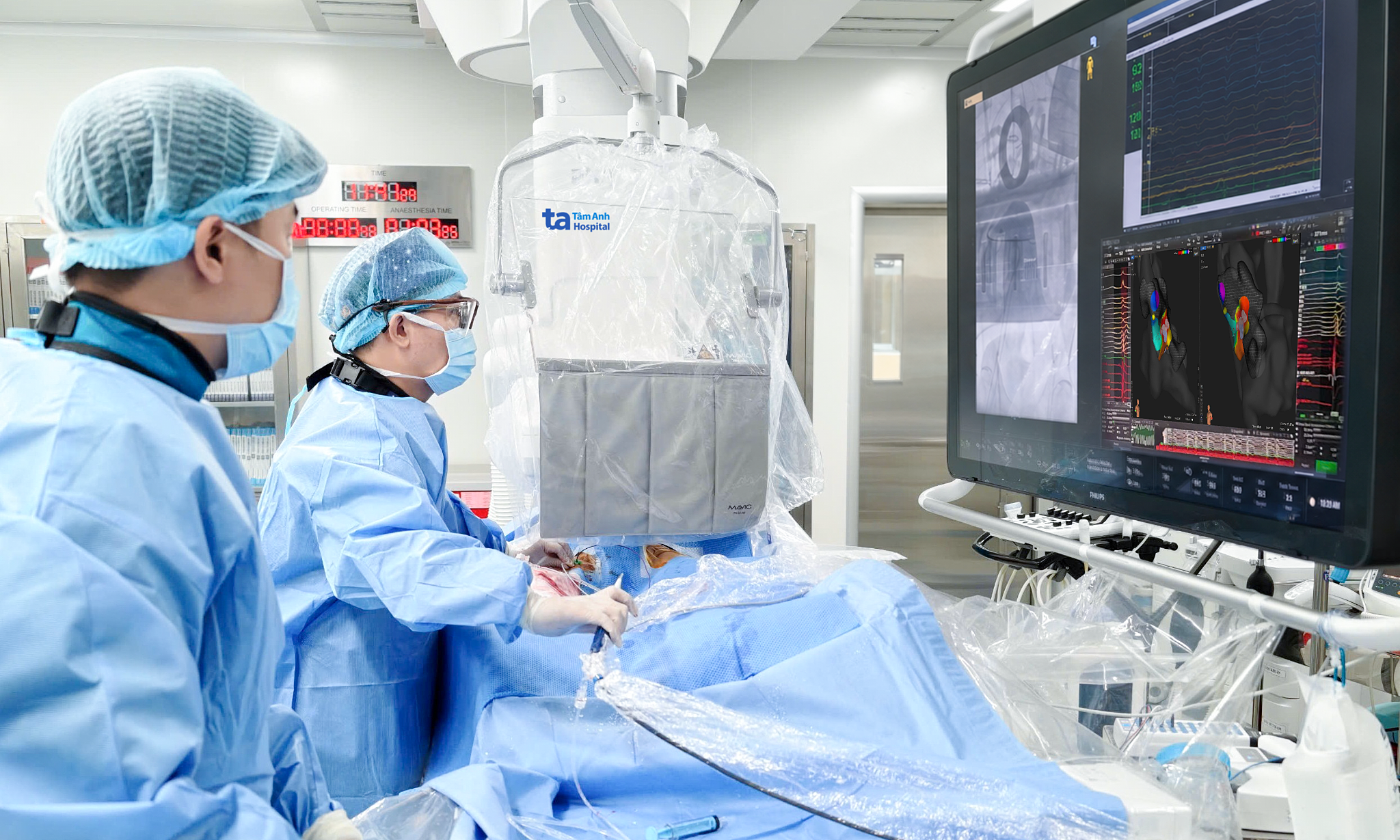
Associate Professor, Doctor Vu Huu Vinh, Director of the Thoracic - Vascular Surgery Center at Tam Anh General Hospital Ho Chi Minh City, stated that the patient presented with a chest deformity. This condition involved a protrusion in the lower one-third of the sternum, accompanied by a sunken area on one side. The elevated sternum created deep depressions in nearby regions, resembling a "gorge". This compressed the heart, affecting both the patient's appearance and circulatory function, thus requiring surgical treatment.
Tuan had previously worn an external chest brace, but it proved ineffective. Associate Professor Vinh explained that external bracing alone cannot correct both chest protrusion and indentation, and it poses a high risk of cardiac injury.
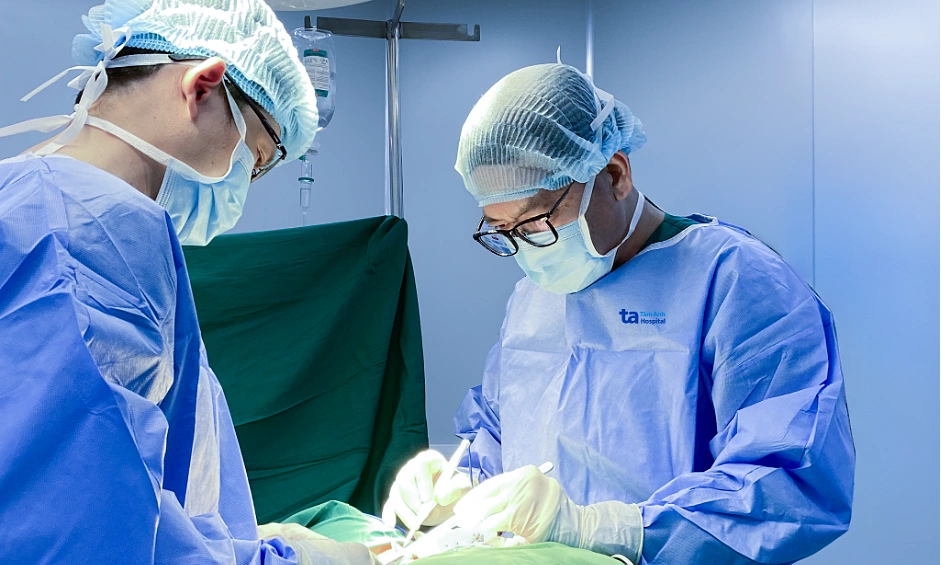
The surgical team performed chest wall reconstruction on Tuan. Through small incisions, about 5 cm, under both armpits, surgeons dissected connective tissue beneath the sternum and released adhesions. This fully freed the muscle and pleura from contraction, creating a safe space between the chest wall, heart, and lungs. Subsequently, the team inserted a highly elastic metal bar beneath the ribs, securing it with a specialized locking system on both sides of the chest wall.
Finally, the team checked intrathoracic pressure and lung expansion to ensure effective respiratory function.
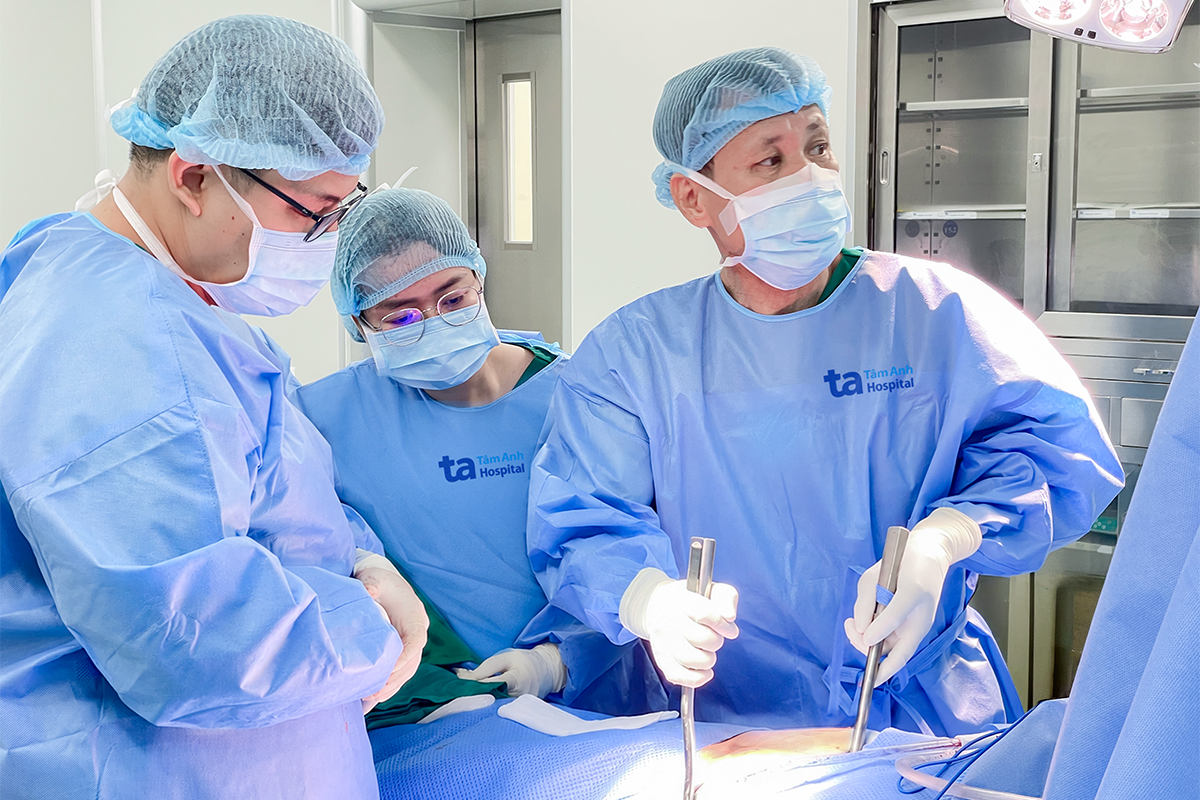 |
Associate Professor Vinh performs chest wall reconstruction surgery on a patient. Photo: Tam Anh General Hospital
Following surgery, Tuan's condition stabilized, with no complications reported. He was discharged after four days. Associate Professor Vinh stated that with this method, the patient's chest would achieve normal symmetry approximately three years after the metal bar is removed.
 |
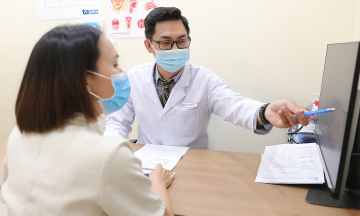
Associate Professor Vinh examines a patient after surgery. Photo: Tam Anh General Hospital
Chest wall deformity is a common congenital condition that requires early diagnosis and appropriate intervention to prevent complications. The optimal time for intervention is during childhood, specifically between 8-12 years old, as the skeletal structure is still pliable, allowing for easier correction and a higher potential for recovery. Delaying treatment can lead to bone structures becoming rigid, complicating corrective procedures.
Bao Anh
*Patient's name has been changed
| Readers can submit questions about cardiovascular diseases here for doctors to answer. |