Upon admission after the accident, the patient was in a deep coma, requiring mechanical ventilation. Scans revealed a right frontal lobe brain contusion with hemorrhage, a skull fracture, a frontal sinus depression fracture, multiple complex craniofacial fractures, and a right femur fracture.
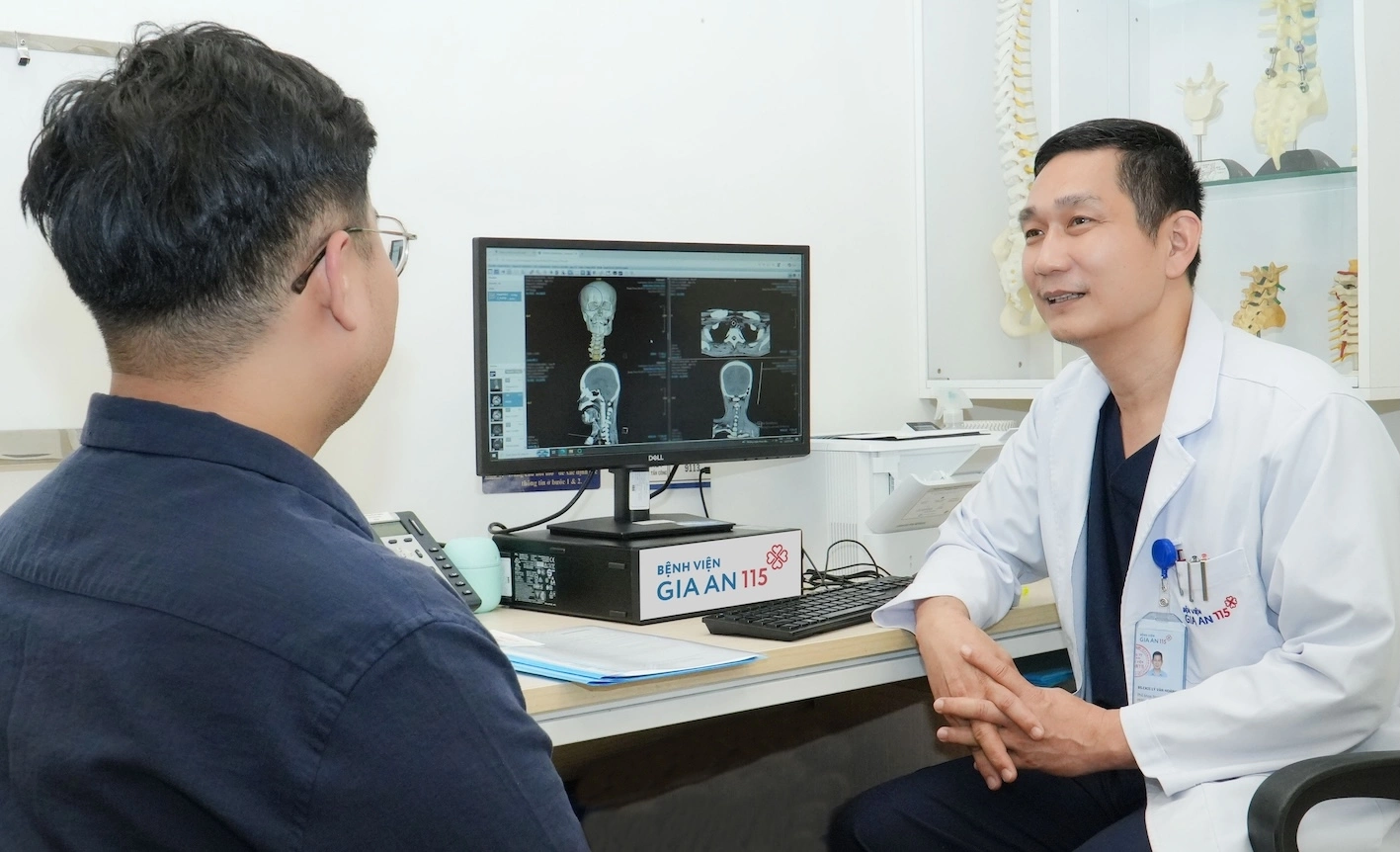
Dr. Ly Van Hoang, Deputy Head of Neurosurgery - Spine at Gia An 115 Hospital, stated on 10/7 that this was a very severe multiple trauma case. The traumatic brain injury directly threatened the patient's life, necessitating urgent intervention. Additionally, complex facial injuries and a right femur fracture required a comprehensive treatment plan to preserve neurological and motor function.
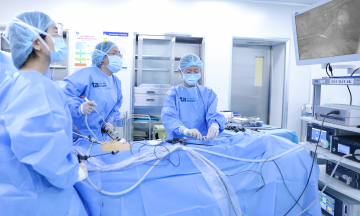
Following an interdisciplinary consultation, doctors decided to perform two simultaneous surgeries under a single general anesthetic. The surgical teams addressed the brain injury and fixed the fractured femur, aiming to shorten treatment time and reduce the risk of complications.
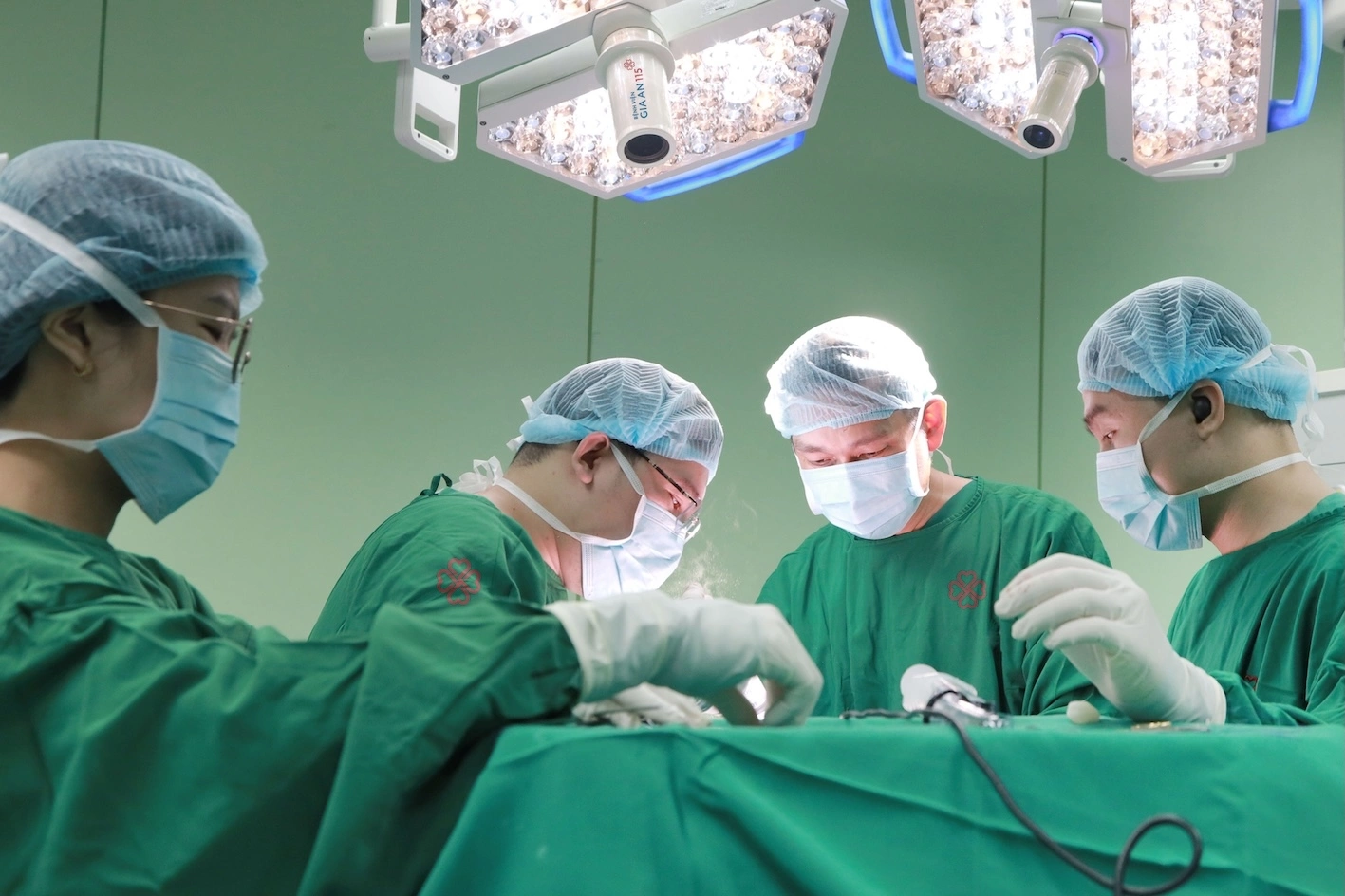 |
Doctors operate on the patient. Photo: Hospital provided |
During the brain surgery, doctors discovered a fractured skull fragment embedded in the brain parenchyma, which had torn the dura mater, the protective membrane covering the brain. The surgical team successfully removed the bone fragment, repaired the dura mater, and reconstructed the skull defect using a titanium mesh. The procedure was supported by multi-modal intraoperative neurophysiological monitoring (IONM), which continuously tracks nervous system activity to detect abnormalities early, thereby minimizing the risk of nerve damage.
Immediately afterward, the orthopedic trauma team proceeded to fix the femur fracture using a locked intramedullary nail. This crucial step helped stabilize the injury quickly and facilitated the subsequent resuscitation process.
Despite the successful surgeries, the patient faced several severe post-operative complications, including pneumonia, sepsis, and a respiratory fungal infection. After over two weeks of intensive treatment in the intensive care unit, with coordination from multiple specialties, the infections were brought under control, and the patient's health gradually recovered.
 |
Patient recovering after treatment. Photo: Hospital provided |
According to Dr. Hoang, multiple trauma resulting from traffic accidents is a leading cause of death and long-term disability in young individuals. Dangerous injuries, such as traumatic brain injury or intracranial hemorrhage, may not always present obvious symptoms immediately after an accident. Therefore, it is crucial for victims to be transported to a medical facility capable of resuscitation and multidisciplinary treatment as quickly as possible, to increase survival chances and minimize long-term sequelae.
Le Phuong