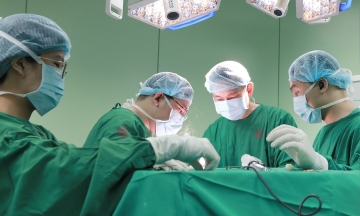
Ngoc felt fatigued, had pale skin, and experienced a rapid heartbeat. Believing it was due to anemia, she took iron supplements, which caused constipation. A CT scan at Tam Anh General Hospital, Ho Chi Minh City, revealed a 4x5 cm tumor on her left adrenal gland. Doctor Le Phuc Lien, Head of the Female Urology Unit at the Center for Urology - Nephrology - Andrology, stated that the large tumor altered surrounding anatomical structures.
According to Doctor Lien, approximately 90% of patients with pheochromocytoma experience hypertension. However, Ngoc's case belonged to the "silent" type, where blood pressure remained normal, making it easily overlooked. Tests showed elevated metanephrine levels in her blood, indicating the tumor was still silently secreting hormones. Without treatment, prolonged excess hormone levels could damage the heart muscle, lead to chronic heart failure, and pose risks of compression or bleeding.
A "catecholamine storm" can be triggered, especially when a patient experiences stress, exertion, physical impact, or abdominal surgery. This condition involves the sudden, massive release of catecholamine hormones, causing blood pressure to surge, which can result in stroke, myocardial infarction, or acute pulmonary edema, threatening life.
Given that the left adrenal gland is located directly in front of the pancreas, below the splenic vein, and above the left kidney, the large tumor compressed these organs. Doctor Lien decided to perform surgery using the Da Vinci Xi robot to minimize the risk of damaging vital structures and avoid postoperative complications. Moreover, Ngoc suffered from chronic anemia, and robotic surgery helped reduce blood loss during the operation, mitigating the risk of worsening her anemia.
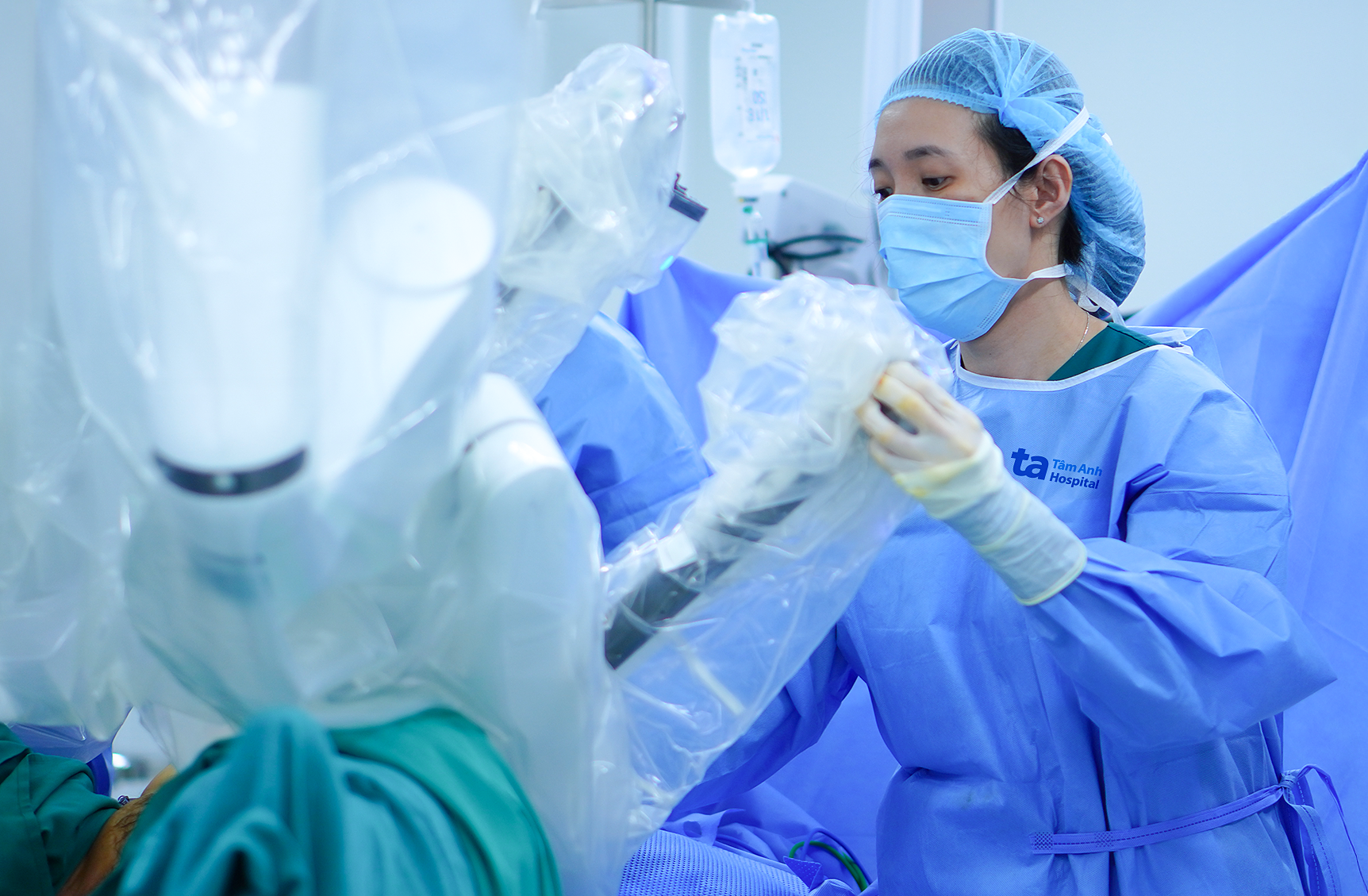 |
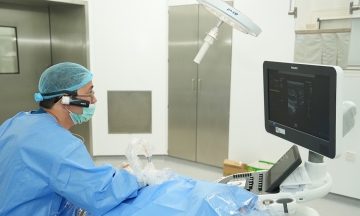
Doctor Le Phuc Lien inserting robotic arms into the abdominal cavity, preparing for Ngoc's surgery. *Photo: Tam Anh General Hospital* |
As the robotic arms accessed the abdominal cavity, the surgical team discovered that the tumor was nourished not only by the three usual main blood vessels but also by an additional abnormal proliferative blood vessel, increasing the risk of bleeding during dissection.
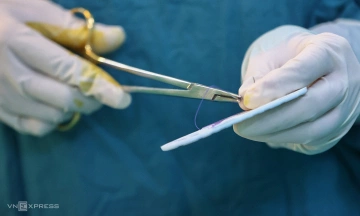
Doctor Lien utilized the robot arm's 3D camera, which magnified images 10-15 times, to identify each nourishing blood vessel and control them before touching the tumor. The doctor skillfully manipulated the robotic arms, rotating 540 degrees, to sequentially clip and cut the blood vessels before dissecting the tumor from the pancreas, splenic vein, and upper pole of the kidney. This approach resulted in minimal blood loss for the patient and preserved adjacent organs.
Concurrently, the anesthesia team continuously adjusted hemodynamics, as even a slight touch to the tumor could cause a massive release of hormones, leading to a sudden surge in blood pressure.
Forty-eight hours after surgery, Ngoc was able to walk gently and was discharged from the hospital. Doctors advised her to monitor her blood pressure and undergo regular metanephrine level tests to assess treatment effectiveness and detect any early risk of recurrence.
 |
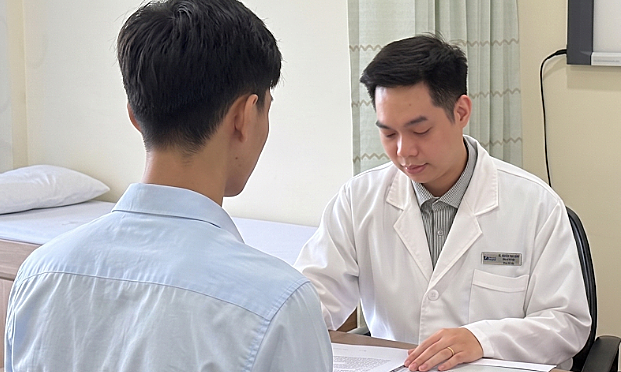
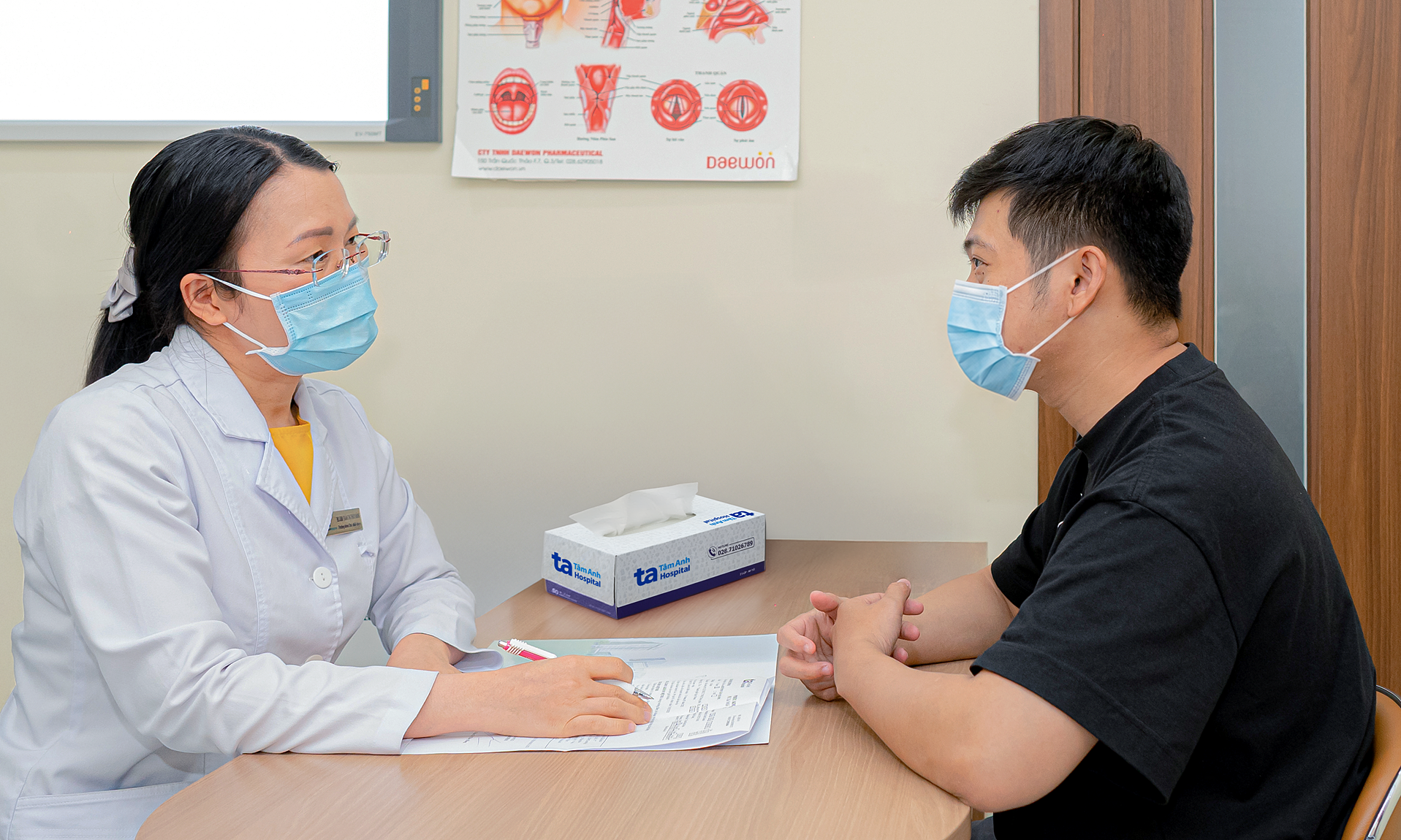
Doctors examining Ngoc after surgery. *Photo: Tam Anh General Hospital* |
Pheochromocytomas develop from chromaffin cells in the adrenal medulla, located above the two kidneys. Most adrenal tumors are benign; however, if not detected and treated promptly, they can cause dangerous cardiovascular complications or progress to malignancy. These tumors can secrete large amounts of hormones such as catecholamines, including adrenaline and noradrenaline, which elevate blood pressure, cause heart arrhythmias, and affect many body organs. Some cases present no clear symptoms, making the condition easily overlooked.
Doctor Lien advises that individuals experiencing prolonged or episodic hypertension, headaches, palpitations, rapid heartbeat, sweating, hand tremors, anxiety, or weight loss should seek medical examination to determine the cause. Early detection of a "silent" tumor and timely surgery can help patients avoid dangerous complications.
Dinh Lam