In early january, Hoai and her husband brought their one and a half year old son to the Center for Reproductive Assistance, Tam Anh General Hospital Ho Chi Minh City (IVF Tam Anh Ho Chi Minh City) to express their gratitude to the doctors. "I only had one embryo, the chances were very slim, but fortunately, we had a child after many years of waiting," Hoai shared.
Hoai had undergone in vitro fertilization (IVF) at various hospitals for four years, collecting many oocytes but only creating five embryos, all five of which resulted in failed transfers. Master of Science, Doctor Giang Huynh Nhu, Director of IVF Tam Anh Ho Chi Minh City, explained that Hoai was older, and although her ovarian reserve had not significantly declined, the quality of her oocytes was poor. Additionally, her husband's genetic test revealed chromosomal abnormalities. These factors likely contributed to the couple culturing few embryos, increasing the risk of genetic abnormalities in the embryos, and leading to multiple failed embryo transfers.
Doctor Nhu developed a special protocol for ovarian stimulation, but Hoai's body responded slowly, requiring a longer course of medication than usual. Ultrasound showed uneven development of ovarian follicles. The doctor retrieved 18 oocyte clusters, but only 8 oocytes were successfully fertilized in vitro with her husband's sperm. This resulted in 8 day 3 embryos, most of which were poor quality, with uneven cell division and slow division rates. From these, one good quality embryo and one average quality embryo developed by day 5. After biopsy, only one healthy embryo remained, which was cryopreserved, awaiting the ideal time for transfer.
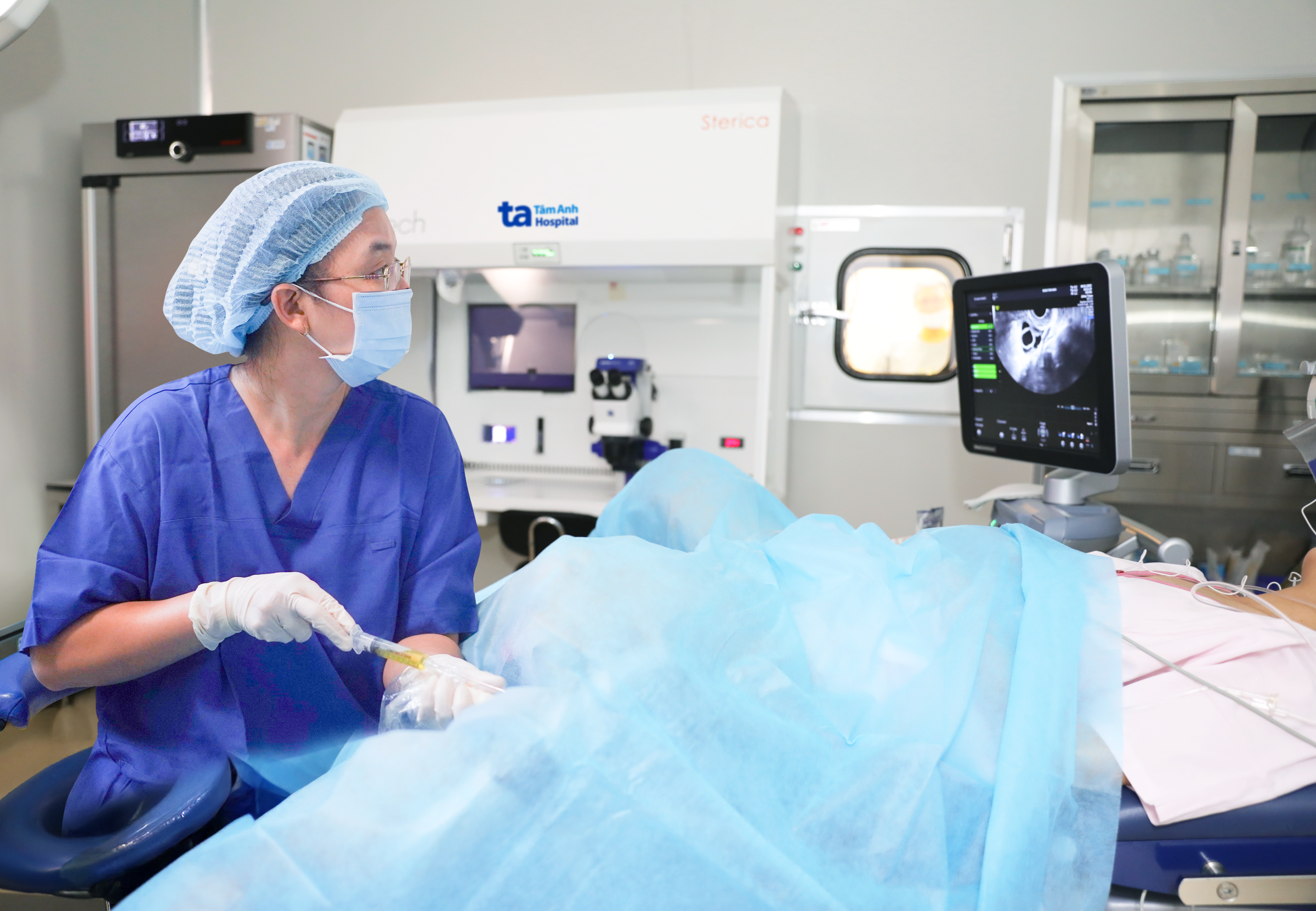 |
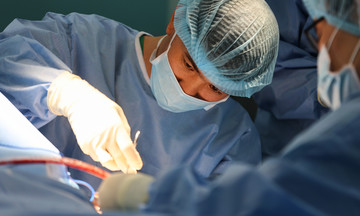
Master of Science, Doctor Giang Huynh Nhu carefully retrieves oocytes for a patient. Photo: Thanh Duy |
Hoai received medication to treat endometrial hyperplasia and chronic endometritis for one month before Doctor Nhu transferred the single embryo into her uterus. She finally conceived and gave birth to a healthy child. They plan to continue IVF treatment for another child once their son is older.
According to Doctor Nhu, while a large number of oocytes increases the chance of embryo creation in in vitro fertilization, embryo quality is the determining factor for successful pregnancy. Poor sperm and oocyte quality or genetic abnormalities can reduce embryo formation rates and lead to poor quality embryos. At IVF Tam Anh, artificial intelligence-integrated embryo culture technology continuously monitors embryos, improving embryo quality and increasing success rates.
Doctor Nhu advises couples who have not conceived after one year of marriage (six months for women over age 35) to seek early examination and treatment with an appropriate protocol to increase success rates and reduce costs.
Hoai Thuong
*Patient's name has been changed