For many people, white rice is often the "centerpiece" of a meal and the first food consumed. However, major medical studies in recent decades have revealed a surprising truth: The order in which foods are eaten during a meal can directly influence blood sugar levels, weight, and even the risk of cardiovascular disease.
Associate Professor Lieu Nghi Thanh from Sun Yat-sen University of Medical Sciences, China, states that studies indicate that simply consuming carbohydrates at the end of a meal leads to significantly more stable post-meal blood sugar. This method is even more effective and easier to implement than meticulously calculating every calorie or nutrient ratio.
The expert-recommended eating order is:
Vegetables: Eat first to provide fiber.
Protein: Meat, fish, tofu, etc.
Starches: Rice, vermicelli, pho, etc., eaten last.
This method works by stimulating the intestines to secrete the hormone GLP-1, which slows down gastric emptying, increases feelings of fullness, and suppresses appetite.
Many mistakenly believe that weight loss requires cutting out meat, but meat plays an important role in maintaining homeostasis. Doctor Tran Duc Huan from Kaohsiung Tzu Chuan Hospital, China, explains that when protein and vegetables are consumed first, they form a "protective layer" on the stomach lining. This prevents a sudden spike in sugar absorption from starches eaten afterward.
Prioritize high-quality protein and avoid processed meats (sausages, bacon) to protect the cardiovascular system.
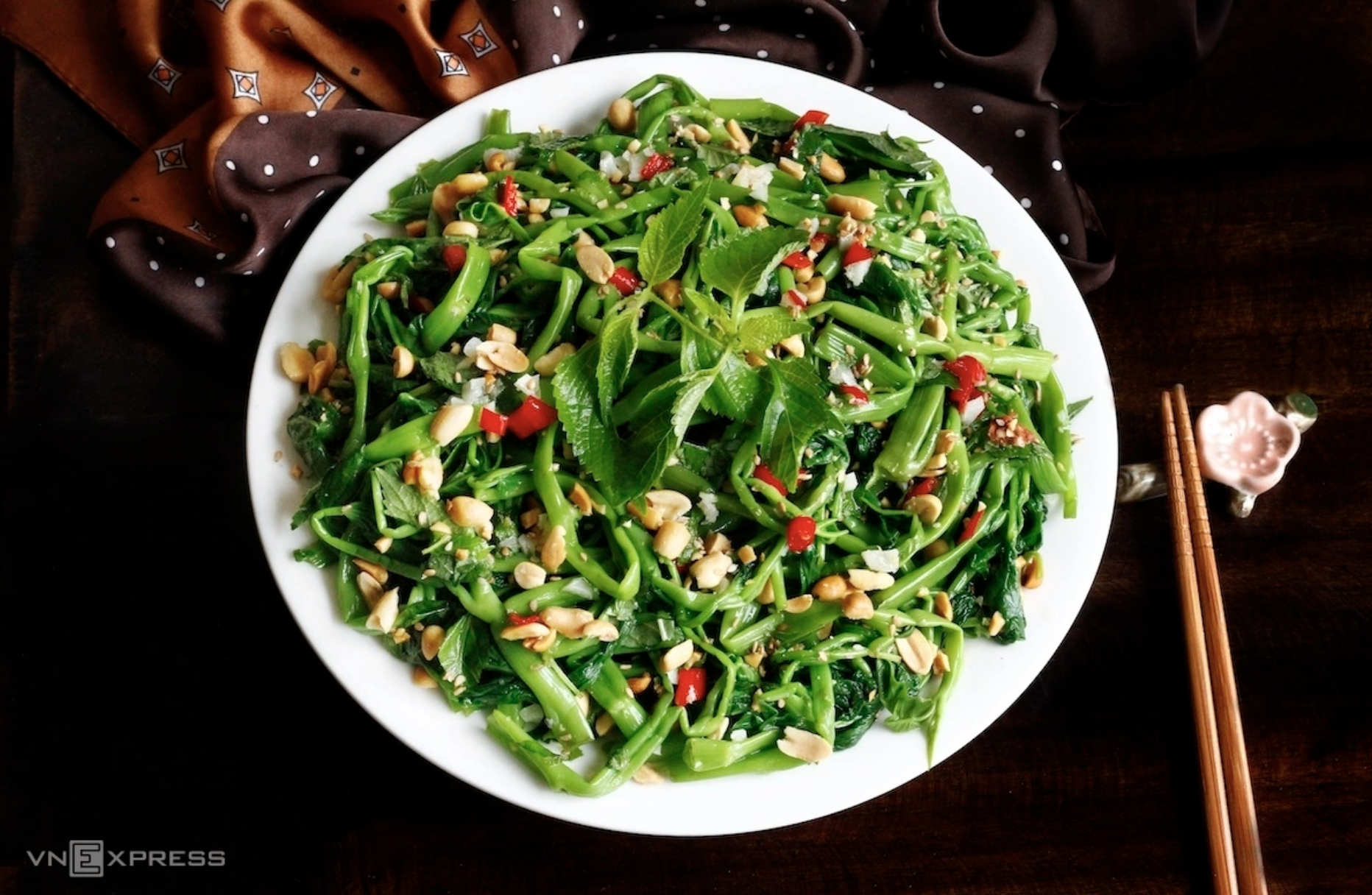 |
Starting a meal with a plate of vegetables, followed by savory dishes, and finishing with starches is an effective way to manage blood sugar. Bui Thuy |
Starting a meal with a plate of vegetables, followed by savory dishes, and finishing with starches is an effective way to manage blood sugar. Bui Thuy
While the "vegetables first, carbs last" rule is effective for young individuals, Doctor Chu Kiet Dinh from National Cheng Kung University Hospital, China, cautions that people over 60 should be careful. Excessive dietary restriction can lead to protein deficiency, causing sarcopenia (muscle loss syndrome), which increases the risk of falls and reduces immunity.
Advice for older adults includes:
Ensuring adequate protein: Each meal should contain about 20 g of protein (equivalent to a palm-sized piece of fish or meat).
Prioritizing soft foods: Tofu, steamed eggs, and fish are suitable for dental health.
Distributing evenly: Spread protein intake uniformly across all three meals—breakfast, lunch, and dinner—to optimize muscle synthesis.
The American and European Heart Associations have recently emphasized the importance of an overall "eating pattern" rather than focusing on a single nutrient. A balanced diet including vegetables, whole grains, lean meats, and healthy fats, combined with a scientific eating order and appropriate physical activity, is a long-term plan to prevent chronic diseases.
My Y (According to Yahoo TW)