Eng English
China 中国人

Eng English
China 中国人
  • News
  • World
  • Business
  • Entertainment
  • Sports
  • Law
  • Education
  • Health
  • Lifestyle
  • Travel
  • Science
  • Digital
  • Automobiles
  • Trở lại Thể thao
  • Health
Sunday, 2/8/2026 | 08:02 GMT+7

Three air conditioner habits that can affect ears

Using the air conditioner too cold, directing airflow at the ears, and not maintaining proper room humidity can cool the ears, increase eustachian tube pressure, and cause pain.

Air conditioners are a familiar device in summer. However, improper use of air conditioners not only increases the risk of respiratory illnesses but also affects ear health, especially in young children, the elderly, and individuals with ear, nose, and throat conditions.

Master, Doctor Nguyen Thuy Linh, from the Ear, Nose, and Throat Department at Tam Anh General Hospital in Hanoi, points out common mistakes that can affect ear health when using air conditioners.

Setting the air conditioner too cold

Setting the air conditioner below 18 degrees C for rapid cooling creates a significant temperature difference between the outdoor environment and the air-conditioned room. This sudden change can affect the function of the eustachian tube, a structure connecting the middle ear to the nasopharynx, which plays a role in balancing middle ear pressure.

When the eustachian tube malfunctions or becomes temporarily blocked, middle ear pressure is not regulated effectively, often leading to feelings of ear fullness, tinnitus, discomfort, or ear pain.
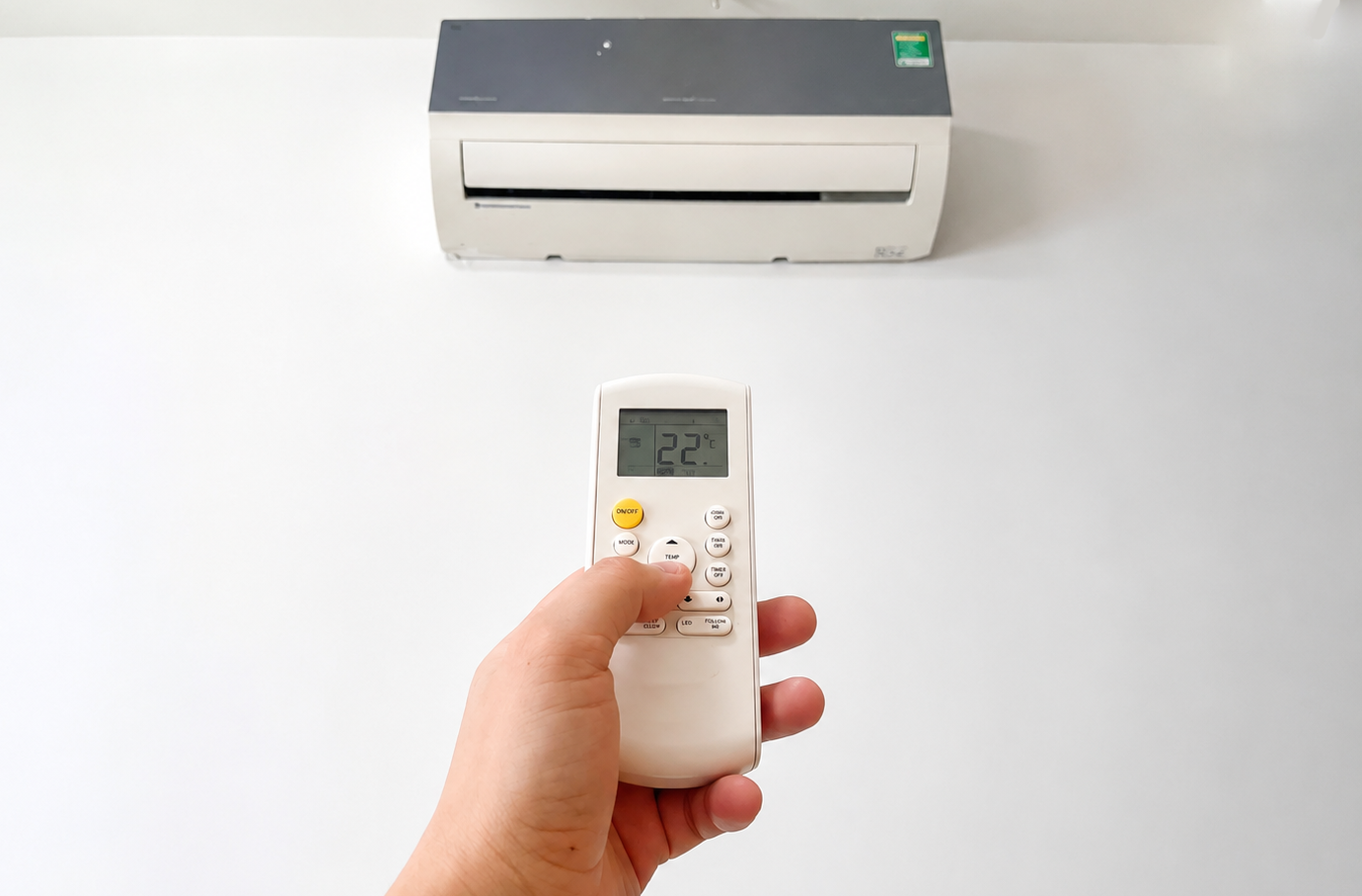
Setting the air conditioner temperature too low can cause ear pain and tinnitus. *Duy Anh*

Directing air conditioner airflow at the head

Many individuals habitually sleep or work directly under the air conditioner's vent. When cold air blows directly onto the head, face, and ears for extended periods, it can cause localized vasoconstriction, reducing blood flow to tissues. This can lead to cold ears, aches, or discomfort, especially in sensitive individuals or those with existing ear, nose, and throat conditions.

Not maintaining proper air humidity

According to Doctor Linh, continuous air conditioner operation reduces room humidity. Without adequate humidification or ventilation, the nasal and pharyngeal mucous membranes can easily dry out.

Normally, the mucus layer and the mucociliary clearance system on the mucous membrane surface play a role in retaining and eliminating dust, viruses, and bacteria from the respiratory tract. When the mucous membranes dry out, this protective mechanism weakens, creating conditions for pathogens to invade the nasopharynx. These pathogens can then spread to the middle ear via the eustachian tube, increasing the risk of otitis media.

To mitigate the adverse effects of air conditioners on the ears and upper respiratory tract, users should maintain the air conditioner temperature between 26-28 degrees C, avoiding a difference of more than 8-10 degrees C from the outdoor temperature. Avoid directing cold airflow directly at the face and ears for extended periods. Maintain room humidity at 40-60% by using a humidifier or placing a bowl of water in the room. Regularly clean air conditioner filters to limit the accumulation of dust, mold, and microorganisms.

Individuals with nasal and pharyngeal conditions such as rhinitis, sinusitis, or allergic rhinitis should seek treatment to manage these conditions and reduce the risk of eustachian tube dysfunction and otitis media. If symptoms like ear pain, tinnitus, hearing loss, ear fullness, or persistent ear discharge occur, patients should consult an Ear, Nose, and Throat specialist.

Minh Duong

Readers can ask questions about ear, nose, and throat conditions here for doctors to answer.
By VnExpress: https://vnexpress.net/ba-thoi-quen-dung-dieu-hoa-co-the-anh-huong-den-tai-5104108.html
Tags: otitis media air conditioner earache

News in the same category

Saving money for family vaccinations

Saving money for family vaccinations

Fearing illness might disrupt their children's education and cause income loss, many factory workers and street vendors are dedicating a portion of their wages to vaccinations.

How diet can slow aging

How diet can slow aging

Eating plenty of green vegetables, fruits, whole grains, and omega-3 rich fish, while limiting added sugar, can slow the aging process.

Why hot weather reduces sleep quality

Why hot weather reduces sleep quality

High temperatures can disrupt the body's natural thermoregulation, making it difficult for many to fall asleep, leading to restless nights and frequent awakenings.

Who should undergo regular kidney function checks?

Who should undergo regular kidney function checks?

Individuals with diabetes, high blood pressure, a family history of kidney disease, or those on long-term medication should undergo regular kidney function checks, even without noticeable symptoms.

Breakfast tips to help balance cholesterol

Breakfast tips to help balance cholesterol

A breakfast rich in soluble fiber and protein, while limiting saturated fat, sugar, and processed foods, can help maintain healthy cholesterol levels.

5 low-calorie, high-protein dishes for muscle gain

5 low-calorie, high-protein dishes for muscle gain

Skinless chicken, tuna, tofu, and lean beef, rich in protein and low in calories, can help individuals feel fuller longer and support weight loss.

How long until you can return to sports after an ankle sprain?

How long until you can return to sports after an ankle sprain?

A 35-year-old in Hanoi asks about recovery time and surgical necessity for talus bone marrow edema after an ankle sprain from playing pickleball.

How long do intestinal infections last?

How long do intestinal infections last?

A reader suffering from an intestinal infection, prone to diarrhea and requiring a restrictive diet, asks about the duration of the infection and the possibility of complete recovery. (Ha, Ho Chi Minh City)

Morning habits that can make you age faster

Morning habits that can make you age faster

Checking your phone immediately after waking up and skipping breakfast can increase stress, affect metabolism, and accelerate the aging process over time.

Parotid abscess leads to unexpected discovery of "flesh-eating bacteria" infection

Parotid abscess leads to unexpected discovery of "flesh-eating bacteria" infection

A 60-year-old man, experiencing swelling and pain in his parotid region, unexpectedly tested positive for the bacteria causing Whitmore's disease, commonly known as "flesh-eating bacteria".

Eng English
China 中国人
  • News
  • World
  • Business
  • Entertainment
  • Sports
  • Law
  • Education
  • Health
  • Lifestyle
  • Travel
  • Science
  • Digital
  • Automobiles
FPT Tower, 10 Pham Van Bach Street, Dich Vong Ward,
Cau Giay District, Hanoi, Vietnam
Email: contacts@vnportal.net
Tel: 028 7300 9999 - Ext 8556
Advertise with us: 090 293 9644
Register
© Copyright 2026 vnnow.net. All rights reserved.
Terms of use Privacy policy Cookies