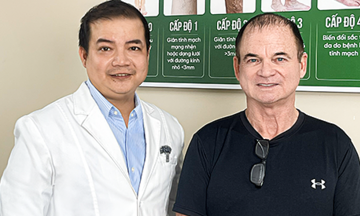
After two neck ultrasounds revealed a 1.5 cm nodule in the right lobe and a larger 4.8 cm nodule in the left thyroid lobe, along with left cervical lymph nodes, Hung sought treatment at Tam Anh General Hospital Ho Chi Minh City. Dr. Do Tuong Huan, a senior specialist in the Department of Breast - Head and Neck Surgery, confirmed a firm nodule in the left thyroid lobe that moved with swallowing, accompanied by cervical lymph nodes. The patient was diagnosed with thyroid cancer that had already metastasized to the cervical lymph nodes.
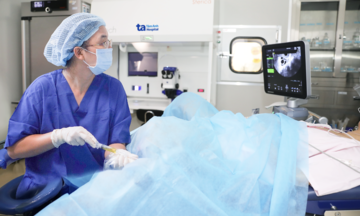
Doctors recommended a total thyroidectomy and cervical lymph node dissection. The procedure aimed to preserve cranial nerve 11, the recurrent laryngeal nerve, and the parathyroid glands. Surgeons made two parallel incisions along the natural creases of the patient's neck, ensuring the surgical scars would align with the skin folds. They then carefully separated muscle layers and thyroid fatty tissue to completely remove the tumor from the left lobe and perform the cervical lymph node dissection.
 |
Dr. Huan and his team surgically removed Hung’s entire thyroid tumor. *Photo: Tam Anh General Hospital* |
Following surgery, Hung must limit iodine-rich foods, such as iodized salt, seafood, and seaweed. This dietary restriction helps enhance the effectiveness of radioactive iodine treatment, as lower iodine levels in the body allow radioactive medication to be better absorbed by any remaining thyroid cells. After a total thyroidectomy, patients must take lifelong thyroid hormone replacement to compensate for hormones the body no longer produces naturally, which helps prevent cancer recurrence.
According to Globocan 2022 data, thyroid cancer recorded over 821,000 new cases and 47,500 deaths globally. Dr. Huan noted that papillary thyroid cancer typically has a good prognosis if detected early. Post-surgery, patients require ongoing monitoring of thyroid hormone levels, regular ultrasounds, thyroglobulin tests, and blood tests for anti-thyroglobulin antibodies (anti-TG) to screen for recurrence risk.
Minh Tam
*Patient's name has been changed
| Readers can submit questions about cancer here for doctors to answer |