The year-end and new year period is a time for numerous crowded festivals and cultural-entertainment events. Amid hot weather and confined spaces, attendees are prone to health incidents. The 115 Ho Chi Minh City Emergency Center advises people to observe simple yet practical measures to prevent risks and minimize unfortunate accidents.
Preventing heatstroke and heat exhaustion at daytime events
Daytime outdoor festivals expose the body to direct sunlight for extended periods, combined with physical activity, easily leading to heatstroke or heat exhaustion. Attendees should note:
Appropriate attire: Opt for cool, sweat-absorbent, light-colored clothing to minimize heat absorption. Avoid tight-fitting or restrictive fabrics.
Body protection: Bring a wide-brimmed hat, sunglasses, and an umbrella. Use sunscreen when necessary.
Hydration and electrolyte replenishment: Excessive sweating causes fluid and electrolyte loss, so proactively drink water or electrolyte-replacement drinks, even before feeling thirsty.
Avoiding hypoglycemia and fainting in crowds
Crowded environments, lack of oxygen, prolonged standing, and insufficient food intake are common causes of hypoglycemia and fainting. Attendees should:
Pre-event energy intake: Eat a light meal before attending the event. Individuals with a history of hypoglycemia should carry candy, biscuits, or soft drinks for immediate use.
Early recognition of unusual signs: If experiencing dizziness, lightheadedness, tinnitus, or cold sweats, quickly inform those nearby, move to a well-ventilated area to rest, and replenish energy.
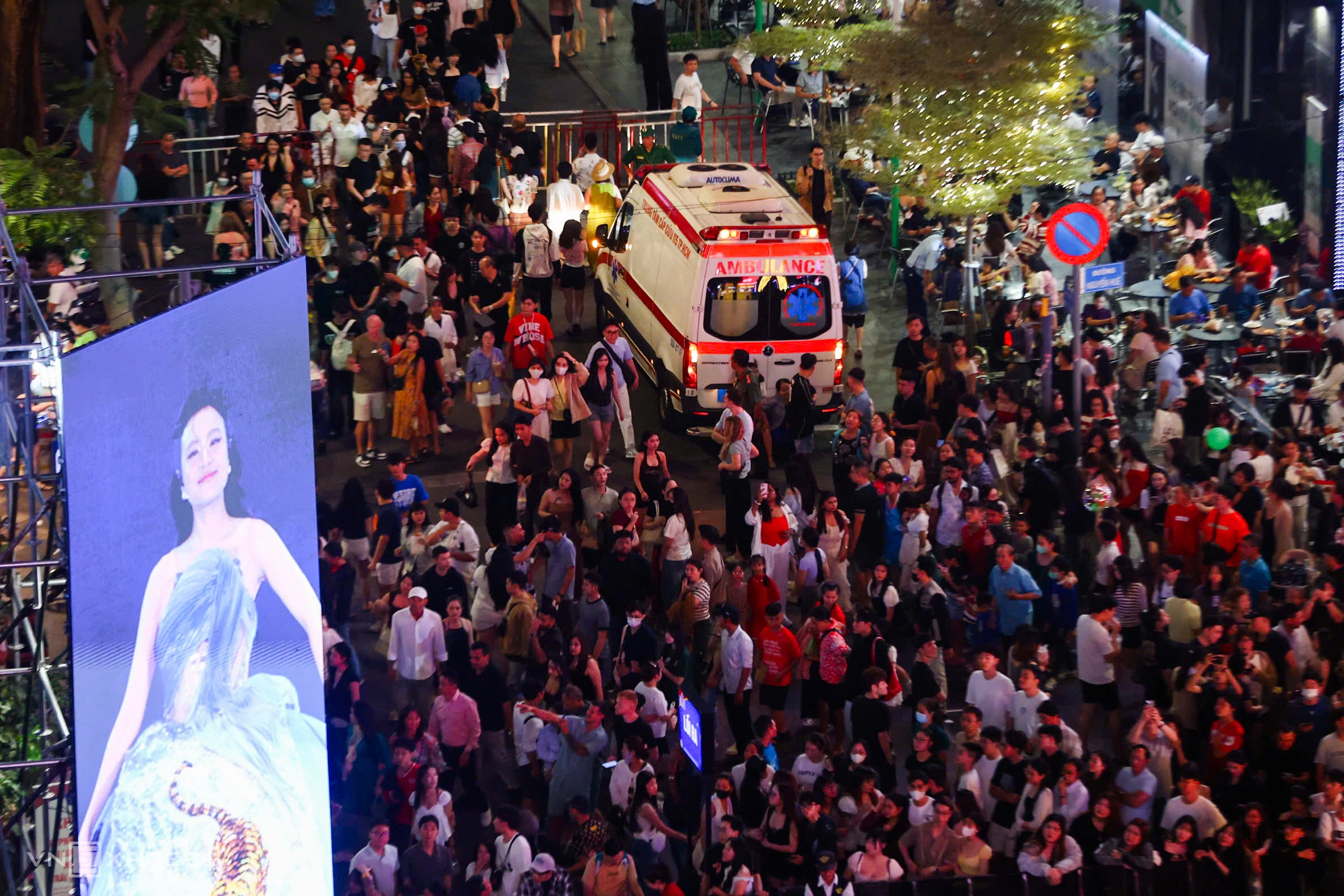 |
An ambulance is deployed near the stage to ensure audience safety during the 2026 New Year's Eve program at Nguyen Hue Walking Street in Ho Chi Minh City. *Photo: Quynh Tran* |
Notes for high-risk groups
Children, the elderly, pregnant women, and individuals with underlying medical conditions require priority protection:
Choose a safe location: Stand in open, outer areas, avoiding crowds or proximity to the stage.
Carry personal medication: Loud noise and oxygen deprivation can trigger chronic conditions. Patients should carry preventive medication such as asthma inhalers or sublingual tablets for heart conditions.
Emergency response procedures
Proactive observation and correct responses help reduce accident risks:
Identify exits and medical stations: Upon arrival at the venue, observe all entry/exit points and locations of mobile medical posts.
Move safely: If chaos erupts, do not go against the flow of people, and avoid bending down to pick up items to prevent being pushed over or trampled.
Call for timely assistance: If someone shows signs of fainting, difficulty breathing, or injuries from crowding, quickly call 115 or take the person to the nearest medical station.
Three golden rules for safe festival attendance
Drink enough water and eat light meals before and during participation.
Avoid standing too long in crowded, poorly ventilated areas.
Always observe your surroundings and be ready to seek medical assistance when needed.
Le Phuong