The Northern and Central regions are currently experiencing the second heatwave of May 2026. Meteorological agencies report this heatwave is more intense than the mid-month period, placing it among the three hottest May heatwaves recorded since 2021.
Yesterday, Vinh Yen station in Phu Tho recorded the nation's highest temperature at 40,8 degrees Celsius, with Lang station in Hanoi close behind at 40,7 degrees Celsius. Temperatures of 38-40 degrees Celsius are prevalent across the Northern Delta and the region from Thanh Hoa to Thua Thien Hue, causing deserted streets and disrupting daily life.
In addition to high temperatures, weather platforms AccuWeather and Weather Online have warned that the maximum ultraviolet (UV) index this week in Hanoi and TP HCM is reaching 11. Central provinces such as Quang Tri, Thua Thien Hue, and Quang Ngai are recording radiation levels of 10-13, which typically peak between 10h and 14h.
The US Environmental Protection Agency (EPA) classifies radiation levels of 11 or higher as extremely dangerous, capable of causing skin and eye burns after just 15 minutes of direct exposure, with 13 being the maximum level. The National Hydro-Meteorological Forecasting Center warns that these radiation levels directly threaten the health of the elderly, young children, and those working outdoors.
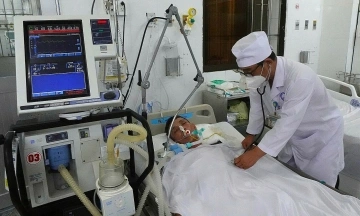
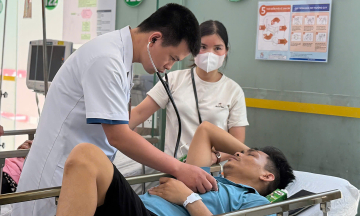
Doctor Ngo Van Ty, from the Department of Oncology at Hanoi Medical University Hospital, explained the destructive mechanisms of sunlight. He noted that uva penetrates deep, causing skin aging, while uvb causes burns and dna mutations that can lead to cancer. Doctor Ty emphasized that these damages accumulate subtly over time, often leading people to underestimate the risks. Outdoor workers, including laborers, delivery personnel, and farmers, face the highest risk of malignant melanoma due to significant cumulative UV exposure. Solar radiation also contributes to cataracts, reduced skin immunity, and keratitis.
Doctor Nguyen Trieu Vu from University Medical Center Ho Chi Minh City concurred, adding that ultraviolet radiation can exacerbate light-sensitive conditions like lupus erythematosus and atopic dermatitis. Although the ozone layer blocks most uvc, the uva and uvb radiation reaching the Earth's surface can still damage skin cells throughout the year, with the most significant harm occurring during summer.
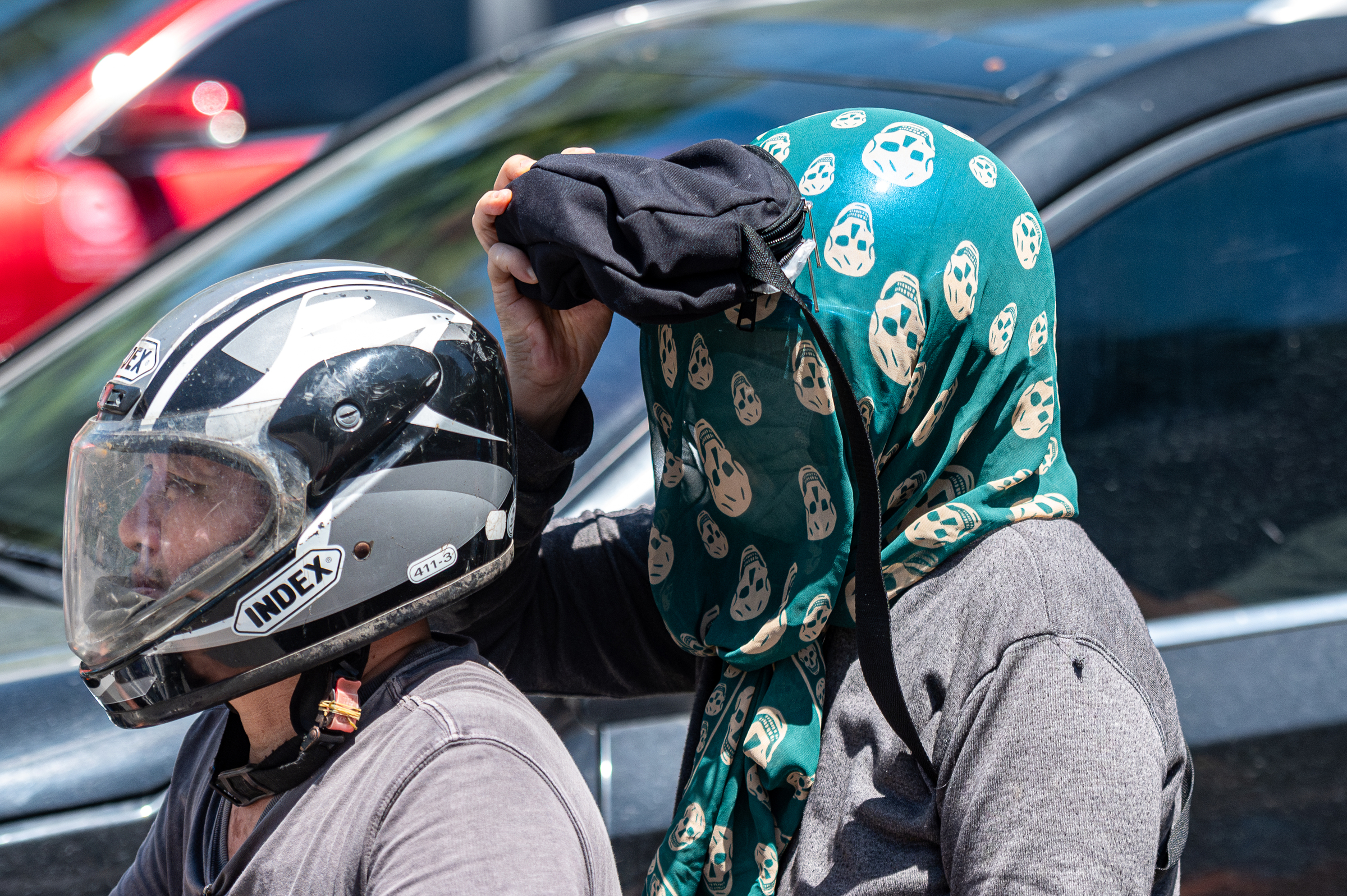 |
Heatwave in Hanoi. *Photo: The Bang* |
To protect against UV radiation, experts advise applying broad-spectrum sunscreen with an spf of 30 or higher. Gel formulations are often preferred for quick absorption and to avoid pore blockage that can cause acne. Reapplication is crucial every 2-3 hours or after heavy sweating. Additionally, lip balm with an spf of 15 or higher should be used. Individuals should minimize time outdoors between 10h and 16h. If outdoor exposure is unavoidable, it is important to cover the body with dark, long-sleeved clothing, wide-brimmed hats, sunglasses, masks, and gloves, and to seek shade whenever possible.
For nutrition, dilute electrolyte drinks are recommended when sweating heavily, but sugary or energy drinks should be avoided. Families should adopt a balanced diet, limiting high-fat and sugary foods, and reducing excess salt in daily meals. Moderate physical activity is encouraged, but individuals must avoid overexertion during periods of high temperatures.
My Y - Thuy An