


A 3 Tesla MRI scan of Thanh at Tam Anh General Hospital, Ho Chi Minh City, revealed that a portion of his brain and meninges had herniated through a skull base defect, protruding into a deep space behind his nose and maxillary sinus. This area, medically known as the pterygopalatine fossa, is located near the base of the brain and contains vital nerves and blood vessels of the face.
Master, Doctor, Level II Specialist Chu Tan Si, Head of Neurosurgery and Spine Department at the Neuroscience Center, explained that skull base defects, like Thanh's, are often congenital malformations. These defects form during the fetal stage and can remain asymptomatic for many years. Typically, prolonged intracranial pressure, trauma, chronic inflammation, or tissue degeneration over time can cause the skull base defect to widen, allowing the meninges and brain parenchyma to descend. In some instances, defects can develop secondarily due to chronic sinusitis, previous skull base surgery, or undetected prolonged intracranial pressure.
When a skull base defect exists, sustained intracranial pressure can push the meninges and brain tissue outward. The displaced brain parenchyma undergoes chronic irritation, leading to the formation of an abnormal electrical discharge, which causes epileptic seizures like those experienced by Thanh.
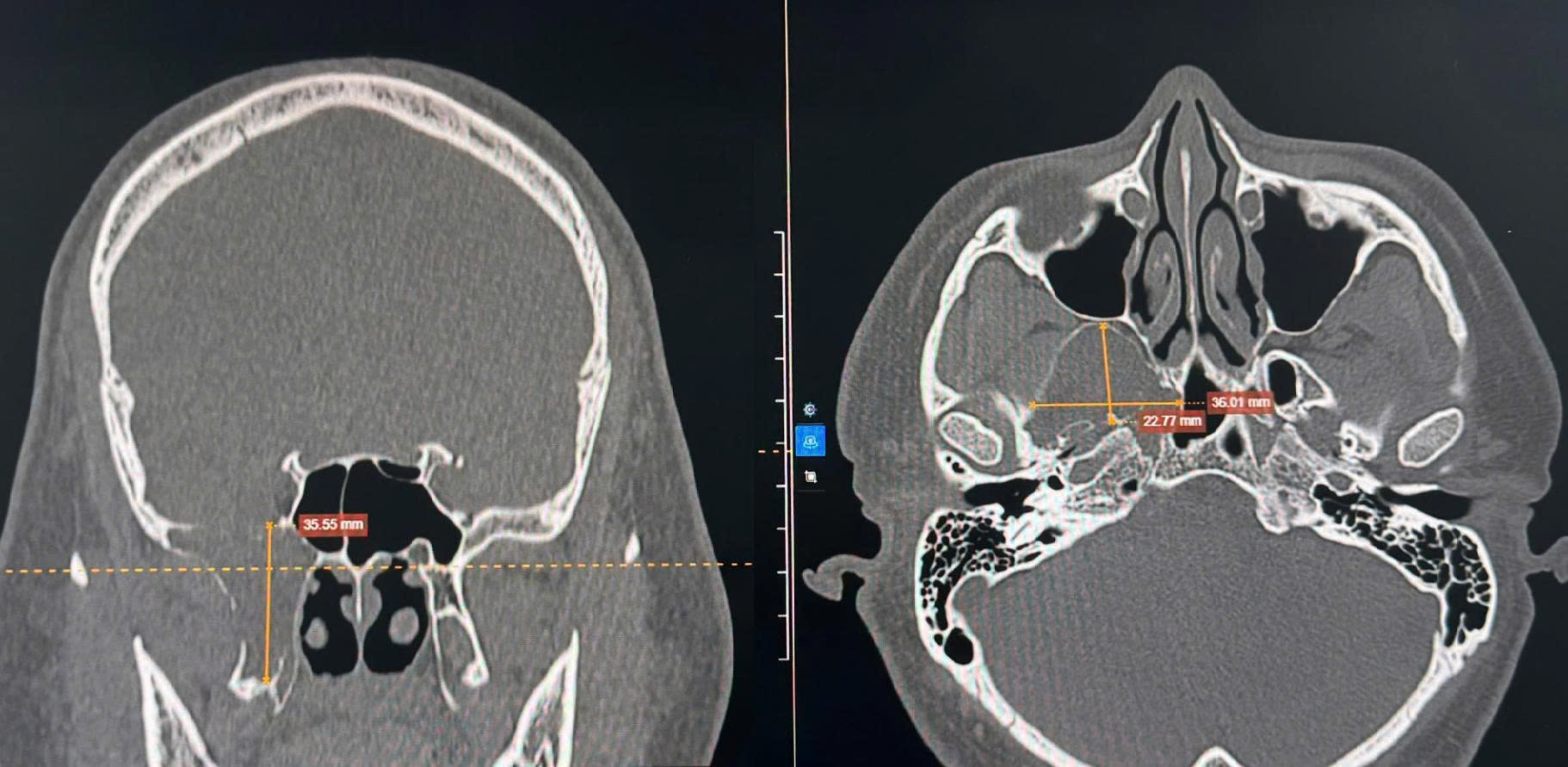 |
An MRI scan revealed the herniated brain and meninges descending through the skull base defect into Thanh's post-nasal space. *Tam Anh General Hospital* |
Following a consultation, the medical team decided on endoscopic transnasal surgery for Thanh. With the aid of a high-resolution endoscopic system, doctors accessed the patient's deep skull base without needing a craniotomy.
Professor, Doctor, Specialist Tran Phan Chung Thuy, Director of the Ear, Nose, and Throat Center, meticulously dissected the nasal mucosa on the left septum and resected the right inferior turbinate to open the right maxillary sinus. Subsequently, the nasal sinus septum was cut, and the sphenopalatine artery was cauterized using a bipolar electrocautery knife to achieve local hemostasis, avoiding damage to healthy tissue. Finally, doctors used a bone drill and rongeur to cut the posterior wall of the maxillary sinus.
At this point, with the pterygopalatine fossa and skull defect exposed, neurosurgeons accessed the herniated sac containing meninges and a portion of brain parenchyma that had descended into the deep post-nasal space. Instead of complete excision, the team meticulously dissected around the neck of the sac, released adhesions, and returned the functional brain tissue to its correct anatomical position within the intracranial cavity. The skull base defect was then repaired using an autologous graft harvested from the patient's thigh. This approach maximized the preservation of active brain tissue and restored the skull base's integrity, reducing the risk of cerebrospinal fluid leakage and future meningitis.
Post-surgery, Thanh recovered well and no longer experienced nasal fluid discharge. During follow-up, no new seizures have been reported. The patient is currently on anti-epileptic medication and undergoes regular check-ups for long-term management.
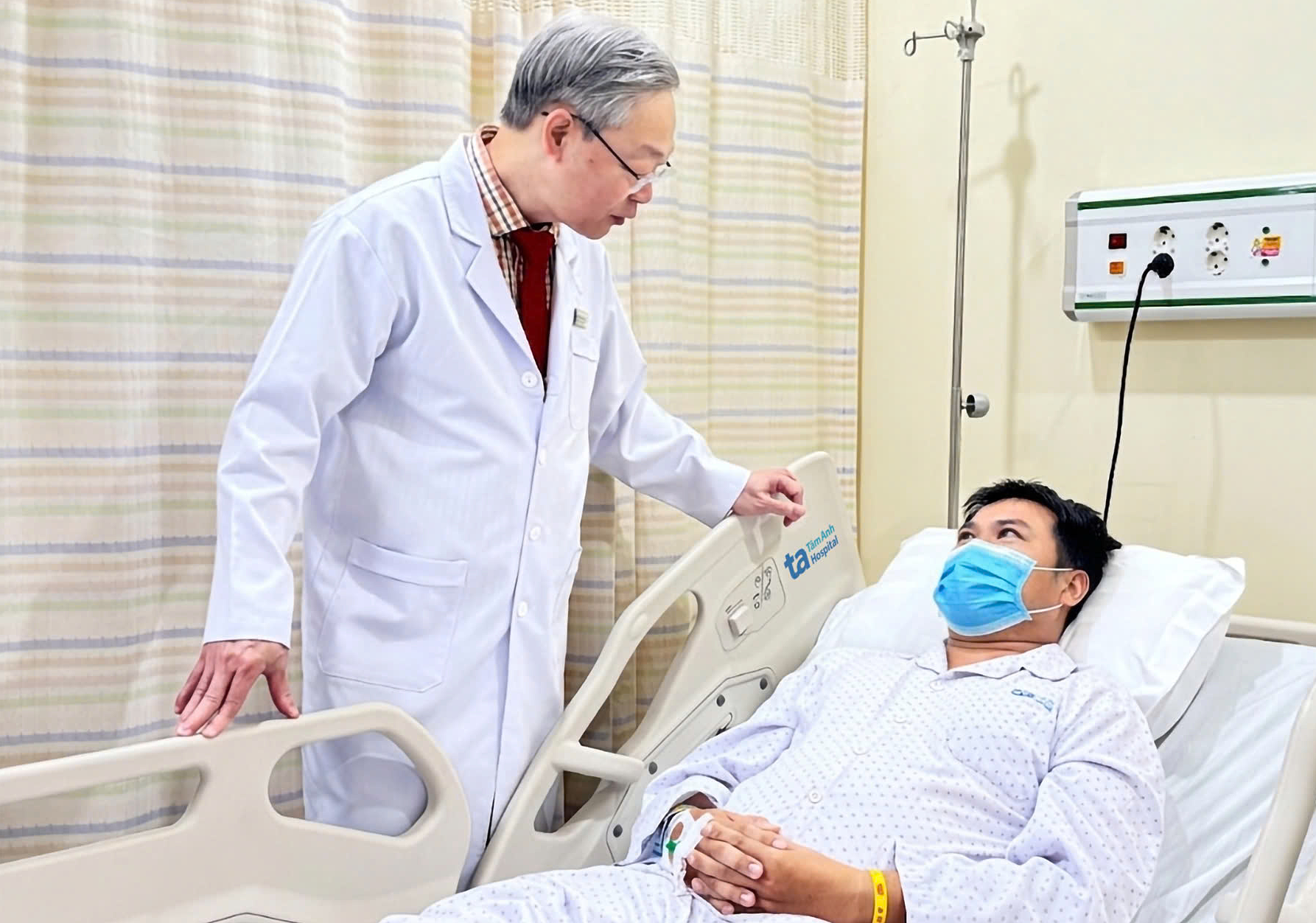 |
Doctor Tan Si examines Thanh after surgery. *Tam Anh General Hospital* |
Doctor Tan Si noted that previously, without skull base endoscopic techniques, patients required open surgery via external approaches, such as a fronto-anterior skull base craniotomy or a facial incision. Surgeons had to retract brain tissue to access the lesion, carrying high risks of brain edema, intracranial hemorrhage, and nerve damage. Post-surgery, patients often faced facial scarring, motor dysfunction, or limb weakness/paralysis. Hospital stays were also longer, compared to the 7-10 days typically associated with current endoscopic surgery.
Doctors recommend that adults experiencing their first epileptic seizure undergo a brain MRI to identify any underlying physical cause. Not all cases of epilepsy are idiopathic (of unknown cause); some can stem from latent skull base structural abnormalities.
By Trong Nghia and Uyen Trinh
| Readers can ask questions about neurological diseases here for doctors to answer |


