Doctor Che Dinh Nghia, Deputy Head of the Orthopedic Trauma Department at Tam Anh General Hospital Hanoi, states that injuries from car accidents are classified as high-energy trauma. This is especially true when a car travels at speeds over 60 km/h and experiences a sudden collision and stop. High-energy trauma subjects the body to significant force, exceeding tissue tolerance and leading to severe, multi-organ damage such as bone fractures, organ rupture, and severe soft tissue injuries.
Children often sustain more severe injuries in car accidents due to their larger head-to-body ratio and underdeveloped bones, cartilage, and soft tissues, according to Doctor Nghia. The younger and smaller the child, the less effective standard car seatbelts become. In adults, standard seatbelts secure the body at strong anchor points like the shoulders and hips. For young children, these anchor points fall across the neck and abdomen, failing to secure them properly and potentially leading to more severe injuries in many accident cases. If children sit in the front passenger seat, airbags deploying at 300 km/h can cause serious head and neck injuries because a child's head is positioned lower than an adult's, directly in the airbag's deployment path.
Therefore, safety support devices like child car seats elevate a child's seating position and secure them at critical body points, overcoming the shortcomings of standard car safety equipment. This enables them to prevent many serious injuries, and in many cases, save children's lives.
Head trauma is a common consequence and the leading cause of death for children in car accidents, occurring when a child's body is not secured to the seat, causing their head to strike hard surfaces inside the vehicle. Child car seats support a child's upper body, reducing head movement and thus preventing injuries or lessening their severity if an accident occurs.
Doctor Nghia advises that if an infant is in the front seat, parents should choose a rear-facing infant car seat. This type of seat provides optimal support for the head and spine during a collision, as the force is directed from the back of the car seat to the infant's back, which is the child's strongest surface for absorbing impact.
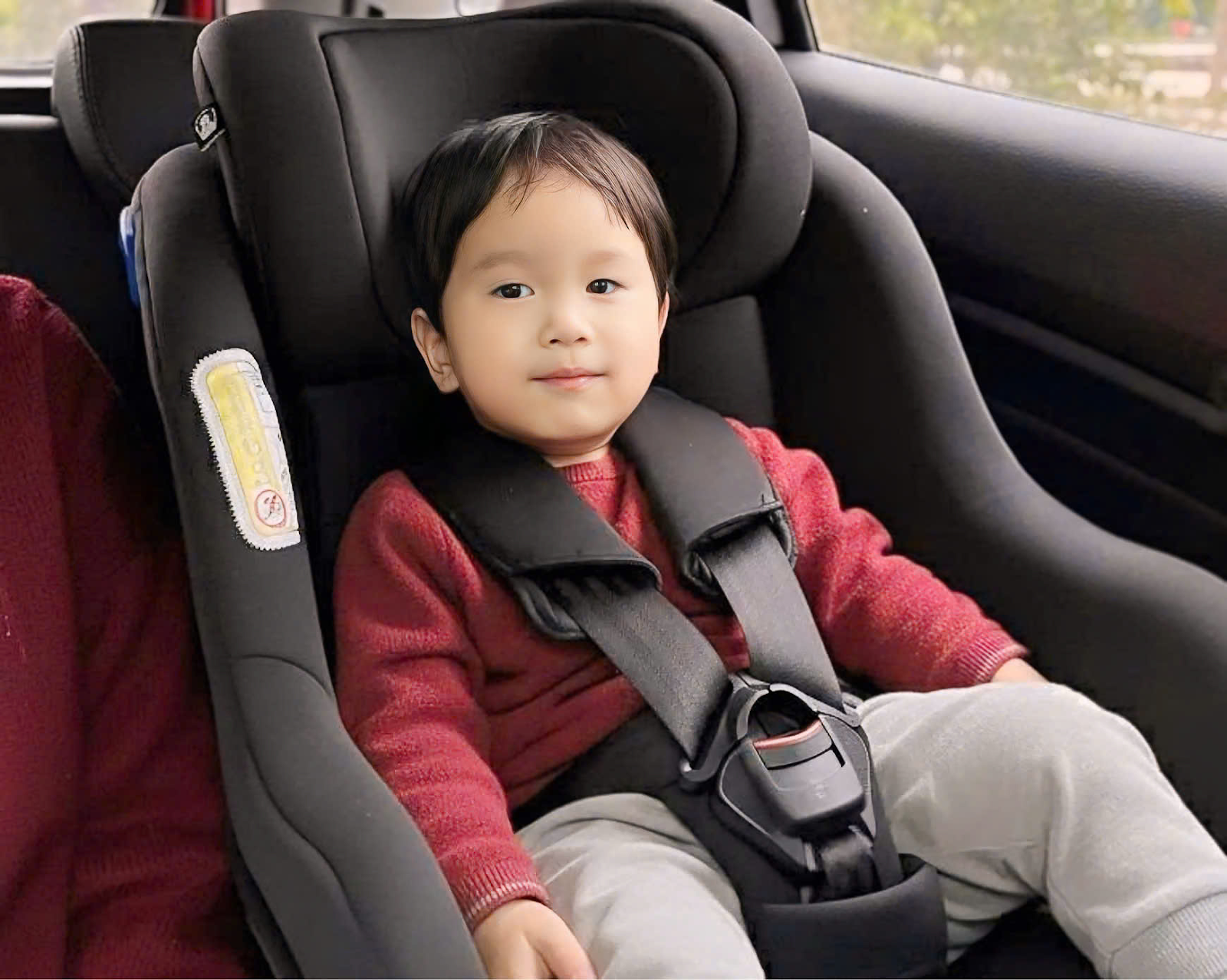 |
Child safety seat in a car. *Photo: Quynh Tho* |
Neck and cervical spine injuries frequently occur in children during frontal or rear-end car collisions, causing the neck to hyperextend or hyperflex, leading to cervical vertebral fractures and brainstem damage. Cervical spine injuries are more common in children than adults because children have a heavier head-to-body ratio, resulting in a higher center of gravity and pivot point in the neck. Children's cervical vertebrae, soft tissues, and ligaments are also weaker and more pliable than adults', making them more susceptible to severe injury.
Chest and upper back injuries often occur in children during side-impact car collisions, resulting in a higher mortality rate for children seated on the impact side. Common chest and upper back injuries in children during car accidents include ruptured heart, lungs, spleen, or liver, aortic transection, and fractures of the spine, ribs, or clavicle. Chest injuries are more severe in children than adults because their rib cages are immature, weaker, and less capable of withstanding force.
Abdominal and lower back injuries frequently occur in children during car accidents when their bodies move rapidly forward and then stop suddenly. Because a child's pelvis is immature and their body diameter is smaller than an adult's, standard car seatbelts cannot anchor correctly to secure the child. Accidents often cause more severe injuries to children in cars, commonly including intestinal tears and perforations, stomach injuries, blunt abdominal trauma, dislocations, and lumbar spine fractures.
Limb injuries often occur in car accidents when extremities are extended and subjected to strong impact. Children are prone to fractures of the femur, pelvis, patella, or hip dislocations in car accidents. Even children in forward-facing car seats can sustain tibia or fibula fractures. For children in the front seat without a car seat, an deploying airbag striking their arm can cause fractures of the hand bones, ulna, and radius.
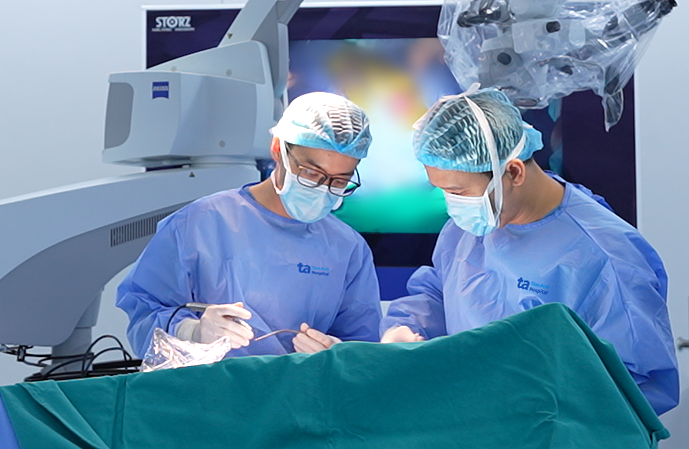 |
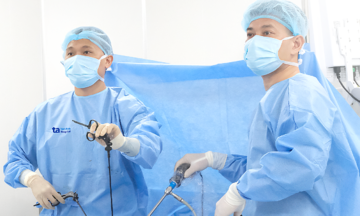
Doctors perform surgery on a patient with injuries from a car accident. *Photo: Tam Anh General Hospital* |
According to the US National Highway Traffic Safety Administration (NHTSA), proper use of child safety seats can reduce the risk of fatality by approximately 71% for infants and 54% for children aged 1-4 in cars.
Doctor Nghia recommends equipping children with car safety seats and placing them in the rear seats of the car. Infants under one year old should use a rear-facing infant car seat. Children aged 1-6 can use a child safety seat with a booster cushion and backrest appropriate for their height and weight. Children aged 6-11 can use a backless booster seat.
In the event of an accident, children should be taken to the nearest hospital for immediate first aid and timely monitoring. Even if a child appears normal after a traffic accident, medical observation is still necessary, as many hidden injuries to the head, abdomen, chest, and spine can manifest later and be life-threatening.
Thanh Long