Parotid gland tumors are a common type of salivary gland tumor, representing approximately 80% of all salivary gland growths. The body contains several salivary glands, including the parotid, submandibular, sublingual, and accessory glands within the oral cavity. The World Health Organization (WHO) currently recognizes nearly 40 variants and similar lesions under its histological classification of salivary gland tumors.
Salivary gland tumors are classified as either benign or malignant. It is important to note that some benign parotid gland tumors carry a risk of malignant transformation. Additionally, large benign tumors can lead to complications such as difficulty swallowing or facial paralysis due to compression of the facial nerve.
 |
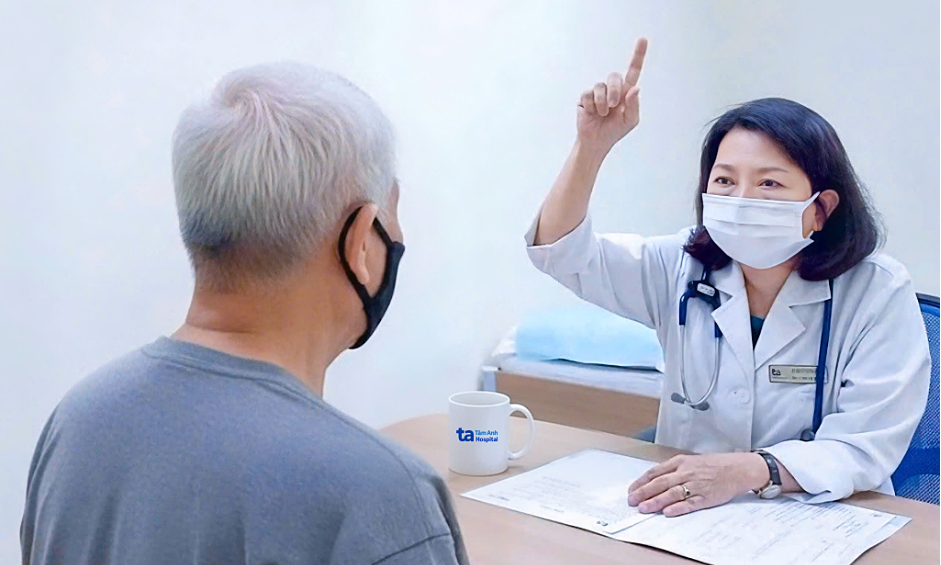
Doctor Vinh advises a patient. *Illustrative photo: Tam Anh General Hospital* |
Malignant salivary gland tumors encompass various types, including mucoepidermoid carcinoma, adenoid cystic carcinoma, acinic cell carcinoma, and adenocarcinoma. Other forms include squamous cell carcinoma (SCC), undifferentiated carcinoma, and polymorphous adenocarcinoma. Untreated malignant tumors can spread to lymph nodes and distant organs throughout the body.
Given your diagnosis of a parotid gland tumor, it is crucial to consult an oncology specialist for a thorough evaluation of your condition. Surgical intervention is typically indicated for most parotid tumors, regardless of whether they are benign or malignant. The specific surgical approach will be determined by the tumor's characteristics and your doctor's expert recommendations.
Surgical removal of parotid gland tumors is a complex procedure due to the tumor's proximity to the facial nerve (7th cranial nerve). Surgeons must perform precise maneuvers to preserve all five branches of this nerve. Inaccurate surgery can lead to nerve damage, resulting in facial paralysis, which impairs a patient's ability to close their eye, close their mouth, or express emotions. Furthermore, incomplete tumor removal increases the risk of recurrence, making subsequent operations more difficult.
Early medical consultation is vital for anyone who discovers an abnormal lump. Doctors diagnose the nature of the tumor, whether benign or malignant, using diagnostic tools such as ultrasound, MRI, and cytological or histological examinations obtained through needle biopsy. Timely intervention can prevent severe complications, including facial paralysis and metastasis.
Dr. Le Ngoc Vinh
Department of Surgical Oncology
Oncology Center
Tam Anh General Hospital, Ho Chi Minh City
| Readers can submit questions about cancer here for doctors to answer. |