Prostate cancer originates from abnormal cell growth in the prostate gland. This small gland, located behind the pubic bone and beneath the bladder in men, produces semen and supports reproduction.
A 2022 report by Golobocan noted over 5,800 new prostate cancer cases in Vietnam, making it one of the top 10 most common cancers in the country.
Doctor Vuong Ngoc Duong, Deputy Head of the Radiation Therapy Department at Tam Anh General Hospital Hanoi, notes that prostate cancer commonly affects men over 50. Its slow, silent progression often leads to late detection, complicating treatment. Patients currently receive individualized treatment plans based on age, disease stage, risk group, and health status. Radiation therapy may be indicated in specific scenarios:
Localized stage
For localized tumors, radiation therapy serves as a primary treatment aiming for a radical cure. Doctors often prioritize radiation therapy if surgery is not an option due to patient preference, surgical challenges, or anesthesia risks.
Modern techniques, including intensity-modulated radiation therapy (IMRT), volumetric modulated arc therapy (VMAT), and image-guided radiation therapy (IGRT), deliver high doses directly to the tumor. This approach minimizes impact on surrounding healthy tissues like the rectum and bladder.
After prostatectomy
Patients with a high risk of recurrence after surgery, such as those with positive margins or extensive tumor invasion, may receive adjuvant radiation therapy. This treatment targets any remaining cancer cells in the pelvic region, thereby reducing the risk of local recurrence.
Post-surgical radiation therapy is tailored to each patient's pathology results and specific risk factors.
Locally advanced or regional metastatic disease
If the tumor has spread beyond the prostate or to regional lymph nodes, doctors prescribe multimodal treatment, combining radiation therapy with hormone therapy. Radiation therapy supports enhanced disease control, reduces recurrence risk, and extends survival.
Bone metastasis
Bone is the most common site for prostate cancer metastasis. Patients often experience prolonged bone pain, pathological fractures, or spinal cord compression. Radiation therapy alleviates these symptoms, reduces pain, and improves patient mobility.
For limited metastatic lesions, doctors may consider stereotactic body radiation therapy (SBRT) for more precise control.
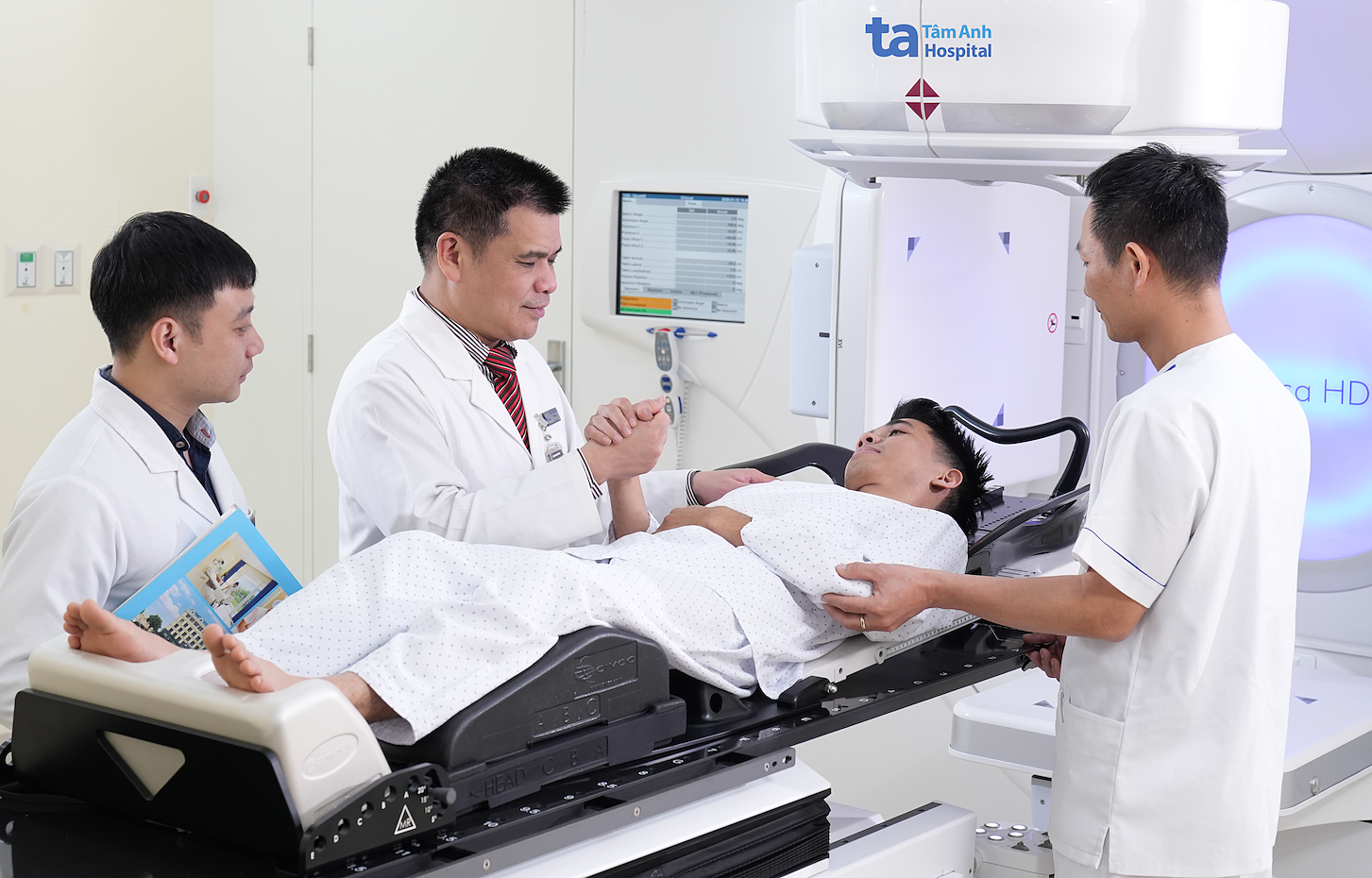 |
Doctor encourages a patient undergoing prostate radiation therapy. *Illustration photo: Tam Anh General Hospital*
Doctor Duong emphasizes that prostate radiation therapy is a challenging technique. It demands modern, high-precision technology due to the gland's deep pelvic location and its proximity to vital organs like the bladder, rectum, urethra, and neurovascular bundles that control urinary and sexual functions.
During treatment, the prostate gland can shift slightly, influenced by bladder fullness or gas in the rectum. Therefore, precise tumor localization and radiation dose control are crucial to destroying cancer cells while minimizing damage to surrounding healthy tissues.
Before treatment, patients undergo simulation imaging and treatment planning using specialized computer systems. These systems accurately calculate the radiation dose and the number of treatment sessions.
Each radiation therapy session typically lasts 15-30 minutes. The full course can span from a few days to several weeks, depending on the treatment goal and technique used. Patients must adhere to their treatment schedule, attend regular hospital follow-ups, and report any unusual symptoms during radiation therapy to their doctor.
Thanh Long
| Readers can ask questions about cancer here for doctors to answer. |