A child's normal heart rate typically ranges from 60 to 120 beats per minute, depending on their age. Arrhythmia occurs when the heart beats too fast (tachycardia), too slow (bradycardia), or irregularly. This can lead to inefficient blood pumping, causing the brain, lungs, and other organs to receive insufficient blood, potentially resulting in high blood pressure, heart failure, kidney failure, or stroke.
Arrhythmias manifest in various forms, including fast heart rates, slow heart rates, and genetically inherited rhythm disorders. Causes of arrhythmia in children include genetic issues, congenital heart structural abnormalities, post-cardiac surgery complications, and infections. The condition can also arise from reactions to external factors such as fever, infections, or certain medications. Occasionally, a child's heart rate may physiologically change for a short period due to crying, playing, or breathing patterns.
Many children with arrhythmias exhibit no symptoms. Some cases present with weakness, fatigue, a sensation of rapid heartbeat, dizziness, fainting, poor appetite, or shortness of breath. These signs are often non-specific and can be easily overlooked.
For a child your son's age, the average heart rate ranges from 60 to 100 beats per minute. If your child only occasionally experiences heart palpitations and a fast heart rate, especially after physical activity, and it then returns to normal, treatment may not be immediately necessary. However, if the child frequently has an elevated heart rate even at rest, accompanied by the symptoms mentioned above, you should seek medical consultation for your child.
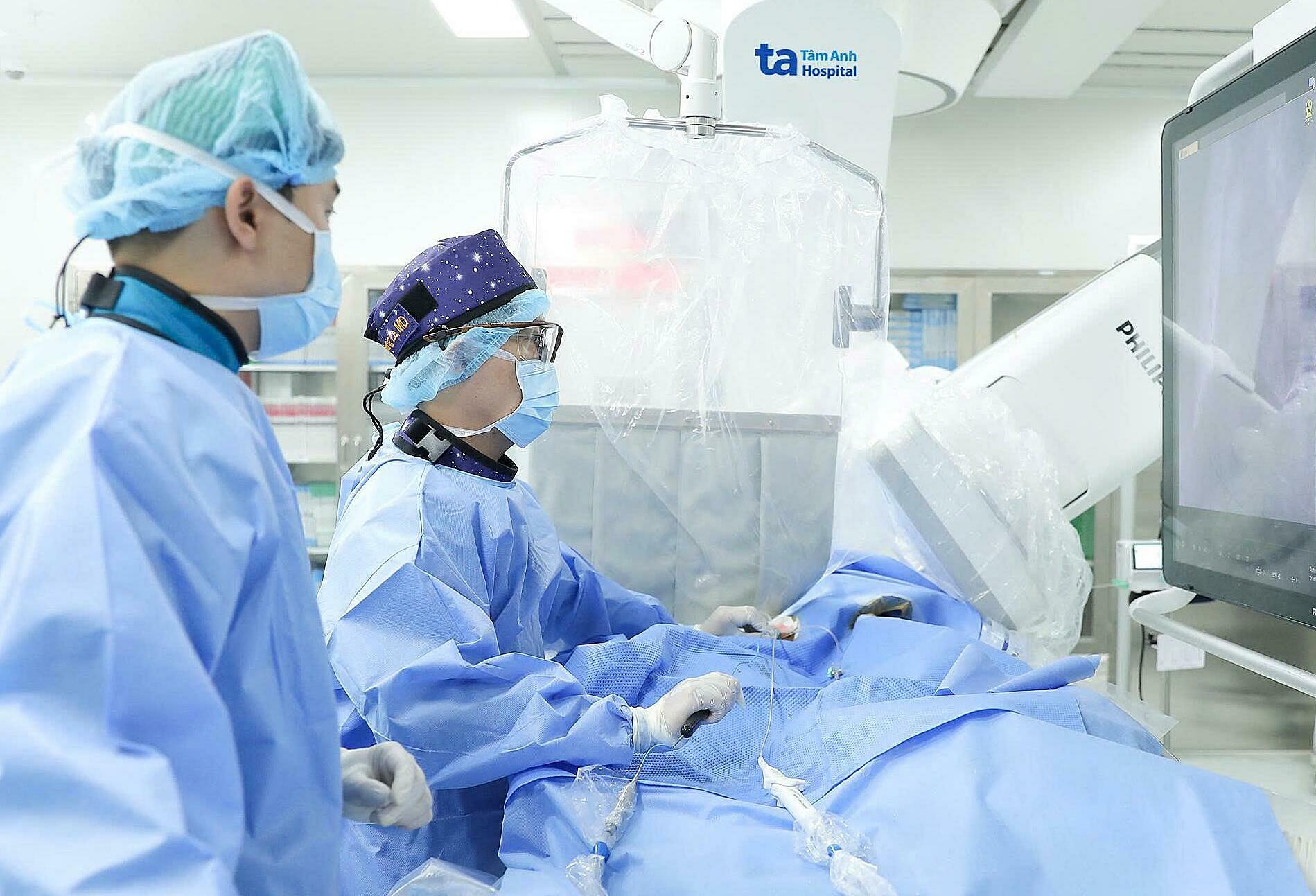 |
A doctor performs electrophysiological ablation for a patient with tachycardia. *Photo: Tam Anh General Hospital* |
Depending on the child's health status and the underlying cause, doctors will determine the appropriate course of treatment. Some children may only require monitoring and reduction of influencing factors. Other cases may necessitate supportive measures, such as:
Medication: Many arrhythmias respond to medication and do not require intervention. However, drugs can cause side effects, so patients need close monitoring.
Cardioversion: This method involves applying electrical impulses to the heart to restore a normal heart rhythm. Cardioversion is typically used in emergency situations.
Radiofrequency ablation: Doctors use high-frequency energy to destroy the site triggering the arrhythmia. This method is often applied to treat tachycardia that does not respond to or cannot be managed with medication.
Implantable devices: Pacemakers or implantable cardioverter-defibrillators (ICDs) are implanted to normalize heart rate if the heart beats too fast or too slow.
Maze surgery: Doctors create incisions in the left and right atria to block electrical impulses causing atrial fibrillation. This method is indicated to correct atrial abnormalities.
During and after arrhythmia treatment, you must ensure your child adheres to medication as prescribed by the doctor. You should bring your child for regular follow-up appointments to monitor and assess treatment progress, allowing for protocol changes if necessary.
Dr. Le Xuan Hoang, M.S.
Interventional Cardiology Center
Tam Anh General Hospital, Ho Chi Minh City
| Readers can submit questions about cardiovascular diseases here for doctors to answer |