A new WHO report on 8/7 warns that significant scientific advancements in the fight against cancer have brought little change for millions of patients worldwide, who face physical, mental, and financial consequences after diagnosis, according to The Guardian.
"The rich-poor divide directly determines life and death, depriving vulnerable groups of access to basic treatments," states the United Nations health agency's report.
WHO estimates that one in five people will develop cancer. The disease affects 92% of the global population, either through personal diagnosis or a family member's illness. Currently, the world records approximately 20,6 million new cases and 10 million cancer deaths annually. This number is projected to rise to nearly 35 million cases by 2050.
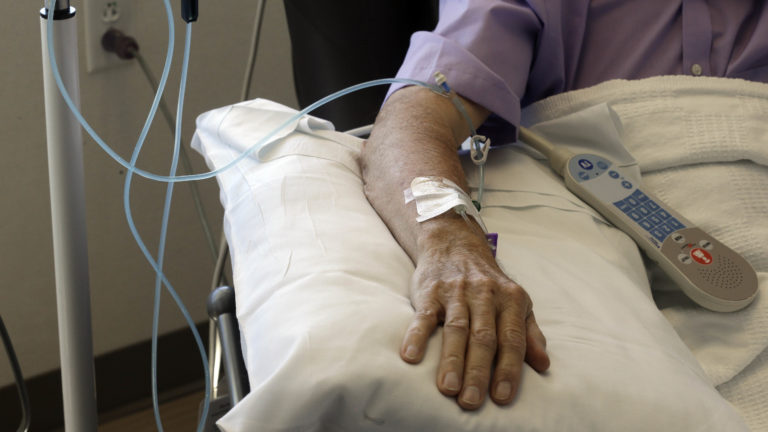 |
Illustrative photo: Gerry Broome/AP
Doctor Andre Ilbawi, Head of Cancer Control at WHO, stated: "For many years, the cancer narrative has revolved around scientific breakthroughs, new technologies, new treatments, and new hopes. That story is true and deserves to be shared, but it is not the whole truth."
The harsher reality lies in the persistent and widening inequality in access to diagnostic services and medical care between countries.
Specifically, in high-income countries, 85% of children and women with breast cancer survive for at least five years, but this rate plummets to below 30% in poorer nations. WHO indicates that low-income countries possess a maximum of 54% of priority treatment drugs, while this figure reaches 94% in wealthy countries. Furthermore, 23 countries currently have no radiotherapy facilities at all, leading to disproportionately high mortality rates in sub-Saharan Africa.
Financial barriers serve as a second "death knell," as two-thirds of countries have not included cancer treatment in universal health insurance. High costs force 90% of patients in many regions to give up hope.
Abigail Simon-Hart, an activist in Nigeria, has witnessed many parents facing the bitter choice between paying their child's hospital bills or allowing them to continue school. Beyond economic pressure, social stigma also claims the lives of many women who choose death rather than undergo mastectomy to preserve their dignity.
Although the overall picture remains challenging, WHO's research agency notes significant bright spots: 40% of new cases are linked to controllable risk factors. Limiting tobacco, alcohol, obesity, and controlling infections can significantly reduce the disease burden.
Experts urge governments to swiftly allocate comprehensive funding for health services and value palliative care equally with curative efforts to change the landscape of the fight against cancer in the future.
Binh Minh (According to The Guardian, WHO)