An ectopic pregnancy occurs when an embryo implants outside the uterus, most commonly in the fallopian tube. In natural conception, an embryo forms in the fallopian tube and then travels to the uterus. However, if the fallopian tube is damaged, narrowed, or inflamed, the embryo may be retained and implant there.
Even with in vitro fertilization (IVF), where embryos are created in a laboratory and transferred directly into the uterus, ectopic pregnancies can still occur. The primary reason is that after transfer, the embryo does not immediately implant. Instead, it can migrate within the uterine cavity for several days before finding a suitable site for implantation.
During this migration period, factors such as uterine fluid, uterine contractions, fallopian tube contractions, or other reproductive tract abnormalities can cause the embryo to move backward towards the fallopian tube, leading to implantation outside the uterus.
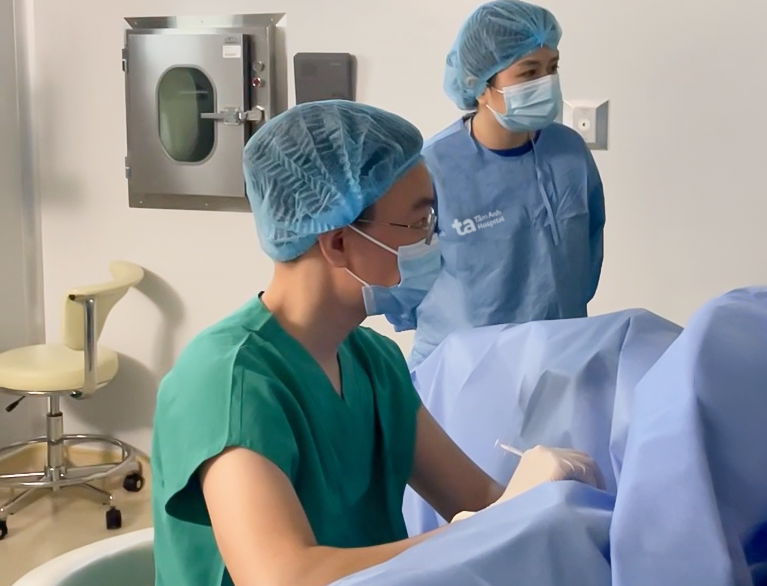 |
A doctor is performing an embryo transfer for a patient. Illustration: Tam Anh General Hospital. |
While uncommon, ectopic pregnancies can occur after IVF. The risk increases for individuals with a history of pelvic inflammatory disease, blocked or fluid-filled fallopian tubes, prior ectopic pregnancy, pelvic surgery, endometriosis, or uterine or fallopian tube abnormalities. Factors during the embryo transfer itself, such as the exact placement of the embryo, the volume of the transfer medium, a difficult transfer procedure, or significant uterine contractions, may also play a role, though a specific cause is not always identifiable.
Early signs of an ectopic pregnancy after embryo transfer are often subtle. Patients typically become aware after a beta hCG test shows elevated levels, yet an ultrasound fails to locate a gestational sac within the uterus. Other indicators may include abdominal pain or vaginal bleeding.
Given your diagnosis of an ectopic pregnancy after embryo transfer, it is crucial to follow your doctor's instructions for follow-up appointments and treatment. An ectopic pregnancy cannot relocate to the uterus and cannot develop normally. Treatment options, including monitoring, medication, or surgery, will depend on the pregnancy's location, beta hCG levels, your symptoms, and overall health. Seek immediate medical attention if you experience worsening abdominal pain, shoulder pain, dizziness, fainting, profuse sweating, or heavy vaginal bleeding, as these are potential signs of a complicated ectopic pregnancy requiring urgent care.
This occurrence does not imply that subsequent embryo transfers will inevitably fail or that ectopic pregnancies will always recur. Once treatment is complete and your condition is stable, your doctor will reassess risk factors. These include fallopian tube abnormalities, pelvic inflammation, any history of ectopic pregnancy, the condition of your uterus, and details of the previous embryo transfer, all to prepare for a safer next attempt.
Before attempting another embryo transfer, it is advisable to undergo a thorough examination and address any existing abnormalities, particularly fluid accumulation in the fallopian tubes, gynecological infections, or uterine damage. Following any future embryo transfer, adhere strictly to scheduled beta hCG tests and ultrasounds to confirm the pregnancy's location early. Do not attempt to self-monitor at home if you notice any unusual signs.
Doctor Le Mai Anh
Reproductive Support Unit
Tam Anh Cau Giay General Clinic
| Readers can submit questions about infertility here for doctors to answer. |