Laparoscopic surgery is a viable and important treatment option for early-stage ovarian cancer, offering significant benefits. Ovarian cancer is a common gynecological cancer among women. Treatment regimens are tailored based on the histopathological type, disease stage, age, and a patient's overall health, encompassing surgery, radiation therapy, chemotherapy, targeted therapy, and immunotherapy.
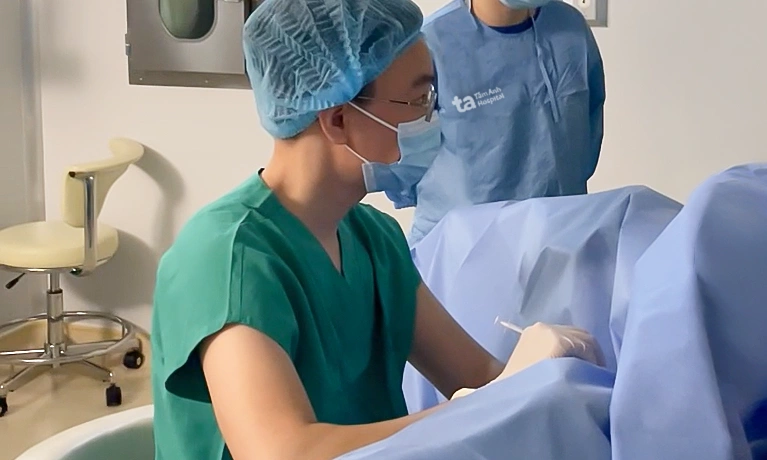
For early-stage ovarian cancer, patients may undergo either open surgery or laparoscopic surgery. During laparoscopic surgery, doctors make small incisions, typically 0,5 to 1,5 cm, on the skin. Through these, specialized instruments and cameras are inserted to remove affected tissues, such as the ovaries, adnexa, and greater omentum, while observing the procedure on a screen.
 |
Doctor Tan consults a patient. Illustration: Tam Anh General Hospital |
This minimally invasive technique provides clear benefits, including a thorough examination during the procedure and improved patient outcomes. Throughout the surgery, doctors meticulously examine the diaphragmatic dome, the entire peritoneal surface, organ surfaces, pelvic lymph nodes, and para-aortic lymph nodes, taking biopsies of any suspicious lesions. Patients experience less postoperative pain, a reduced risk of abdominal wall hernia, quicker recovery, shorter hospital stays, and less blood loss. Additionally, patients benefit from a better cosmetic outcome, avoiding a long abdominal scar.
Laparoscopic surgery is typically reserved for early-stage ovarian cancer when malignant cells are localized and have not yet invaded or metastasized. Patients diagnosed with early-stage ovarian cancer have a favorable prognosis, with a five-year survival rate of up to 95%.
Early detection of ovarian cancer is challenging due to the ovaries' deep pelvic location and the vague nature of symptoms, which can be easily mistaken for other gynecological conditions. Therefore, women should prioritize regular health check-ups and gynecological cancer screenings.
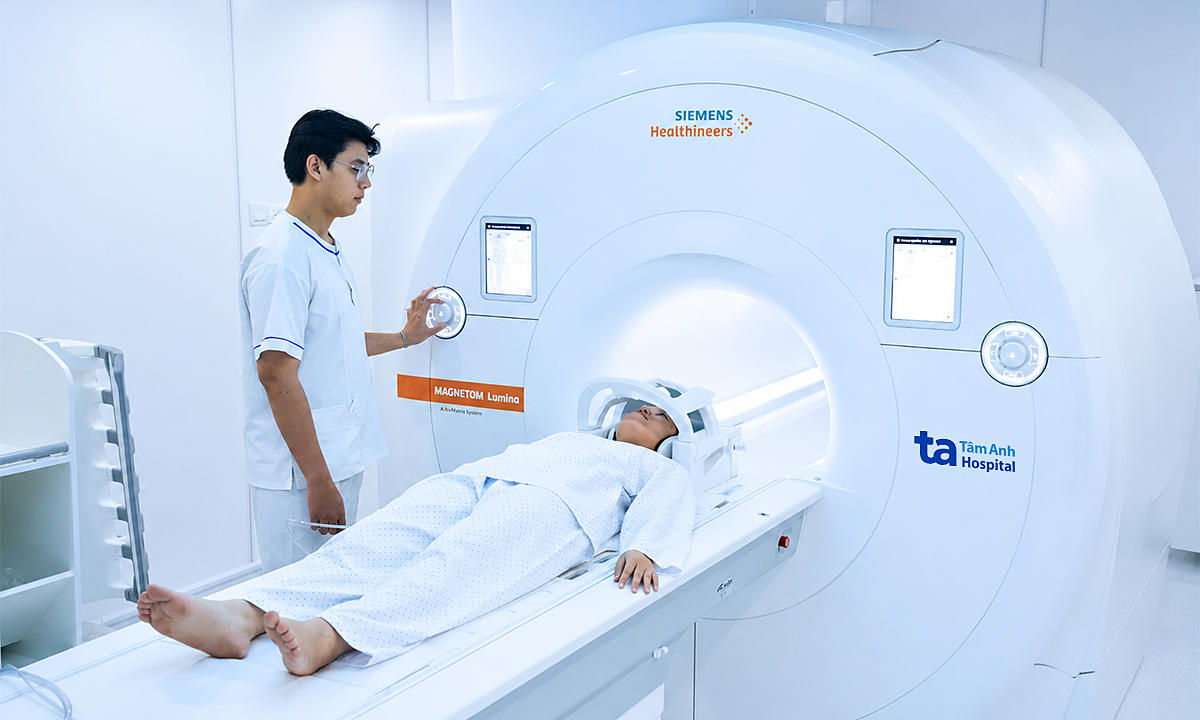
Various diagnostic tools are employed to detect and stage ovarian cancer. Doctors may order a CA-125 tumor marker test and an ovarian ultrasound to identify initial abnormalities. A CT scan helps assess tumor invasion and detect abnormal lymph nodes. If metastasis is suspected, patients may undergo a CT-guided needle biopsy of the ovarian tumor. An MRI scan can further determine the extent of cancer spread to other organs, including the lungs, brain, or spinal cord.
Given the complexity of ovarian cancer and your aunt's medical history, a specialized consultation is crucial. You should take her to an oncology hospital for a comprehensive evaluation to determine the most suitable treatment plan.
Master, Doctor, Level I Specialist Huynh Ba Tan
Department of Surgical Oncology
Oncology Center
Tam Anh General Hospital, TP HCM
| Readers can submit questions about cancer here for doctors to answer. |