


On the afternoon of 1/5, driver Nguyen Vo Duy An, 24, drove a 5-seater car into a gas station to refuel. In the trunk, there were 20-25 24V battery packs and 9 fully charged electric scooter batteries. Despite leaving the vehicle, the driver left the engine running.
As an attendant prepared to pump gas, the car's trunk unexpectedly exploded and burst into flames. Two teenagers, 16 and 17 years old, sitting in the back seat, died after being trapped inside the vehicle.
Da Nang Public Security prosecuted and detained An for violating fire prevention and fighting regulations. They are also consolidating documents to handle Nguyen Quoc Vin, 32, who hired An to transport the goods.
From a legal perspective, the issue is not merely who caused the incident, but who is responsible for compensation when risks stem from "high-risk sources."
Lawyer Nguyen Chi Tuong of the Da Nang Bar Association stated that, according to Article 601 of the 2015 Civil Code, motorized transport vehicles, explosives, and flammable substances are classified as "high-risk sources." Additionally, some goods like batteries, accumulators, and chemicals can be considered high-risk sources. This category poses a high potential for significant damage, leading the law to apply a strict liability mechanism.
The key point is not who was present at the scene, but who possessed, used, and controlled the high-risk source at the time of the incident. "In cases involving high-risk sources, the crucial question is not 'who caused it,' but 'who was controlling the risk'," the lawyer said.
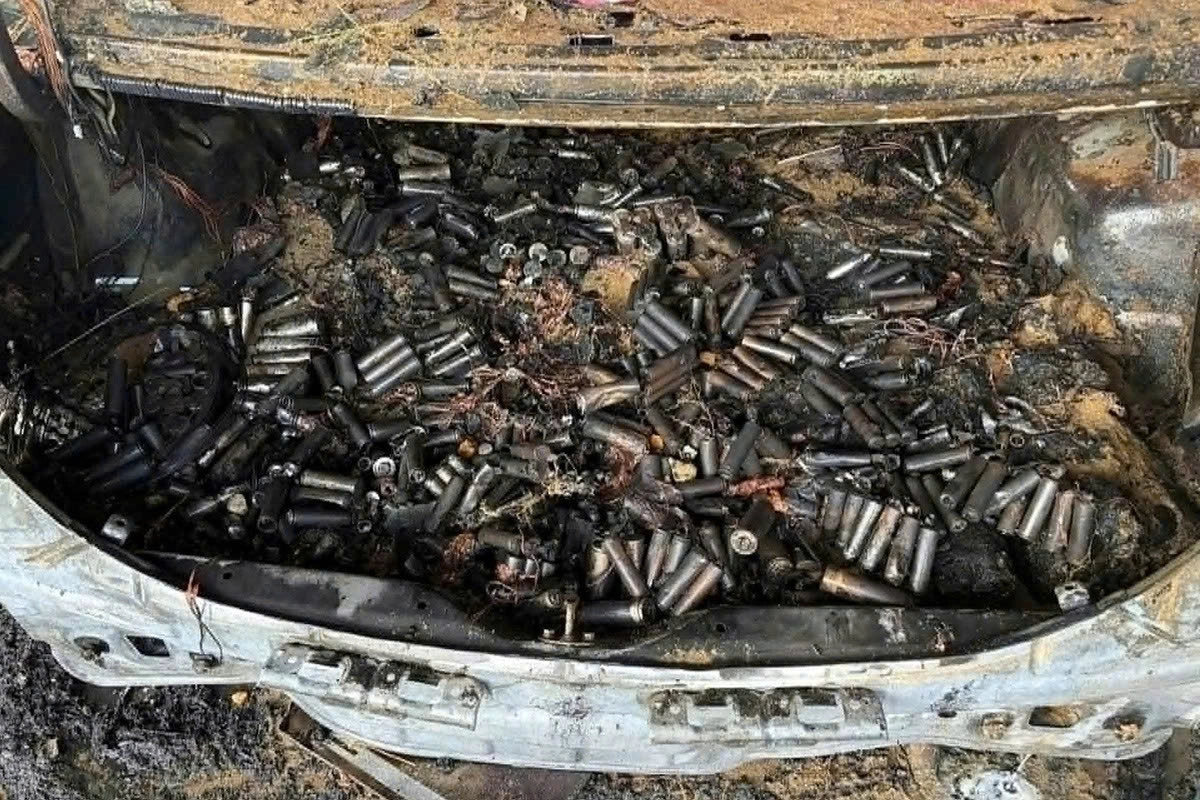 |
The batteries found in the car's trunk after the fire was contained. *Photo: Nam De* |
Unlike ordinary civil relations which require proof of fault, in this situation, the obligation to compensate can arise even without direct fault. This obligation is only exempted in very limited cases, such as when the damage is caused entirely by the intentional fault of the injured party or by force majeure (Clause 3, Article 601: The owner, possessor, or user of a high-risk source must compensate for damage even without fault, except in certain cases).
Citing Resolution 03/2006 of the Council of Judges of the Supreme People's Court, the lawyer suggested that if the driver was merely an employee, receiving wages and acting under instruction, they would not legally be considered the possessor of the vehicle. In such a scenario, the owner could still be deemed the possessor and manager of the high-risk source and responsible for compensation.
This is not automatic; in each case, authorities will consider the roles of all parties involved, including the operator and the consignor.
If the right of possession was clearly transferred – for example, through a rental or loan agreement – then the recipient could be the responsible party.
Another notable point is the "right of recourse" mechanism. Accordingly, even if the vehicle owner compensates first to protect the rights of the injured party, they still have the right to demand reimbursement from the party at fault.
For example, if the incident resulted from the driver violating safety procedures, the vehicle owner could demand reimbursement. Conversely, if the risk stemmed from the preparation stage, such as goods not being properly packaged or failing to ensure safety, responsibility could be considered from the vehicle owner or the consignor.
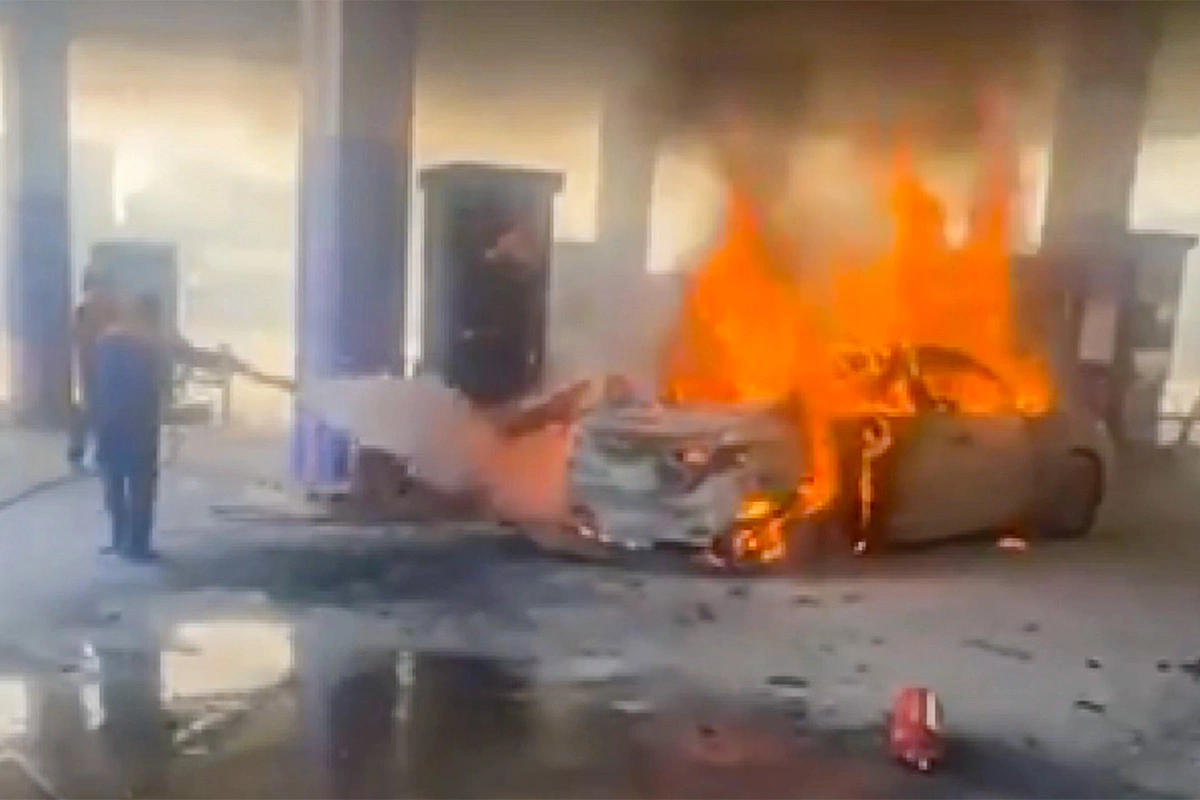 |
Gas station attendants and many residents helped extinguish the fire, only later discovering the two teenagers' bodies trapped inside the car. *Photo: Screen grab from clip* |
However, the lawyer emphasized that merely following instructions does not exempt the operator from responsibility. "A driver has the right and obligation to refuse to operate if they perceive a safety risk. If they knew the goods were unsafe but still transported them, or failed to inspect them under risky conditions, responsibility could still be assigned," he stated.
Accordingly, the boundary of responsibility in similar cases often lies in two stages: preparation (belonging to the vehicle owner, consignor) and operation (belonging to the driver). When errors occur in both, responsibility may be divided accordingly.
In reality, the specific determination of civil and criminal liability will depend on the investigation results, evidence, and assessment by competent authorities.
Nguyen Dong


