Hanson's empire began operating in 2012, transporting hundreds of kilograms of drugs worldwide. Simultaneously, Hanson ran an illegal betting ring worth millions of USD.
"I lost control," admitted Hanson, 44, also known as "O-Dog."
Nearly a decade in federal prison forced Hanson to confront his mistakes and re-evaluate his life after completing his sentence.
The downward spiral
His parents divorced when he was 8 years old, and Hanson was raised by his construction worker father. The two lived a simple life in Redondo Beach, California.
In high school, Hanson was 1,93 meters tall, excelled in sports, and was popular. In 2000, Hanson entered the University of Southern California (USC) on a volleyball scholarship. By 2004, he joined the Trojans football team as a walk-on player.
A desire to fit in with his privileged and wealthy teammates led Hanson to make poor choices. He started using performance-enhancing drugs (PEDs) and selling cocaine on a small scale just to keep up and fund his studies. Upon graduation, seeing all his friends playing professionally, Hanson thought, "What do I do now to keep up with them?"
After that, Hanson had a successful career in real estate development but lost his job during the 2008 recession. Disoriented, he turned to his network of wealthy contacts from USC and transitioned into being a professional sports bookie.
The business grew rapidly, and Hanson began taking bets from the notorious Sinaloa cartel from Mexico. "They realized I could access a lot of money, so they offered for me to launder money for them through the US. I said, 'No problem,'" Hanson recalled.
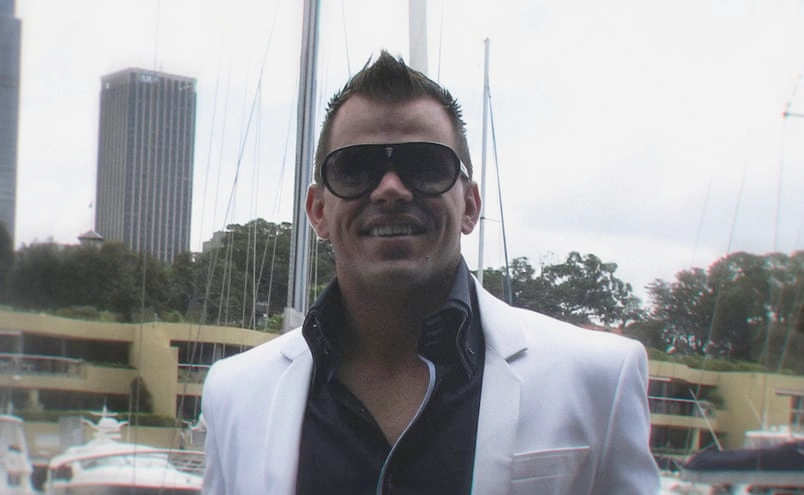 |
Owen Hanson earned illegal money to live a lavish life. Photo: Prime |
A few months later, Hanson received an offer he couldn't refuse: earn 1 million USD per day. However, there were two conditions: he had to move to Australia and deepen his involvement in illegal drug trafficking.
To smuggle drugs across international borders, Hanson devised new methods. He discovered a way to liquefy cocaine and put it into wine bottles, simultaneously creating a wine shipping service from Napa Valley to Australia.
At the same time, to maintain money laundering operations for the cartel, Hanson sought out a professional blackjack player to help handle the illicit funds. This individual would travel to Australia to play in casinos, launder large sums of drug money, then bring it back to the US, specifically to Las Vegas, and clean the money through casinos there.
Everything collapsed when this player lost 2,5 million USD of the cartel's money and informed the FBI, fearing for his life.
Apprehended
The FBI collaborated with the New South Wales State Police (Australia) and the New South Wales Crime Commission to investigate Hanson's network.
In the days before his arrest, Hanson communicated with an undercover agent to coordinate a methamphetamine deal. The night before his arrest, the undercover agent texted Hanson that the deal was complete and the methamphetamine "was good stuff." Hanson replied, "I told you, we don't do shoddy business."
Hanson was arrested on 9/9/2015, after arranging the delivery of 5 kilograms of cocaine and 5 kilograms of methamphetamine.
According to court records, Hanson led a transnational drug trafficking, gambling, and money laundering organization operating in the US, Central and South America, and Australia from 2012 to 2016. This criminal network trafficked thousands of kilograms of cocaine, heroin, methamphetamine, MDMA (ecstasy), marijuana, anabolic steroids, and human growth hormone (HGH).
In 2017, after pleading guilty to participating in a criminal enterprise and conspiracy to distribute drugs, Hanson was sentenced to 21 years in prison and ordered to forfeit 5 million USD in criminal assets. These assets included three houses, three cars, one sailboat, luxury watches, and 100,000 USD in gold and silver coins.
Life behind bars
Prison did not break Hanson's spirit. He used his time productively to earn a master's degree in business, while also focusing on physical training. To maintain his health, the former player often used empty peanut butter jars to mix protein drinks after workouts.
Everything changed when his cellmate put ice and salt into a mop bucket to keep Hanson's drinks cold. This mixture turned the drink into ice cream.
"Instead of drinking it, I started eating it and thought, 'Oh, this is protein ice cream.' Then an idea sparked in my mind," Hanson recounted. He began making and selling protein ice cream to other inmates for 15 USD a jar.
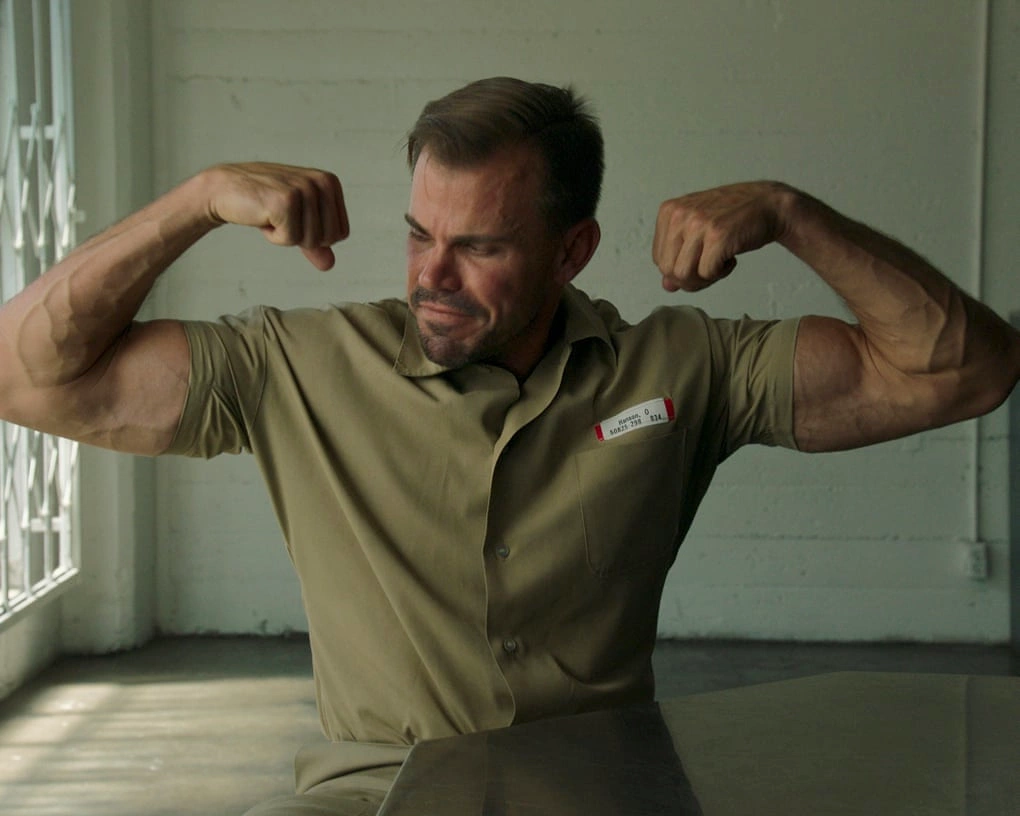 |
Owen Hanson in the documentary Cocaine Quarterback. Photo: Prime |
After serving 9 years of his sentence, Hanson was released and placed on lifelong probation. He promised himself he would not waste the second chance life had given him.
A new life
Hanson began meeting with ice cream manufacturers to turn his protein ice cream idea into a real product. In 9/2025, he launched the California Ice Protein brand.
Also that month, Amazon Studios released a three-part, Emmy-winning documentary series about Hanson's rise, fall, and path to redemption, titled Cocaine Quarterback: Signal-Caller for the Cartel, produced by Mark Wahlberg.
According to Hanson, the journey from his days in prison to finding the inspiration to rebuild his life was a truly transformative experience.
After many ups and downs, Hanson shared: "Everything happens for a reason. I earned my master's degree while incarcerated, and now I have a 20 million USD business. To rebuild everything from rock bottom and give people hope for life after prison, that's what makes me most proud."