The Hanoi People's Court received appeals from all 10 defendants following the initial trial, including former Minister Nguyen Thi Kim Tien.
In addition to Tien, two former Ministry of Health officials, Nguyen Chien Thang, former Director of the Key Medical Project Management Board, and Tran Van Sinh, former Head of the Board's department, also appealed for reduced sentences and lower restitution.
Thang received the highest sentence and restitution obligation in the case: 30 years in prison and 393 billion dong; Sinh received seven years in prison and 8,3 billion dong.
Nguyen Huu Tuan, another former Director of the Key Medical Project Management Board, appealed the entire verdict, requesting a reduction in his 25-year sentence and 223,5 billion dong restitution.
The remaining defendants also appealed for reduced sentences or suspended sentences, a reduction in the amounts to be paid, and requested the unfreezing of assets.
The Appellate Court of the Supreme People's Court in Hanoi will hear the case in the coming period.
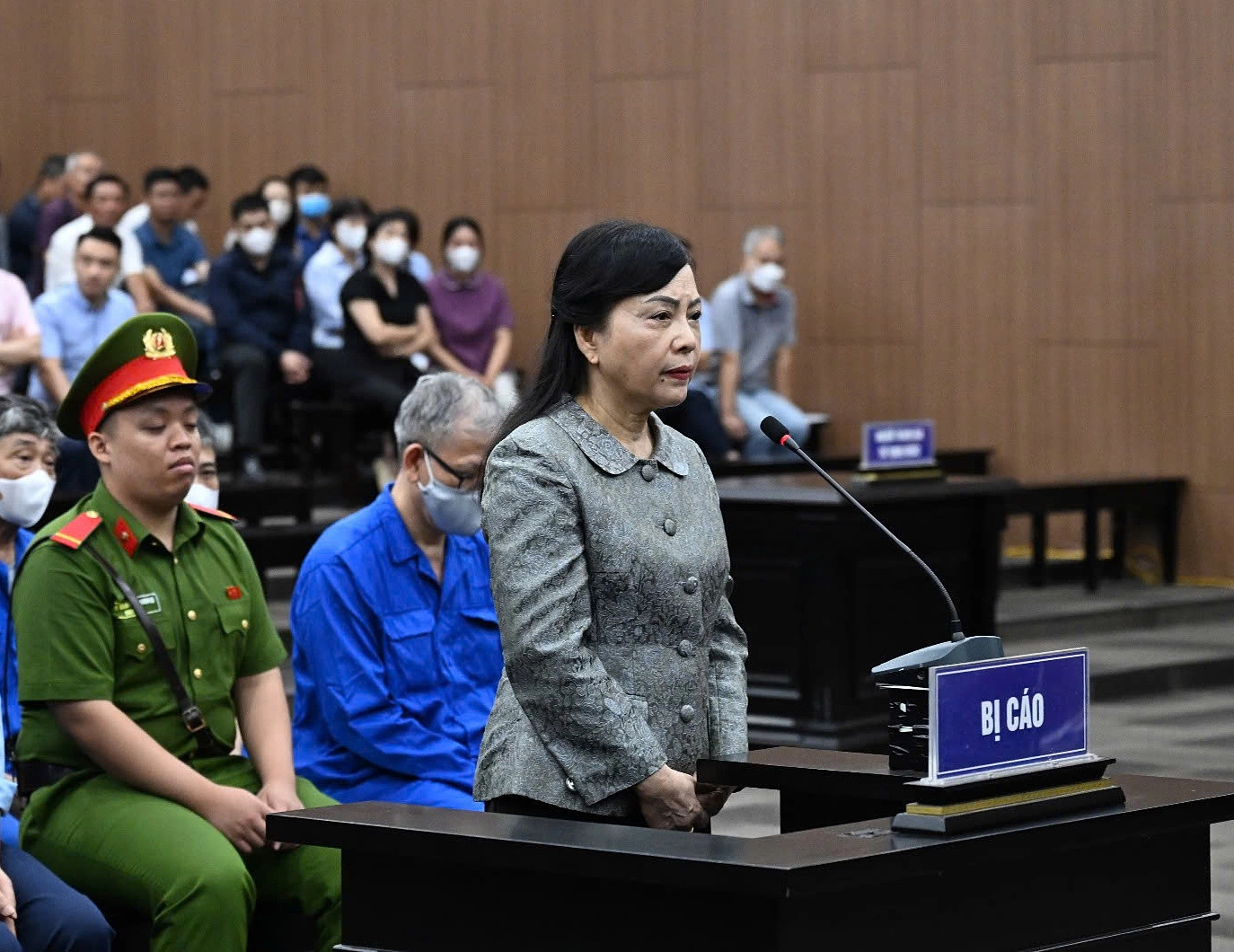 |
Nguyen Thi Kim Tien at the initial trial. *Photo: Danh Lam*
The initial trial panel assessed this as a typical case of state asset loss and waste. However, the defendants faced pressure during project implementation due to the large scale and urgent deadlines, with some lacking deep expertise in investment and construction.
According to the verdict, former Minister Nguyen Thi Kim Tien held the fourth highest role in the case. While not directly causing the consequences, she made errors in approving plans related to the selection of design consultants. This was identified as the basis and premise leading to violations in subsequent stages of the project.
Additionally, Tien was found to have received 7,5 billion dong from subordinates, out of a total of 100 billion dong disbursed by contractors to the Project Management Board.
The violations occurred in the investment and construction projects for Bach Mai Hospital Facility 2 and Viet Duc Friendship Hospital Facility 2. Approved in 2014 with a total investment of nearly 10.000 billion dong, the indictment detailed violations spanning from selecting foreign design consultants to preparing tender documents, bidding, direct contracting, and construction.
Nguyen Chien Thang was accused of agreeing to facilitate companies winning bids. In return, after receiving advances or payments, contractors were required to pay the Project Management Board an amount equivalent to 5% of the pre-tax contract value.
Consequently, Thang and Nguyen Huu Tuan were found to have received over 100 billion dong from contractors, which they then used for various purposes and distributed among several individuals.
In court, Kim Tien accepted ministerial responsibility, stating she was at fault for urging subordinates, inadvertently creating pressure. She maintained she acted with "pure motives," driven by a vision for hospitals that would serve the people for hundreds of years, though the outcome was not as desired.
She testified that she only received 7,5 billion dong from Thang and Tuan, disputing their claim of nearly 20 billion dong. While largely admitting to the charges, she expressed concerns about the method used to calculate damages.
During arguments, questions regarding the damage calculation and the need for restitution in a non-corruption case were raised. However, the People's Procuracy countered that the projects, left "overgrown with weeds" for the past 10 years, clearly illustrate the waste and the lost opportunity for thousands of patients to receive healthcare.
Thanh Lam