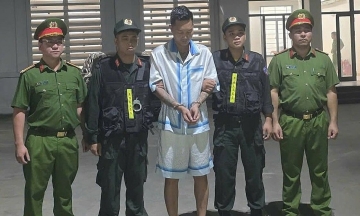
The Ministry of Public Security has proposed amendments to the Law on Handling Administrative Violations, suggesting a significant change to how "cold fines" are issued. The draft, introduced in late June, seeks to double the monetary threshold for fines that do not require an immediate written record, raising it from 500,000 VND to 1,000,000 VND for individuals. Under this proposal, administrative violations detected by technical equipment would not necessitate a traditional written record.
Most ministries and localities have largely supported the increase in the on-the-spot fine limit, acknowledging its potential to expedite the processing of minor violations. Proponents argue this would alleviate pressure on enforcement agencies and reduce the need for citizens to make multiple trips to administrative offices.
However, the proposal to issue "cold fines" without a written record has met with caution from several bodies, including the Ministry of Justice, Ministry of Finance, Ministry of Education and Training, and the National Assembly delegation of Thanh Hoa province. They emphasize that administrative violations are not criminal offenses, and issuing penalties without a written record or direct input from the violator could infringe upon their legal rights and interests. This concern is particularly relevant in cases involving force majeure or mitigating circumstances that automated systems might not fully capture.
The Ministries of Finance and Justice highlighted the diverse nature of violations detected via technical means across various sectors. For instance, in customs, violations uncovered by scanning equipment are often complex and do not occur directly in the presence of an authorized officer at the time of detection. In such scenarios, a written record remains a crucial legal basis for documenting evidence and safeguarding future complaint rights.
These agencies urged the drafting committee to clearly define that the record-free procedure should only apply to genuinely simple, straightforward offenses, or be limited to low fine amounts to mitigate legal risks for all parties involved.
The Ministry of Industry and Trade offered a compromise: apply record-free "cold fines" only if the penalty is below 1,000,000 VND for individuals, thereby ensuring legal safety.
In response, the Ministry of Public Security argued that linking the requirement for a written administrative violation record to a specific fine amount is unnecessary. They contend that eliminating this requirement would streamline procedures and shorten processing times. The Ministry asserted that in all "cold fine" cases, authorized officials would thoroughly review and verify all information, ensuring that the necessary details typically found in a written record are fully captured.
Incorporating feedback: transparency in evidence without a written record
The National Assembly delegation of Hanoi proposed an amendment: if no written record is made, the fine decision must include clear information, images, or electronic data proving the violation. This would allow citizens to verify the offense and exercise their right to explain or complain if they deem the decision unsatisfactory.
Regarding fine payment, the National Assembly delegation of Hai Phong suggested exploring a mechanism for instant electronic receipts. These receipts would be sent via SMS or the VNeID application immediately after payment through an online portal, enabling citizens to quickly track their compliance.
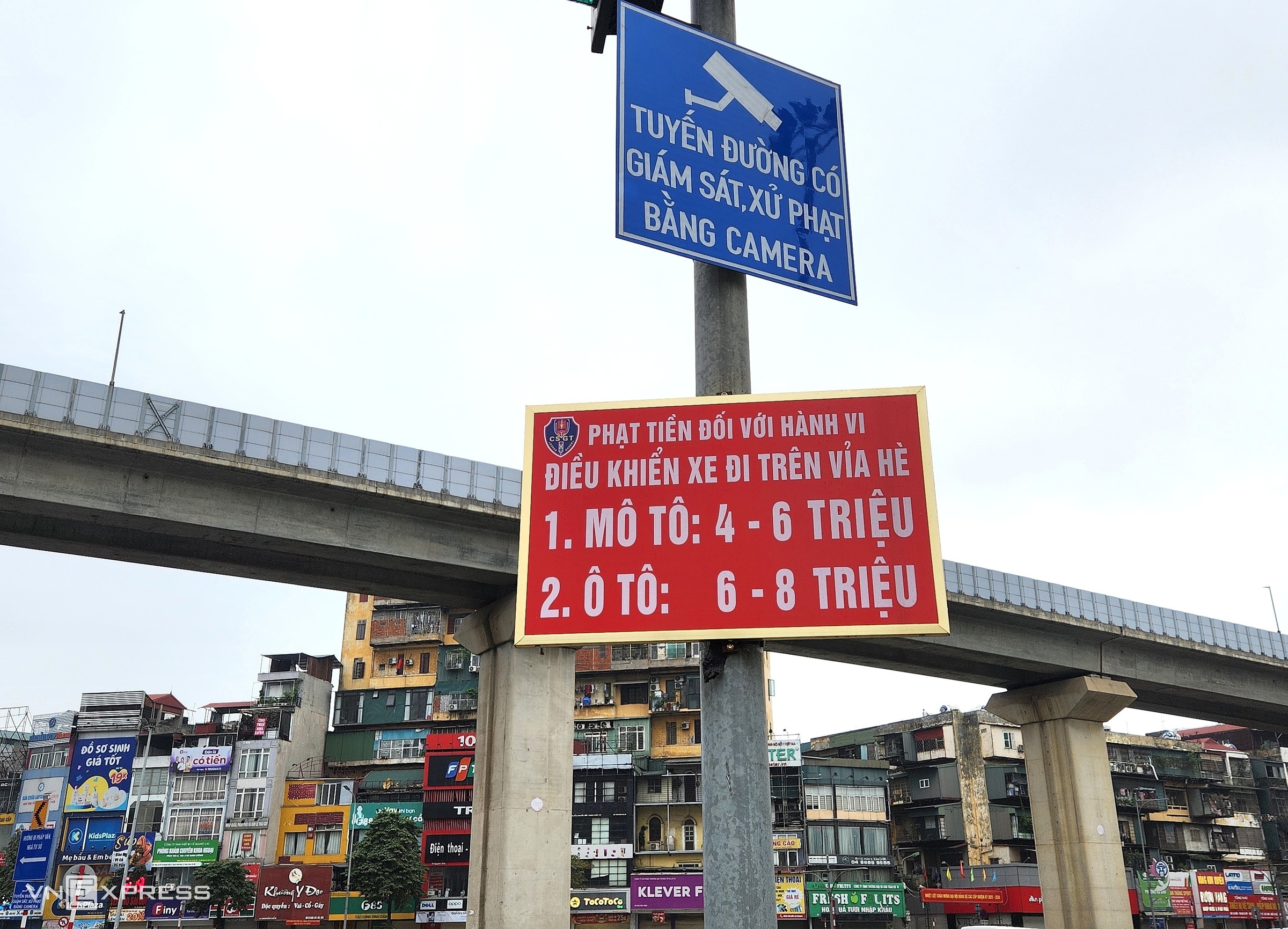 |
A sign indicating camera-based traffic enforcement at the Nguyen Trai - Khuat Duy Tien intersection, Hanoi. *Photo: Hai Thu*
Addressing these suggestions, the Ministry of Public Security, as the lead drafting agency, affirmed that data used for "cold fines" is collected from specialized technical equipment such as weigh stations, breathalyzers, and surveillance camera systems.
These devices, the Ministry explained, inherently contain all the essential information typically found in a traditional written record: time, location, a description of the act, and photographic evidence of the violation. This information is highly accurate and objective, providing sufficient grounds for issuing a fine decision without the need for an additional, costly, and time-consuming intermediate paper document.
The Ministry of Public Security has incorporated the view of the National Assembly delegation of Hanoi, adding a provision that "cold fine" decisions issued without a written record must be accompanied by information, images, and data proving the violation.
This ensures that individuals and organizations subject to penalties still have full grounds to exercise their rights to explanation and appeal, as stipulated by law.
The draft is open for further public feedback until 10/8 and is expected to be presented to the National Assembly for consideration and approval at its 2nd session, 16th National Assembly, in 10/2026.
Hai Thu