The Ministry of Public Security has proposed a significant change to traffic regulations: removing the requirement for overloaded or oversized vehicles to unload their cargo immediately at the point of violation. This amendment to Decree 168/2024 aims to increase flexibility in handling infractions and improve traffic flow.
Decree 168/2024 has recently undergone its third revision and is set to be submitted to the Government for signing and promulgation this month. The current regulations, outlined in Article 21, mandate that drivers of vehicles violating load or dimension limits must, in addition to paying fines, unload the excess cargo directly at the scene of the violation, under the guidance of authorities.
The Ministry of Public Security explained that this on-site unloading requirement is incompatible with existing traffic infrastructure. Forcing large trucks to stop and unload goods directly on the road creates difficulties for vehicle owners and obstructs other vehicles. Many violations occur in locations lacking sufficient space for unloading, such as narrow urban areas or roads with limited width.
 |
Under the proposed amendment, if approved, authorities would guide vehicles to the nearest suitable and safe rest stops, parking lots, or warehouse facilities for unloading instead of at the scene. This approach is expected to apply to trucks, tractors (including towed trailers or semi-trailers), and similar cargo transport vehicles. This method also helps ensure better preservation of goods after unloading, preventing loss or damage.
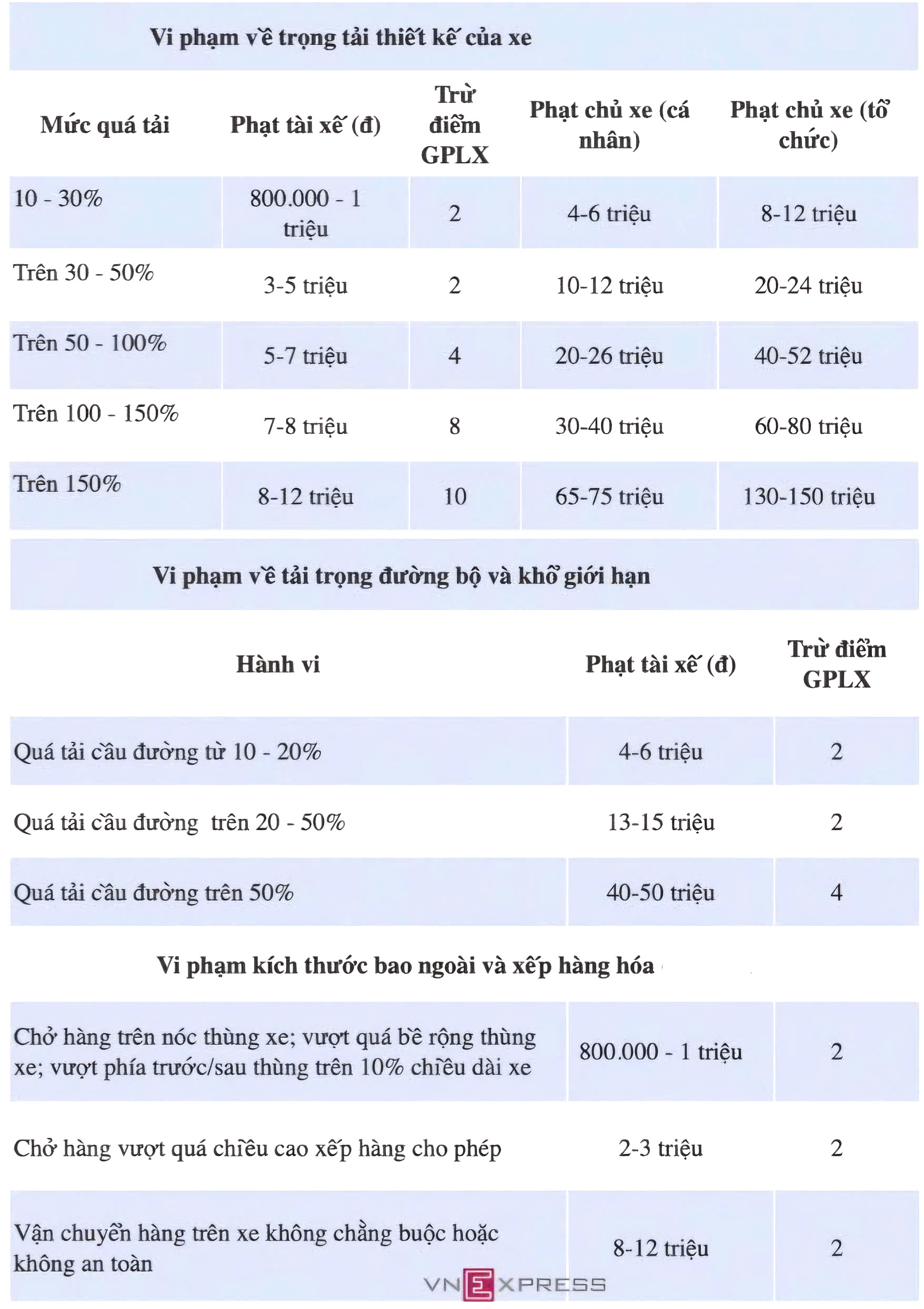
Decree 168/2024 currently defines a vehicle as violating load limits if it carries over 10% of the permissible weight for general goods, or over 20% for liquid-carrying vehicles. A vehicle carries bulky goods if the cargo extends more than 10% beyond the front or rear of the vehicle's designed length.
Hai Thu