This is one of the proposals in the draft Law on Cultural Industry Development, which is currently undergoing appraisal by the Ministry of Justice and is expected to be submitted to the National Assembly for consideration in October.
The proposal stems from the reality that cultural industries are unique: their greatest added value lies not in tangible assets or natural resources, but in creativity and intellectual property.
Untapped economic potential of cultural products
Regulatory agencies recognize that intellectual property assets, such as film scripts, animated characters, sound recordings, or video games, can generate numerous derivative products, expand value chains, and yield continuous profits for many years.
However, the current legal system lacks policies to develop the economic value of intellectual property rights, preventing them from "generating capital".
This situation leads to businesses in the cultural industry, predominantly small and medium-sized enterprises or young creative groups, frequently facing a shortage of investment capital.
These entities often lack significant assets like real estate or machinery to use as collateral through traditional methods, while credit institutions lack the legal basis and capacity to appraise the value of intangible assets.
To address this capital bottleneck, the draft law proposes using intellectual property as capital contributions and as collateral in credit relationships.
State to share risks in initial phase
The State Bank of Vietnam is expected to lead the development of risk management mechanisms and guide credit institutions in providing capital based on the value of intellectual property assets.
The State will provide credit guarantees or share risks for loans secured by intellectual property assets during the initial phase of establishing this financial market.
This policy aims to encourage commercial banks to participate in the creative economy sector. The level of support will gradually decrease as this market stabilizes.
Information regarding intellectual property assets used as collateral will be synchronized with the National Database on Cultural Industry, updating directly into intellectual property asset records.
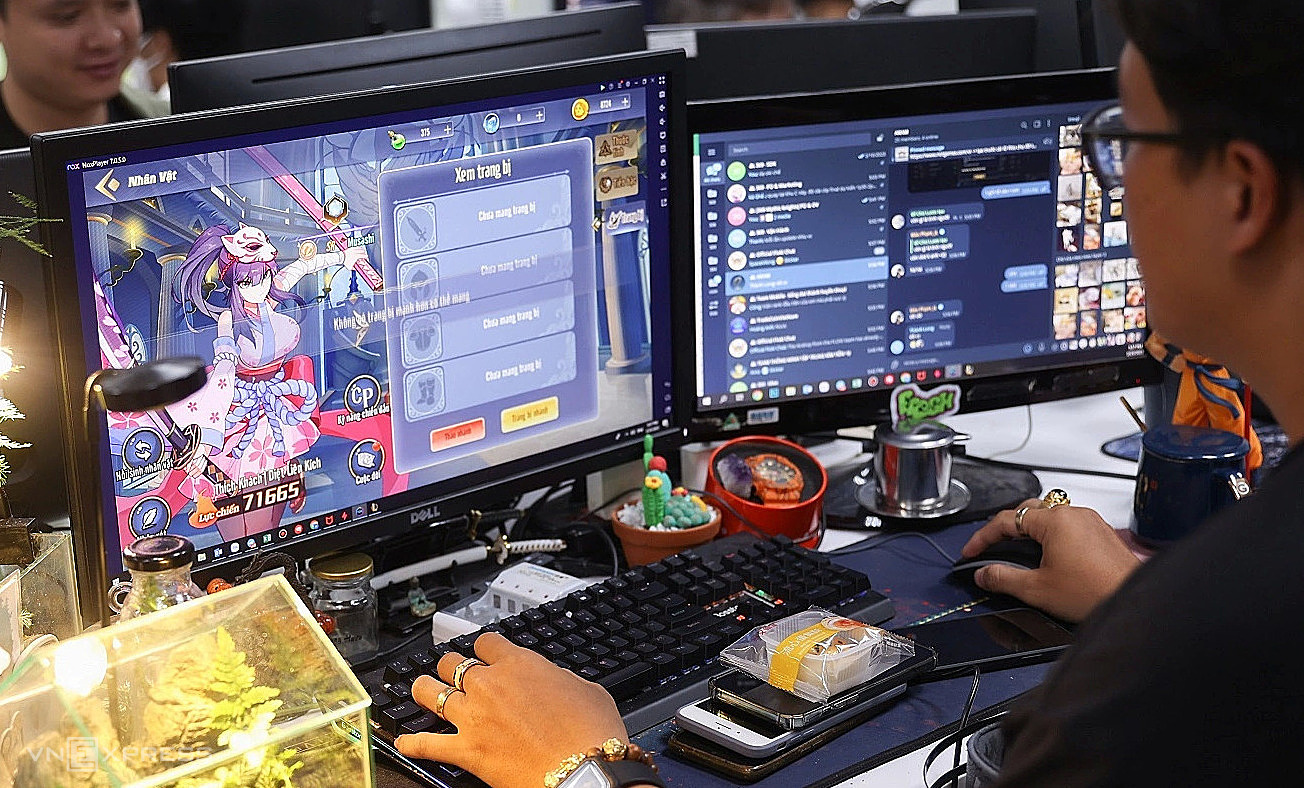 |
A game development studio of a well-known publisher in Vietnam. Photo: Quynh Tran |
How will intellectual property be valued?
The draft proposes that these intellectual property assets will be professionally appraised by independent valuation organizations, serving as the basis for banks to approve mortgage loans.
The State will enhance valuation capacity, develop appropriate valuation methods and standards consistent with international practices, and organize specialized training for appraisers and credit officers according to standards set by the World Intellectual Property Organization (WIPO).
Periodically, the Ministry of Culture, Sports and Tourism will be responsible for publishing data on the actual transaction prices of intellectual property assets in the market, providing reliable reference data for all parties.
In cases of dissolution or bankruptcy, intellectual property assets will be prioritized for continued exploitation through transfer or licensing to capable entities.
The draft is open for public comment until 25/8.
Intellectual property in cultural industries is defined as property under the provisions of the Civil Code, including property rights to objects of copyright, related rights, industrial property rights, and more.
Hai Thu