The proposal is outlined in the Draft Circular on the management, identification, and traceability of specially controlled chemicals on an electronic identification and authentication platform. The Ministry of Public Security is currently soliciting feedback on this draft until 31/8.
In practice, the production, trade, and use of specially controlled chemicals are complex and pose many risks. However, current management lacks adequate tools for monitoring, and there is no rapid tracing mechanism in case of violations. Consumers often lack clear information about the origin, legality, and basic details of these chemicals, leading to potential consequences.
The drafting agency has therefore determined that identifying these chemicals is essential for both regulatory bodies and consumers.
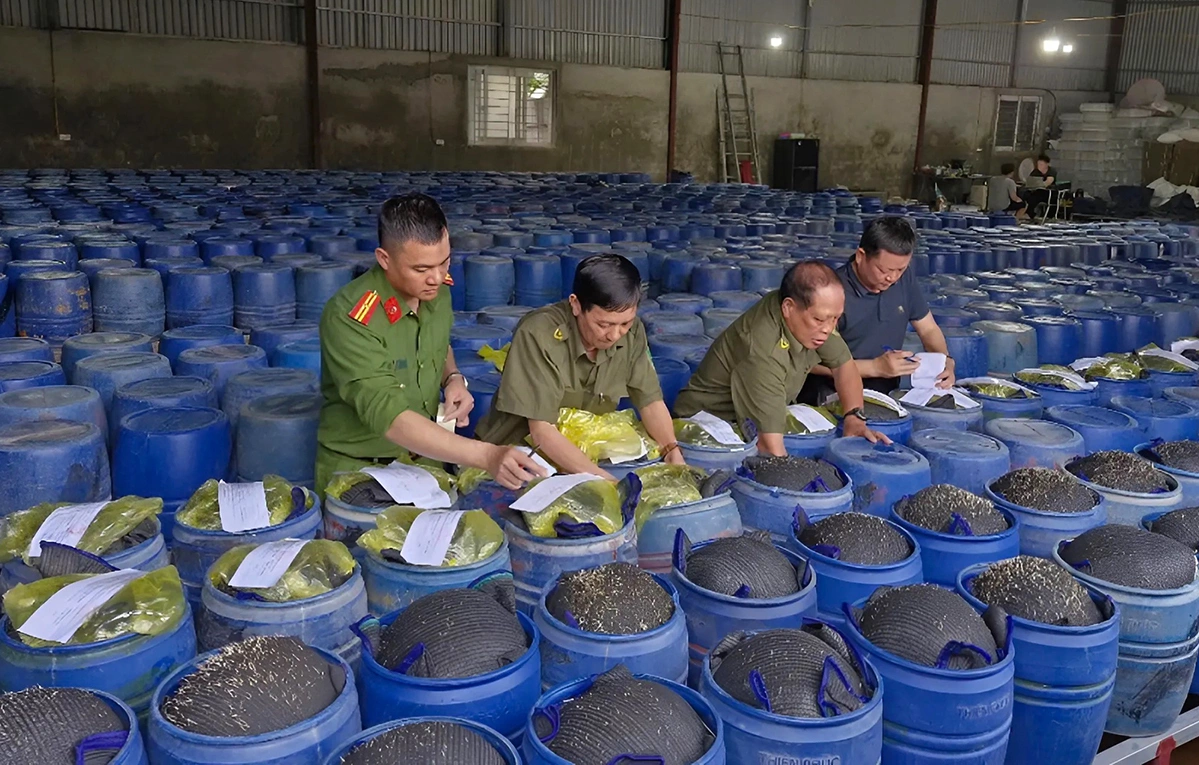 |
Nghe An police discovered and shut down a workshop producing 3,500 tons of bean sprouts soaked in 6-Benzylaminopurine (6-BAP), a chemical banned in food production. Photo: Public Security.
What information can the public trace?
According to the draft, owners of batches, lots, or units of specially controlled chemicals will use their VNeID accounts to access the chemical identification and traceability system. This access will allow them to create, activate, and utilize specific management codes.
Integrating VNeID will accurately verify the identities of all entities involved in the supply chain, including manufacturing, import, trade, and transportation, while eliminating the need for paper documentation.
Additionally, each chemical batch will be assigned a unique QR code identifier, activated and used by the owner throughout the entire circulation process.
The Ministry of Public Security proposes that the chemical traceability data within the identification system must include 18 pieces of information. Specifically, data available for consumer lookup must contain at least eight pieces of content:
- Chemical name;
- CAS number (if applicable);
- Brand, product serial number (if applicable);
- Image of the chemical container (packaging, label, or chemical vessel);
- Chemical origin;
- Name of the agency, organization, or individual involved in chemical activities;
- Batch code, lot number, type, or chemical unit;
- Key tracking events during the production, import, storage, transportation, sale, use, and disposal of chemicals within the supply chain.
Thus, in the near future, when purchasing or using chemical products, consumers will simply scan the QR code on the packaging with their mobile devices to instantly display the aforementioned information publicly.
The system will also establish direct two-way interaction within the application, allowing consumers to report information or unusual signs concerning chemicals to state agencies.
For businesses, in the event of incidents, abnormal losses, unaccounted for materials, mandatory destruction, or chemical safety risks, they will be responsible for electronically updating and declaring these events on the system within 24 hours of discovery.
Hai Thu