This policy is outlined in Decision 08/2026 on credit for post-drug rehabilitation individuals, effective today, 1/5.
The decision introduces policies designed to help post-rehab individuals access credit for vocational training and business ventures. It also provides significant loan incentives for businesses that employ post-rehab individuals.
Up to 200 million dong with interest rates for poor households
Eligibility for these loans extends to post-drug rehabilitation individuals aged 12 and above, who are certified by commune-level authorities as having completed rehabilitation no more than 10 years prior to the loan application. The loan amount depends on the intended use.
Specifically, if citizens require capital for vocational training, they can receive an amount equivalent to the student loan program. The current maximum applied is 4 million dong per month per person. For production or business purposes, post-rehab individuals can borrow up to 200 million dong.
 |
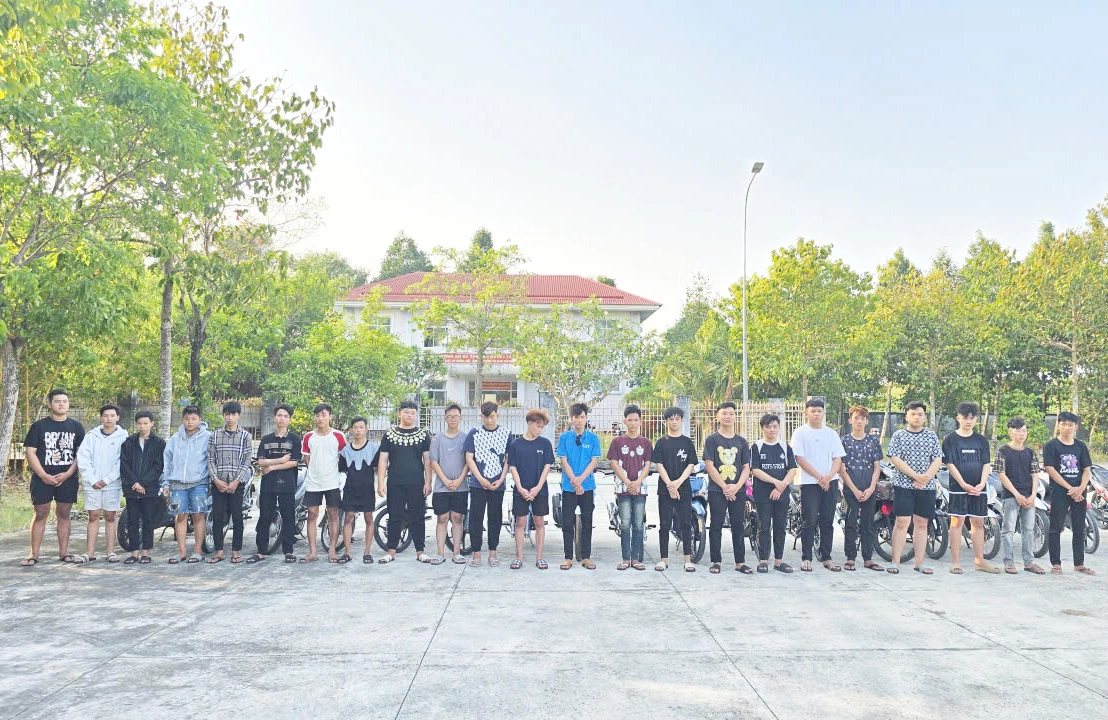
Students at Thanh Hoa Rehabilitation Center No. 1. Photo: Pham Du |
The flexibility in capital use ensures that post-rehab individuals can choose the path most suitable for their abilities and circumstances, whether starting with vocational training or directly launching a production business.
In these cases, post-rehab individuals cannot apply for loans directly. Loans must be processed through a household or guardian, who will be the named borrower and transact with the Vietnam Bank for Social Policies.
If there is no guardian, post-drug rehabilitation individuals aged 18 and above can directly apply for loans at the Vietnam Bank for Social Policies.
Interest rates and loan terms are designed to be highly preferential, reducing financial pressure on those reintegrating into society. The loan interest rate is set at the same level as that for poor households during each period (currently 6,24%). If a loan becomes overdue, the interest rate will be 130% of the standard loan interest rate.
Individuals borrowing capital are not required to provide loan collateral, and the maximum loan term can be extended up to 120 months.
Companies can borrow up to 2 billion dong if they employ post-rehab individuals
Beyond individuals, the policy also encourages economic organizations to participate in creating employment opportunities for this group.
Accordingly, production and business establishments, including small and medium enterprises, cooperatives, cooperative unions, cooperative groups, and business households, are eligible for preferential loans if at least 10% of their total workforce consists of post-drug rehabilitation individuals with legal labor contracts.
Funds must be used for production, business operations, and job creation activities not prohibited by law.
According to the Ministry of Public Security, clearly defining these conditions will make loan application reviews more transparent and straightforward, while ensuring that borrowed funds are used for their intended purpose.
Interest rates and loan terms are similar to those for individuals, meaning a maximum of 120 months and interest rates applied to poor households.
This is a positive step towards creating a comprehensive support ecosystem where post-rehab individuals not only receive personal loans but also gain employment in businesses that receive financial support from the Government.
The Ministry of Public Security reported that as of 15/9/2025, the country had over 92,000 drug addicts and more than 31,000 individuals under post-rehabilitation management.
Most of these individuals are a unique group with limited education and persistent psychological stigma. Business owners often hesitate to hire them, contributing to high rates of unemployment and relapse.
Hai Thu