The Investigation Police Agency of the Ministry of Public Security (C03) has determined that the case causing losses of over 540 billion VND at the 39-39B Ben Van Don project not only exposed the process of selling public land cheaply by Vietnam Rubber Group (VRG) but also revealed another branch of serious violations. The defendants and many related individuals "transformed" social welfare housing into commercial goods.
C03 has separated this act for further investigation and handling. Initial testimonies from the "masterminds" of the case, including Le Y Linh and Dang Phuoc Dua (Director and Chairman of Phu Viet Tin Co., Ltd.), clearly outline the "ask-and-give" mechanism within this project.
Phu Viet Tin is a company established by two VRG subsidiaries, but it essentially served as a tool to transfer public land assets to private ownership.
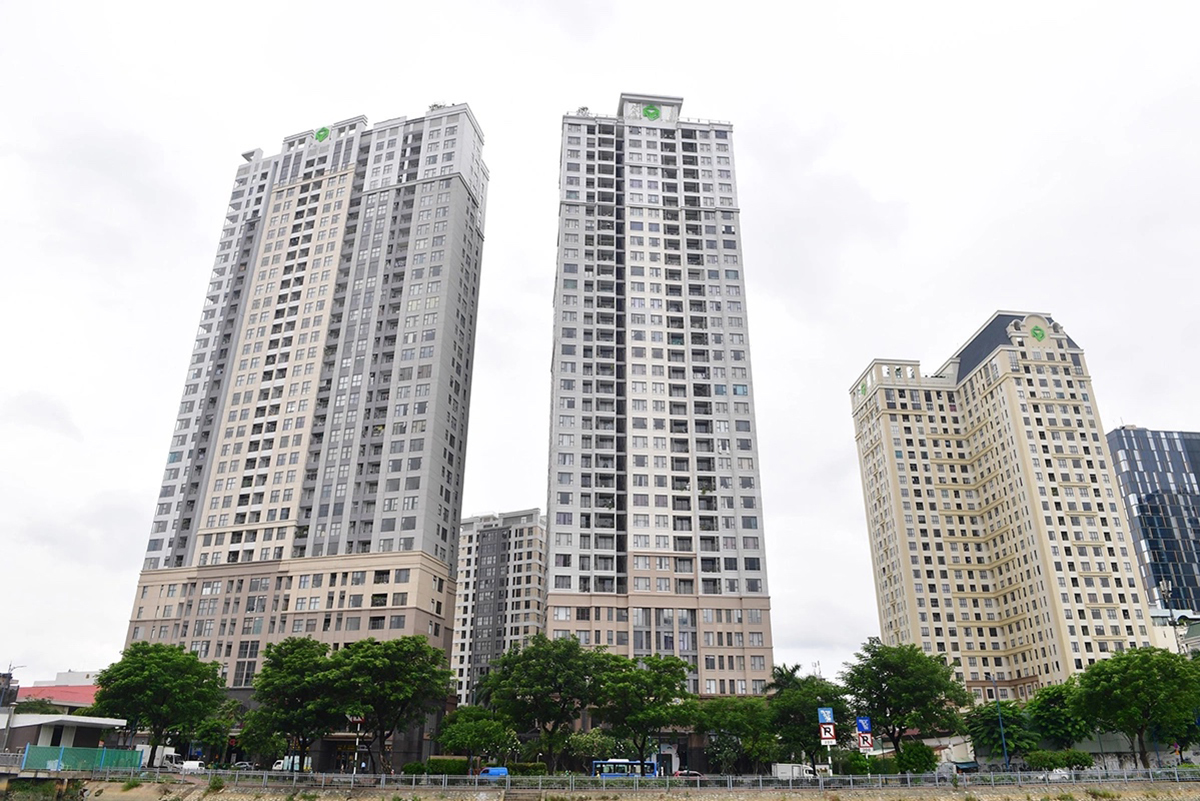 |
The existing project on the 39-39B Ben Van Don land plot. Photo: Thanh Tung
The land plot at 39-39B Ben Van Don (formerly District 4), covering over 6,200 m2, originated as public land managed by VRG. When converting the land use purpose for a commercial project, the Ho Chi Minh City authorities set a prerequisite to ensure social welfare.
Specifically, on 15/4/2010, in the document approving the project scale, the District 4 People's Committee required the investor, Phu Viet Tin Co., Ltd., to sell one-third of the project's housing fund (equivalent to 159 apartments) to the district at resettlement prices.
This requirement was further legalized in Investment Approval Decision No. 6603/QD-UBND dated 9/12/2015 by the Ho Chi Minh City People's Committee. The ultimate purpose of these 159 apartments was to serve households displaced by public utility projects in District 4.
Meetings to break the resettlement "golden hoop"
For a luxury real estate project located near the center of District 1, having to set aside 159 apartments for sale at low resettlement prices represented a significant burden, reducing the investor's profit margin. To optimize profits, this "golden hoop" had to be removed.
To expedite the project's legal procedures, including the handling of resettlement obligations, the project acquisition team, Le Y Linh and Dang Phuoc Dua, sought to approach local leaders.
According to Le Y Linh's testimony to the investigative agency, to foster favorable relations for the project's implementation, she and Dua hosted dinners for District 4 People's Committee leaders. Attendees included Nguyen Tien Dat (then Chairman of the district) and Tran Hoang Quan (Vice Chairman). These were not merely social meals; envelopes were exchanged. Linh stated she gave Dat 10,000 USD and Quan 5,000 USD.
The testimony of defendant Dang Phuoc Dua further clarified the nature of these clandestine meetings. Dua admitted that in addition to providing money, he also made significant promises of future material benefits.
Specifically, Dua promised to give Dat and Quan one completed apartment each at the 39-39B Ben Van Don project after its construction. However, as the project was later sold to other partners (Quoc Cuong Gia Lai Company and then Novaland), he could not fulfill the promise of gifting the apartments.
Although the apartment gifts did not materialize, the USD payments and promises effectively "greased the wheels" of the administrative process.
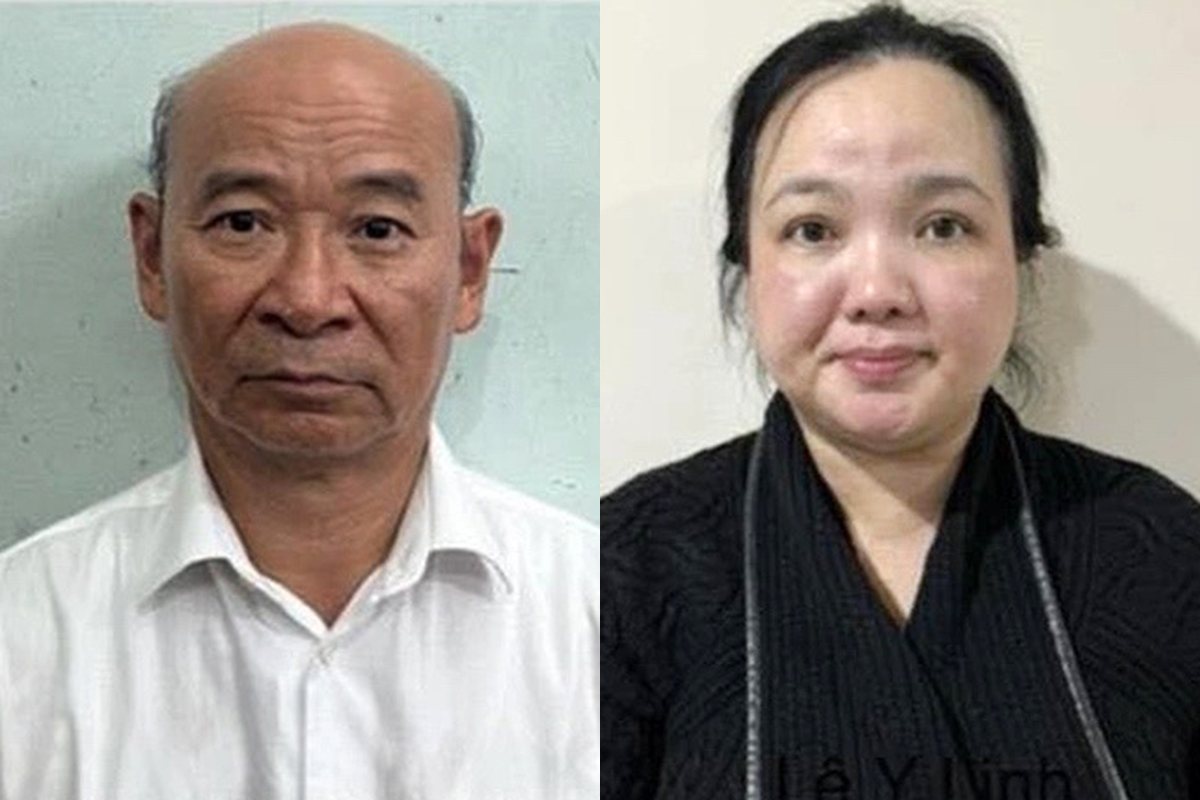 |
Dang Phuoc Dua and Le Y Linh. Photo: Ministry of Public Security
Following these "diplomatic" efforts, the requests from the two business executives received a positive response. On 26/11/2015, after approval from the District Party Committee Standing Board, Tran Hoang Quan signed a document allowing Phu Viet Tin to forgo selling the resettlement housing fund to the district. Instead, the company was permitted to commercially sell all 159 apartments on the market. To convert this housing handover obligation, the company had to contribute a differential amount to the district budget.
However, instead of hiring an independent appraisal unit to determine the market price accurately at that time (in 2015, the real estate market was vibrant), the District 4 People's Committee "self-estimated" the differential value.
District 4 set the figure at 1,5 million VND/m2 of floor area. At this price, the total amount the investor had to pay to "redeem" the 159 apartments (with an average area of 60 m2 per unit) was only 14,31 billion VND. In contrast, the actual commercial value was tens of times higher.
Rapid legalization
The process of legalizing this policy proceeded quickly. Just one day after signing the approval document for the business (27/11/2015), Tran Hoang Quan signed another document to the Ho Chi Minh City People's Committee requesting feedback.
Ten days later, on 7/12/2015, the city issued a document approving District 4's proposal and instructed the Department of Finance and the Department of Construction to guide its implementation. By late 2016, the Ho Chi Minh City People's Committee officially allowed District 4 to receive and use these funds.
From 16/12/2016 to 28/12/2018, Phu Viet Tin Co., Ltd. deposited the full 14,31 billion VND into the District 4 People's Committee's account. The district later used this money to build public infrastructure in the area.
In its recently issued investigation conclusion, C03 noted that the District 4 People's Committee's self-estimation of the differential price at 1,5 million VND/m2 to allow the business to convert its resettlement obligation to commercial sale showed signs of wrongdoing, causing damage to state and public interests.
Testimonies regarding the giving and receiving of bribes and promises of apartments between Le Y Linh, Dang Phuoc Dua's group, and the District 4 People's Committee leaders at that time are crucial details proving the self-serving motives behind these administrative decisions.
However, due to the expiration of the investigation period for the main case (occurring at Vietnam Rubber Group), C03 decided to separate all information and documents related to the violations in converting these 159 resettlement apartments for continued investigation and handling in a later phase, ensuring objective and thorough processing.
Thus, the legal fate of individuals involved in the "removal" of these resettlement homes is still pending. Former leaders who signed documents based on "self-estimated" prices and "thank you gifts" will continue to be investigated.
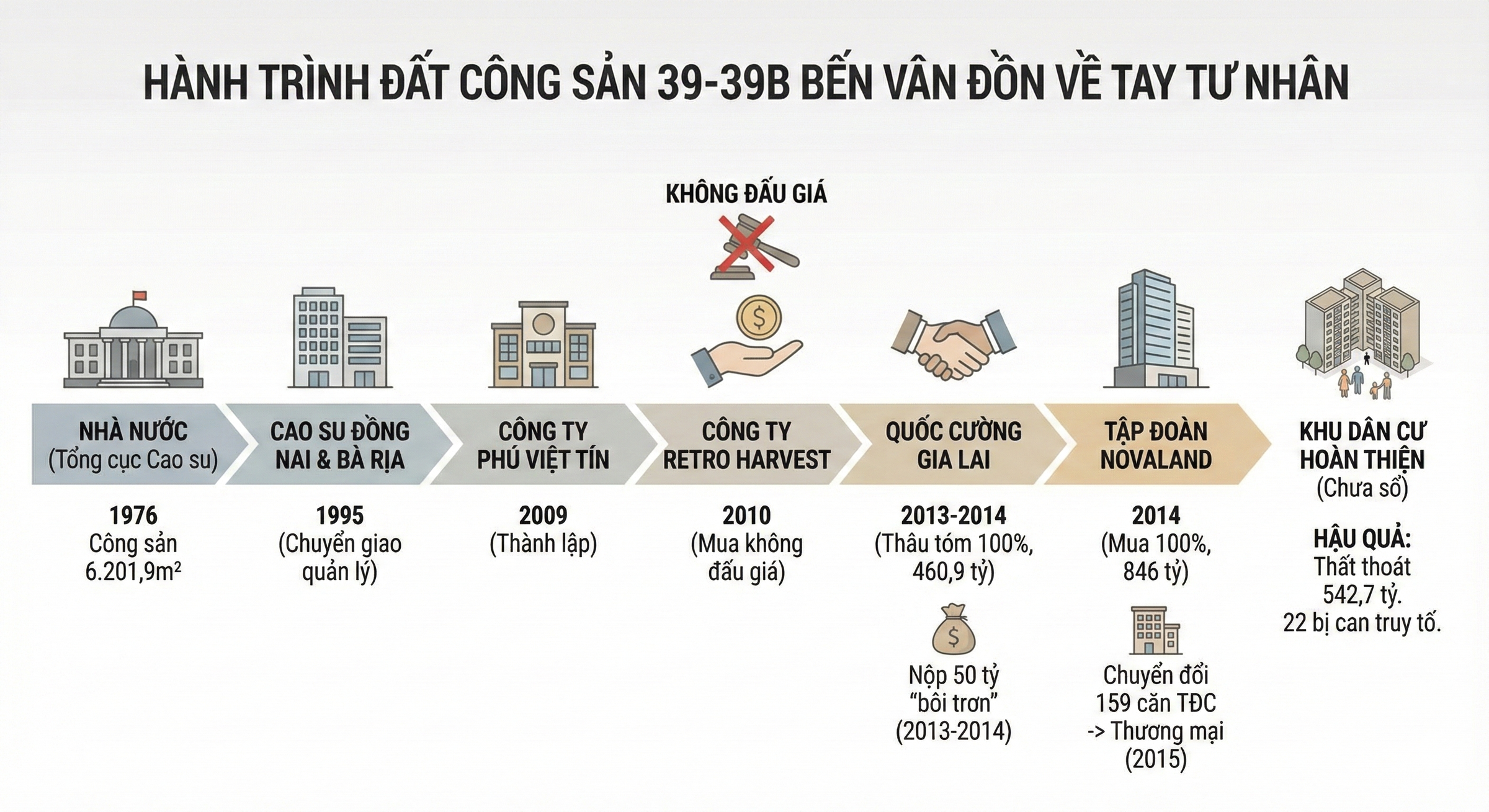 |
The violations in "removing" the 159 resettlement apartments mentioned above are a separate branch, yet closely related to the main case at Vietnam Rubber Group, which initiated the illegal transfer of the 39-39B Ben Van Don land from public to private ownership.
The case stems from the disregard for laws by leaders and a lack of oversight in public asset management. This prime land was managed by Vietnam Rubber Group. Le Quang Thung (former General Director) colluded with Le Y Linh and Dang Phuoc Dua, instructing the establishment of Phu Viet Tin Co., Ltd., and then illegally transferring capital contributions (essentially selling land without auction) for private takeover. Subsequently, Nguyen Thi Nhu Loan (CEO Quoc Cuong Gia Lai) acquired the project and profited nearly 298 billion VND.
To ensure the scheme's success, Linh and Dua bribed Thung with over 11,4 billion VND and Tran Ngoc Thuan (former General Director) with 45 billion VND. Additionally, defendant Doan Ngoc Phuong (Chairman of the Valuation Council of the Ministry of Natural Resources and Environment) received money to falsify valuation results, helping the defendants evade charges.
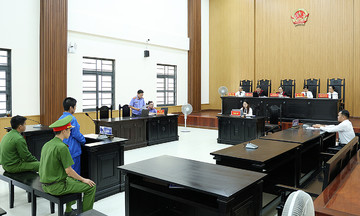
C03 has transferred the case files to the Supreme People's Procuracy, recommending the prosecution of 22 defendants for five charges, including: Violations of regulations on management and use of state assets causing losses and waste; Giving and receiving bribes; Abusing positions and powers; and Lack of responsibility.
>>List of 22 individuals recommended for prosecution
Quoc Thang
The Tresor project | Quoc Cuong Gia Lai CEO | 39-39B Ben Van Don | prime land | Ho Chi Minh City