In recent years, unmanned aerial vehicles (UAVs), commonly known as drones, have become a strategic tool for police forces and security agencies worldwide. With their ability to fly high, capture aerial footage, provide real-time surveillance, and integrate advanced sensors, UAVs help law enforcement reduce risks, accelerate emergency response, and offer a superior perspective in investigation and suspect apprehension missions.
UAVs become rapid response units
Instead of relying on road patrols, helicopters, or fixed cameras, UAVs can take off and reach a scene within minutes of receiving a command, providing images from angles that traditional methods struggle to achieve.
In many american cities, police departments have begun deploying UAVs as "first responders"—meaning the devices can be dispatched immediately to a scene after an emergency call, even before 911 personnel arrive. As this program expands to approximately 1,500 police departments, UAVs clearly demonstrate their value as a rapid response force, pre-positioned at various launch stations rather than officers having to deploy them upon arrival at a scene.
Chief Roxana Kennedy of the Chula Vista Police Department in california stated that UAVs helped officers locate and rescue a driver trapped in a burning vehicle by providing precise location information, which differed from the initial 911 report.
Cameras on UAVs allow command centers to monitor events in real time. Chief Kennedy noted that officers can make better decisions because UAVs can reach a scene faster through heavy traffic.
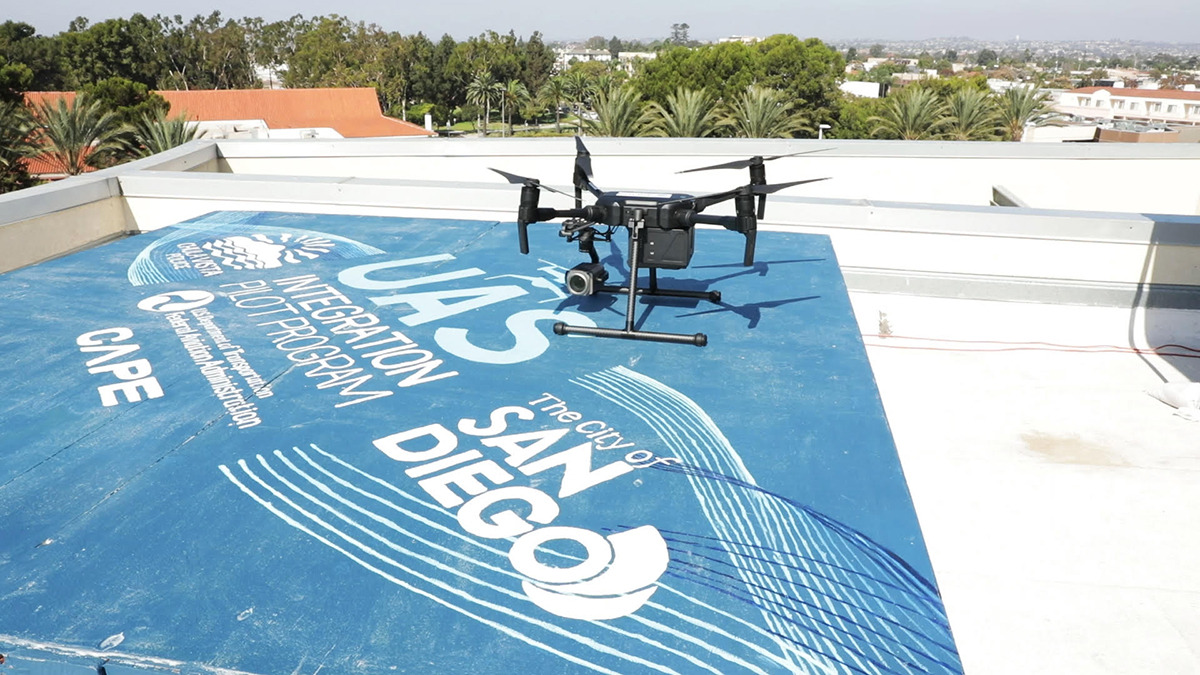 |
UAV launch station at Chula Vista Police Department. Photo: Chula Vista PD
In another incident, a UAV detected that an object a man was waving was actually a lighter, not a gun as reported by a citizen, helping to prevent a dangerous escalation that could have led to an accidental shooting.
These are prime examples of how UAVs not only help "see" but also "understand" a scene and enable faster intervention, thereby reducing risks and damages.
UAVs assist in suspect apprehension
Thanks to UAVs, police can identify and track suspicious vehicles from a distance, avoiding unnecessary and potentially dangerous pursuits. Police can also use spike strips more effectively as obstacles to disable vehicles and contain suspects before a chase ensues.
A testament to the effectiveness of UAVs in apprehending criminals is the case of the police force in Midland County, michigan, united states. During a foot pursuit of a suspect fleeing into the wilderness, police used a UAV equipped with a thermal camera to quickly scan the dense forest area. Thanks to the imagery provided by the UAV, the suspect was located and safely apprehended—a task that would have taken hours or even failed with ground personnel alone.
In november 2024, the San Francisco Police Department (SFPD) received a report of a home invasion robbery in the Bayview area. UAVs helped officers pinpoint the suspects' getaway vehicle and observed them transferring to two different cars, ultimately leading to the successful arrest of both individuals.
The San Francisco Police Department stated that the use of UAVs contributed to a 28% reduction in the crime rate there in 2024 and a further 30% reduction by april 2025.
In toronto, canada, the local police team used UAVs in an anti-theft operation: drones provided high-resolution images directly to the investigative team to track and apprehend a suspect involved in a series of warehouse break-ins without causing casualties.
UAVs aid in scene analysis
Beyond apprehension, UAVs play a crucial role in scene analysis and tactical support before forces are deployed. In special operations, UAVs act as "eyes in the sky" to assess risks, measure distances, and even track suspect movements from afar.
Modern UAVs are equipped with thermal cameras, capable of recording in low-light conditions, allowing police to compile scene maps, identify dangerous locations, and coordinate tactics effectively. Thanks to integrated UAV networks and communication devices, operational teams can coordinate seamlessly in real time.
For example, a UAV can provide information about a building before a drug raid, helping police better understand the terrain and residents in the area. Additionally, UAVs can continue surveillance after the team enters, providing field commanders with a comprehensive overview throughout the operation.
"We can use UAVs instead of police officers. UAVs can break windows, look under objects, like sofas and beds. This reduces risk for law enforcement", said detective Chris Levely, commander of the UAV team at the Midland County Sheriff's Office.
Many times, UAVs have recorded images of suspects fleeing through doors or windows, changing clothes, or discarding drugs and guns into bushes or on rooftops. Suspects who thought they had successfully escaped were unexpectedly apprehended.
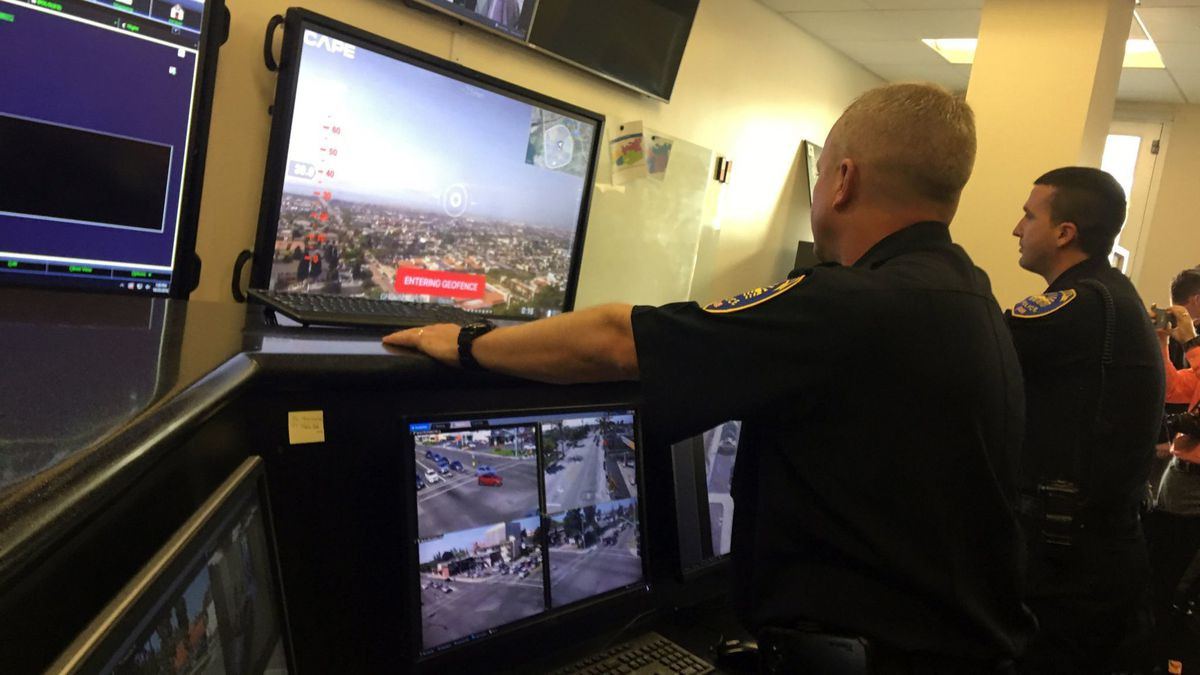 |
Police monitor live video feed from a UAV. Photo: Chula Vista PD
In hostage situations, UAVs are used in various ways. One method involves positioning a UAV to look into windows and gather information about the location of suspects and/or hostages. This provides police with intelligence on where and when to conduct a raid. In some cases, it has helped de-escalate incidents without casualties.
UAVs support forensic investigation
UAVs can accurately record traffic accident scenes and do so in just one-third the time compared to traditional methods, while also generating 3D models that can be accessed for review. More importantly, the faster process reduces the likelihood of secondary accidents, thereby enhancing safety for those involved.
In crime scene investigations, UAVs offer immense value by collecting information from a top-down perspective and data from scenes that might be overlooked when observed from the ground. In some cases, criminals may have broken into buildings from above or left evidence on rooftops.
Similar to reconstructing traffic accident scenes, UAVs enable the creation of 3D models that provide a comprehensive overview of the entire scene and can be reviewed.
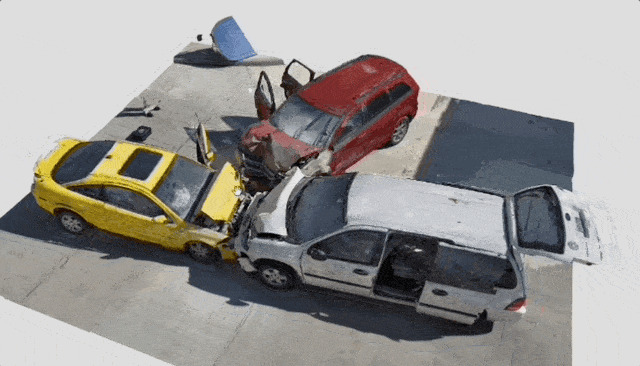 |
3D model captured by an unmanned aerial vehicle at an accident scene. Photo: Skydio
Furthermore, UAVs are not only "crime-fighting tools" but also serve public safety purposes, such as monitoring crowds to detect unusual behavior or incidents, searching for missing persons, and assisting in rescue operations, especially in vast areas or complex terrain.
Detective Chris Levely stated that the Midland County Police Department is experimenting with new ways to use UAVs, such as controlling UAVs to drop ropes to individuals who have fallen through ice. However, Levely believes that despite their high flexibility, UAVs cannot replace traditional police investigation work.
Alongside these benefits, the use of UAVs by police forces also raises questions about privacy and public surveillance. In many parts of the united states, police programs using drones must adhere to strict regulations regarding recording, data storage, and in some cases, even require court authorization to ensure that individual rights are not infringed upon.
Tue Anh (according to Police1, Investigatetv, Midland Daily News)