According to the draft Law on Specialized Courts at the International Financial Centers, which the government submitted to the National Assembly on 4/12, judges of specialized courts may be foreign nationals or Vietnamese citizens.
Foreign judges must meet specific criteria: they must be reputable lawyers or experts with relevant specialized knowledge; possess at least 10 years of experience in adjudicating and resolving cases related to investment and business activities; have sufficient English proficiency to handle cases in specialized courts; be not older than 75 years of age; and be in good health.
Chief Justice of the Supreme People's Court Nguyen Van Quang explained that foreign judges are necessary because the court model at the financial centers has unique characteristics, differing from the conventional People's Court system. This model operates under common law, utilizing precedents and expedited procedures, emphasizing flexibility and direct binding force from rulings.
In contrast, Vietnamese law belongs to the civil law system, which employs a distinct approach to judicial thinking, legal sources, and legal techniques.
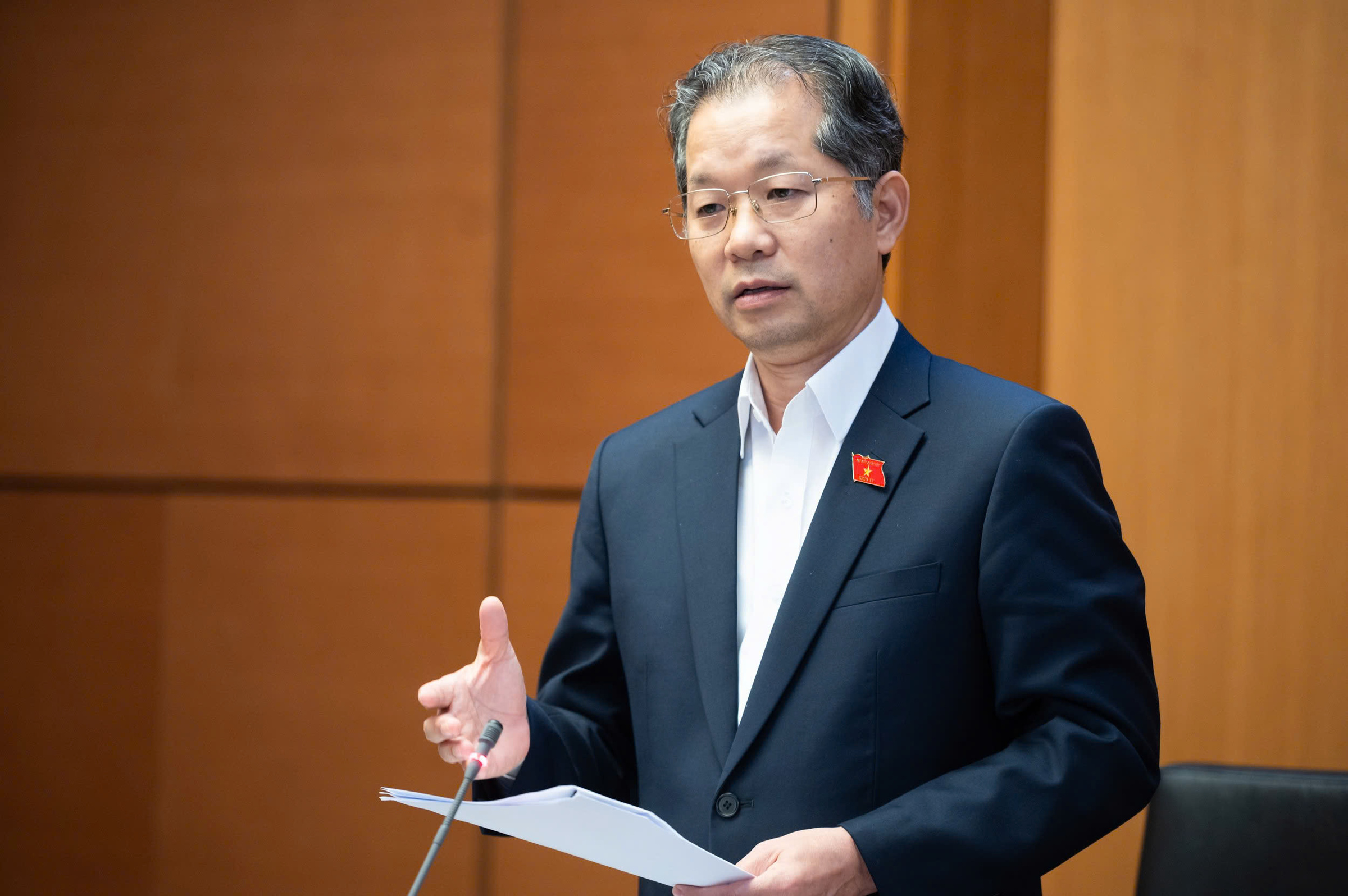 |
Chief Justice of the Supreme People's Court Nguyen Van Quang. Photo: Pham Thang
Based on this reality, Mr. Nguyen Van Quang outlined four reasons for the proposal. First, currently, no Vietnamese judges possess sufficient English proficiency in international financial and commercial law to directly adjudicate cases. Without adequate language competence, rulings may lack the necessary legal precision and fail to build investor confidence.
Second, most Vietnamese judges receive training under civil law and have no extensive training or judicial experience in a common law environment. However, common law is the legal system that will apply to the financial centers.
The Chief Justice also noted that attracting foreign judges is important because domestic judges lack international practical experience. Vietnamese judges have not adjudicated global-scale lawsuits, making it challenging for them to immediately handle complex investment and financial disputes.
Specialized court rulings are not expected to be subject to cassation or review. Judges bear final responsibility for their judgments. Therefore, adjudicators need significant prestige and international experience for their rulings to be respected and potentially recognized when enforced abroad.
The Chief Justice cited the case of Dubai (part of the United Arab Emirates), which for its first 10 years of operating its financial center, exclusively hired foreign judges from Singapore and Hong Kong. Only when the local team was adequately trained did the proportion of local judges increase to 30-45%. Vietnam needs to follow a similar path, initially recruiting international personnel while simultaneously training local judges to gradually build a Vietnamese judicial team for the future.
He affirmed that foreign judges will still be appointed by the President upon the recommendation of the Chief Justice of the Supreme People's Court. However, to attract qualified personnel, the law must establish a clear legal framework. This is a prerequisite if Vietnam aims to become a competitive destination in the region.
Many international financial centers (IFCs) or "international commercial courts" abroad currently employ foreign judges or combine domestic and foreign judges. Examples include the Dubai International Financial Centre Courts (DIFC Courts) and the Singapore International Commercial Court (SICC).
On 27/6, the National Assembly passed a resolution on developing international financial centers in Vietnam, effective from 1/9. This resolution guides the establishment of financial centers in Ho Chi Minh City and Da Nang, featuring a unified management mechanism but developing specialized products based on each locality's strengths.
Ho Chi Minh City will focus on capital markets, banking, monetary affairs, fintech sandboxes, and specialized exchanges. Da Nang will develop green finance, financial technology, digital services, and controlled trials of assets and digital currency, attracting investment funds.
Son Ha