At 11 a.m. on 23/12, in the basement parking lot of an apartment building in Nhan Chinh ward, Hanoi, Thanh Nam, a 10th-grade student, struggled to remove a battery weighing over 10 kg from his electric motorbike to carry it up to his 12th-floor apartment. Around him, the sockets that once charged over 100 electric vehicles were now just crudely dismantled remnants. "Since late November, the building management board cut off all power in the basement due to fire safety concerns, so I have to take the battery home to charge it," Nam said.
The sudden ban on electric vehicle charging in the basement greatly frustrated Tung, a resident of the building. "The city encourages green living, but when electric vehicles arrive home, their charging access is blocked," he stated. The 38-year-old man argued that the management board was escalating risks by forcing residents to charge batteries near their beds.
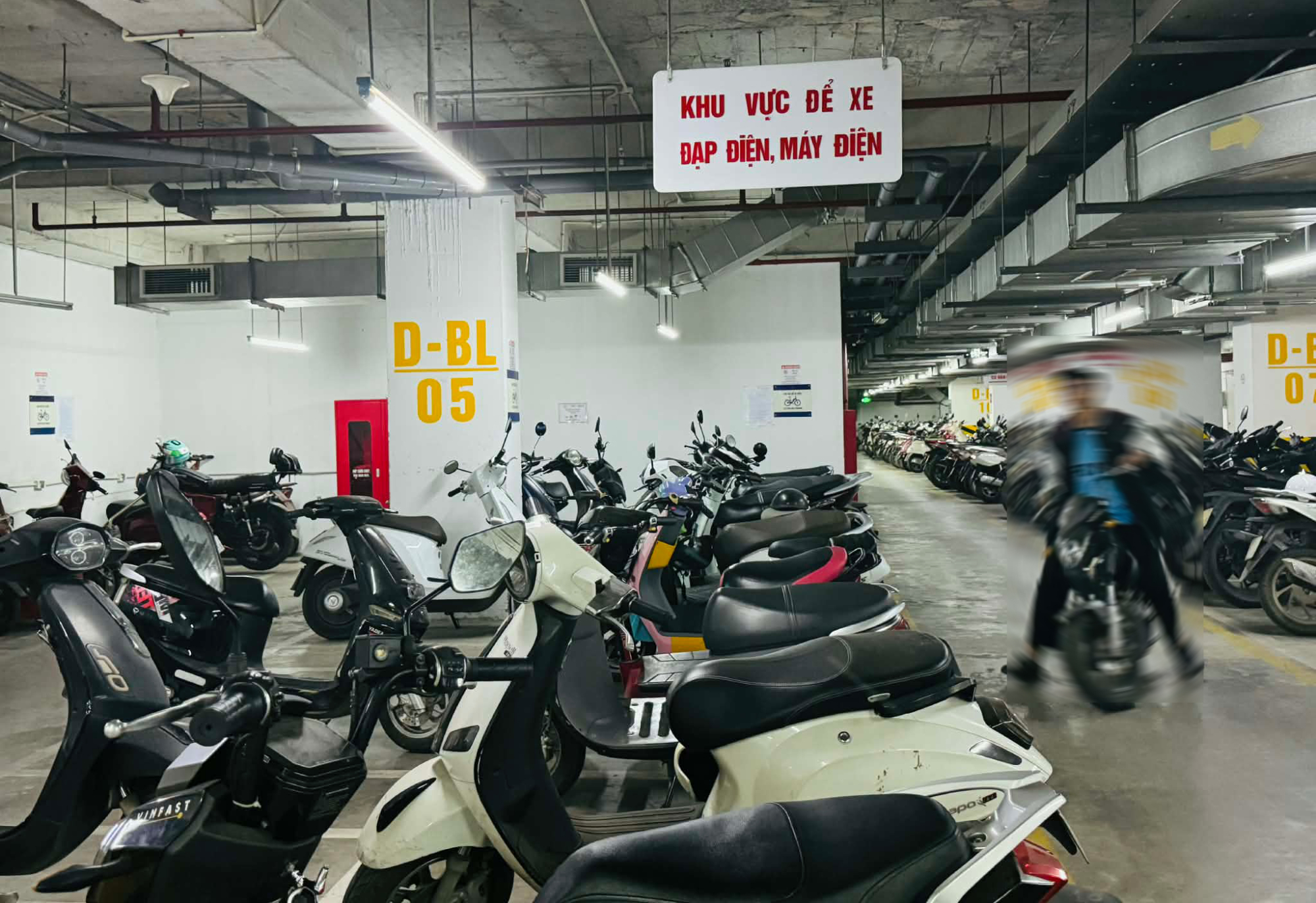 |
The electric vehicle parking area at an apartment building in Nhan Chinh ward, Hanoi, has had its charging sockets removed. *Photo: Pham Nga*
While over 700 apartments in this building still await the developer's promise of "new charging arrangements," a solution has been found just a wall away. Comatce Tower, another apartment building, has adopted an "outsourcing" model.
Pham Quang, a resident of Comatce Tower, expressed relief that his family's two electric motorbikes now have a dedicated "home" for charging, completely separate from the main parking basement. The charging process connects via an application, automatically cuts off when full, and transparently displays electricity consumption. "Each charge costs about 8,000-12,000 VND, which I find reasonable for the peace of mind it provides," Quang commented.
Nguyen Ngoc Thang, head of the building management board, stated that due to safety pressure for large apartments (150-600 square meters), the board previously had to remove basement charging sockets, leading to strong resident protests. "Residents reacted strongly at the time. Many called to question: 'If it's banned in the basement, we have to bring batteries home, which is twice as dangerous. What's the difference?'" Thang recalled.
Recognizing electric vehicles as an inevitable trend, the management board invited five professional units to conduct surveys instead of having the building's technical team handle the connections themselves. "Setting up a charging station isn't just about connecting a few sockets; it requires expertise," Thang emphasized.
Currently, Comatce Tower's station can accommodate 30 vehicles and is ready for expansion as the number of vehicles increases.
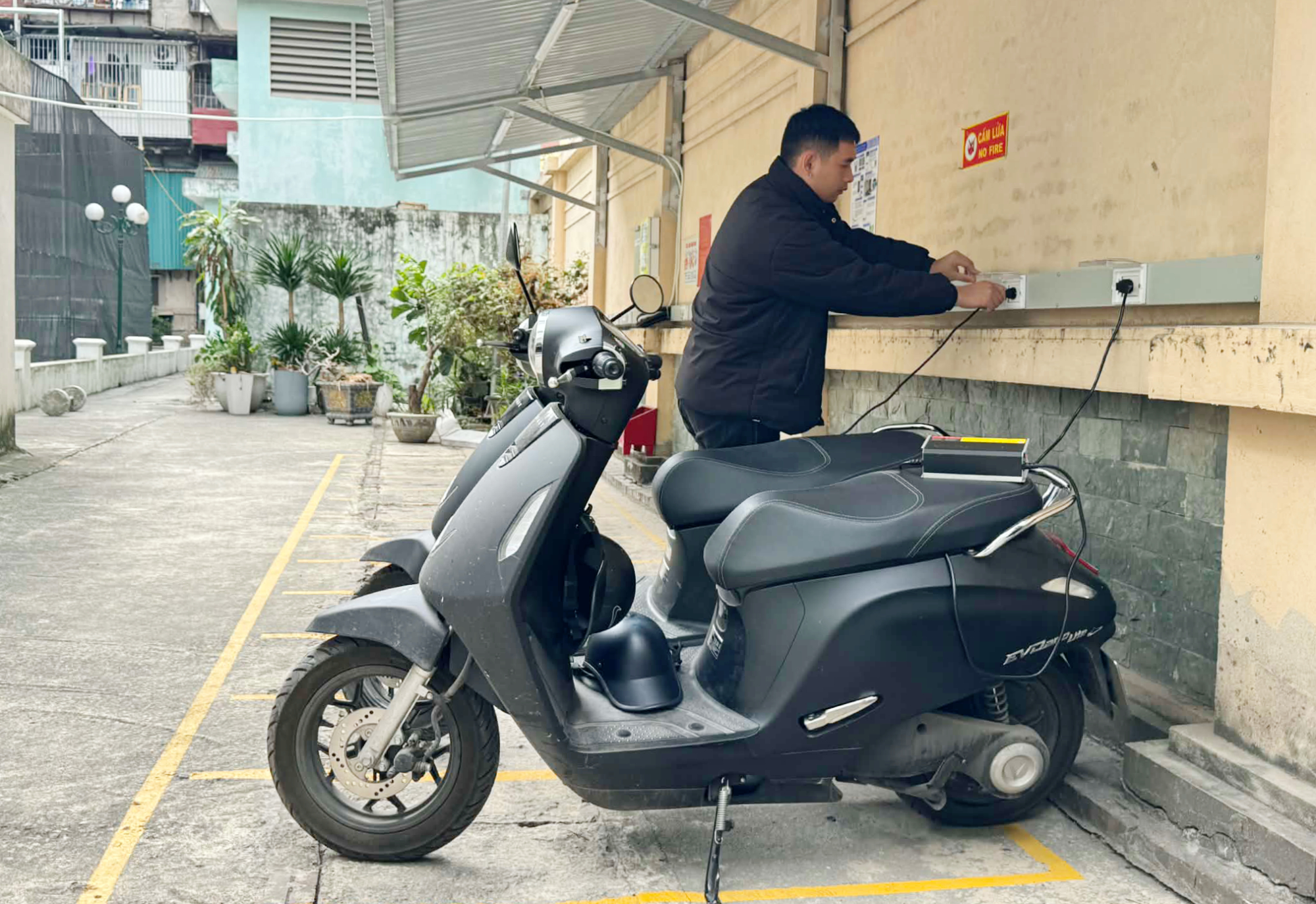 |
Residents charge electric vehicles at an app-connected, safe area in Comatce Tower apartment building, midday 24/12. *Photo: Phan Duong*
In Ho Chi Minh City (HCMC), the socialized charging station model is also helping many residential areas solve the problem of fire and explosion risks associated with charging electric vehicles in basements. In late December, My Phuc apartment building, residential group 53, Phu Dinh ward, launched a charging station capable of accommodating several hundred vehicles across 200 square meters, alleviating charging concerns for nearly 4,000 residents.
Previously, this apartment building experienced residents vying for sockets and arbitrarily unplugging each other's vehicles, causing conflicts. Nguyen Phuong Mai, a representative of the management board, said they used the parking fund surplus and resident support to systematically re-plan 30 charging ports (double the previous number), equip them with full fire prevention and fighting (PCCC) equipment, and are on track to expand the area for electric automobile charging.
"This is not just a solution for resident needs; it's also a way for the apartment building to accompany the city in its green transformation roadmap," said Hoang Nang Hung, head of the management board.
Hanoi and HCMC lead the country with nearly 80,000 automobiles and around 200,000 electric motorbikes. This number is projected to increase significantly with the green transition trend. In reality, the infrastructure in most apartment buildings cannot keep pace with the rapid development of electric vehicles. Many places opt for extreme solutions, such as banning electric vehicle charging and parking.
This gap has created an opportunity for companies offering comprehensive charging station solutions. Pham Hoang Vu, deputy sales director of Fascha charging station system, stated they are implementing nearly 20 projects in major cities. Unlike manual sockets, professional charging stations use management software, automatically cut off power when overheating, and send alerts to both users and the operating unit.
From an economic perspective, this model operates like an e-wallet: top up first, then charge. The provider only sells the solution, equipment, and maintenance. Revenue is automatically transferred to the building developer's account. The investment cost is approximately 25 million VND for a 10-vehicle station (excluding auxiliary infrastructure). If a proper roof is included, the total cost is around 70 million VND—a figure within the capabilities of medium-sized apartment building maintenance funds.
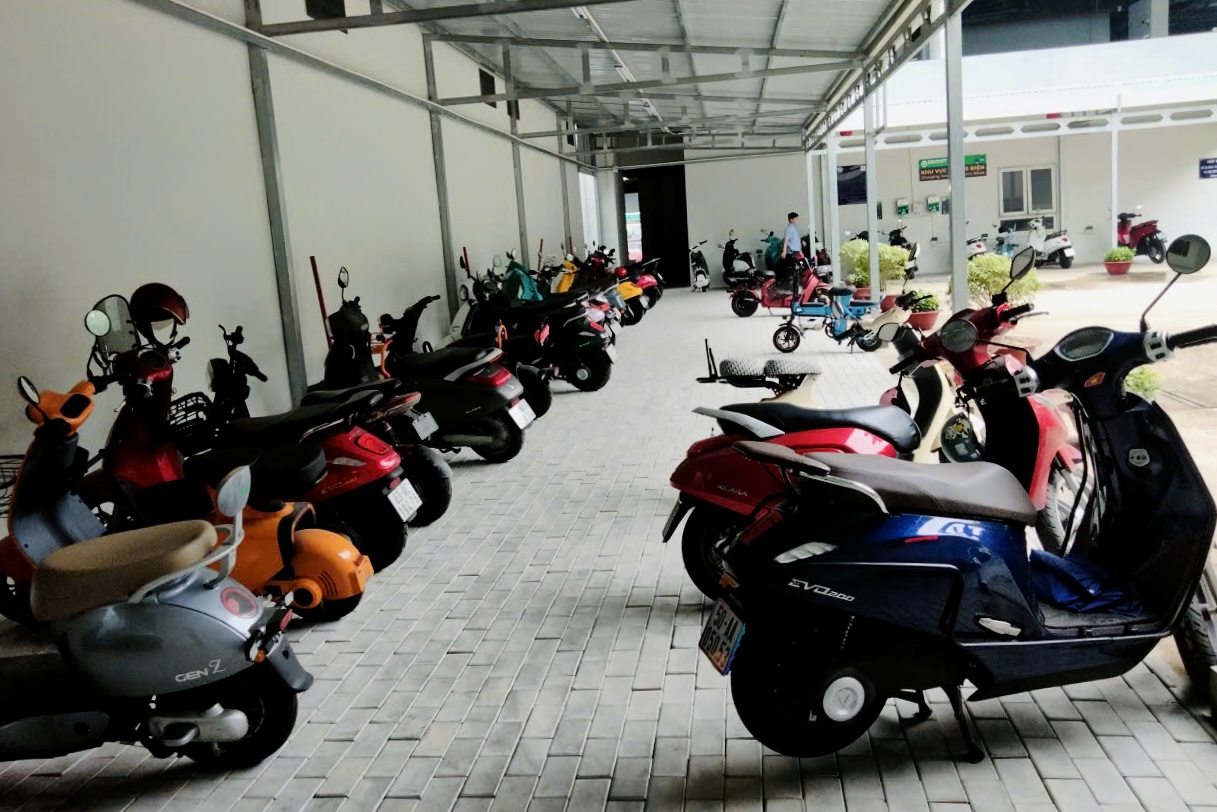 |
My Phuc apartment building, residential group 53, Phu Dinh ward, HCMC. *Photo: Phuong Mai*
Trieu Tran, a representative for Eboost—a company operating over 2,000 charging points—confirmed that the demand for professional solutions from management boards is surging. Eboost's strength lies in serving various brands, from automobiles to electric motorbikes, integrating the entire process from finding a station to payment on a mobile application, making it easy to locate stations and monitor the charging process.
However, Tran admitted that despite high demand, most apartment buildings are hesitant to implement solutions due to issues with electricity capacity and PCCC regulations. "Developers are struggling to find professional units to ensure regulatory compliance, but they urgently need a clear legal framework and technical standards from regulatory agencies," Tran recommended.
Nguyen Duy Thanh, general director of an apartment building operating unit in the South, shared this view, noting that technology and cost are no longer major problems. The difficulty lies in the mechanism. To ensure safety, many places choose outdoor installation, leading to landscape conflicts with residents who do not use electric vehicles.
"Outsourced models that clarify responsibilities offer a way out, ensuring that batteries no longer 'wander' dangerously in elevators or residents' apartments," Thanh concluded.
Nga Duong