Cooking at a consistent temperature from start to finish often results in less flavorful braised dishes. Too high a heat can dry out or scorch the meat before it absorbs flavor, while starting with too low a heat can make fish taste fishy.
Applying the 'initial boil - gentle simmer - final open' rule ensures braised dishes achieve a perfect balance of aroma and taste.
Stage one: high heat, lid open for odor removal
When you begin braising, turn the stove to high heat to bring the pot to a rapid boil and leave the lid open. This high temperature allows impurities and fishy odors, especially from fish, to escape with the steam. The thermal shock quickly sears the surface of the meat or fish, helping it maintain its shape and preventing it from breaking apart during the long braising process.
For pork belly or ribs, searing them over high heat before adding hot water achieves a similar effect, creating a protective layer that keeps the meat succulent inside.
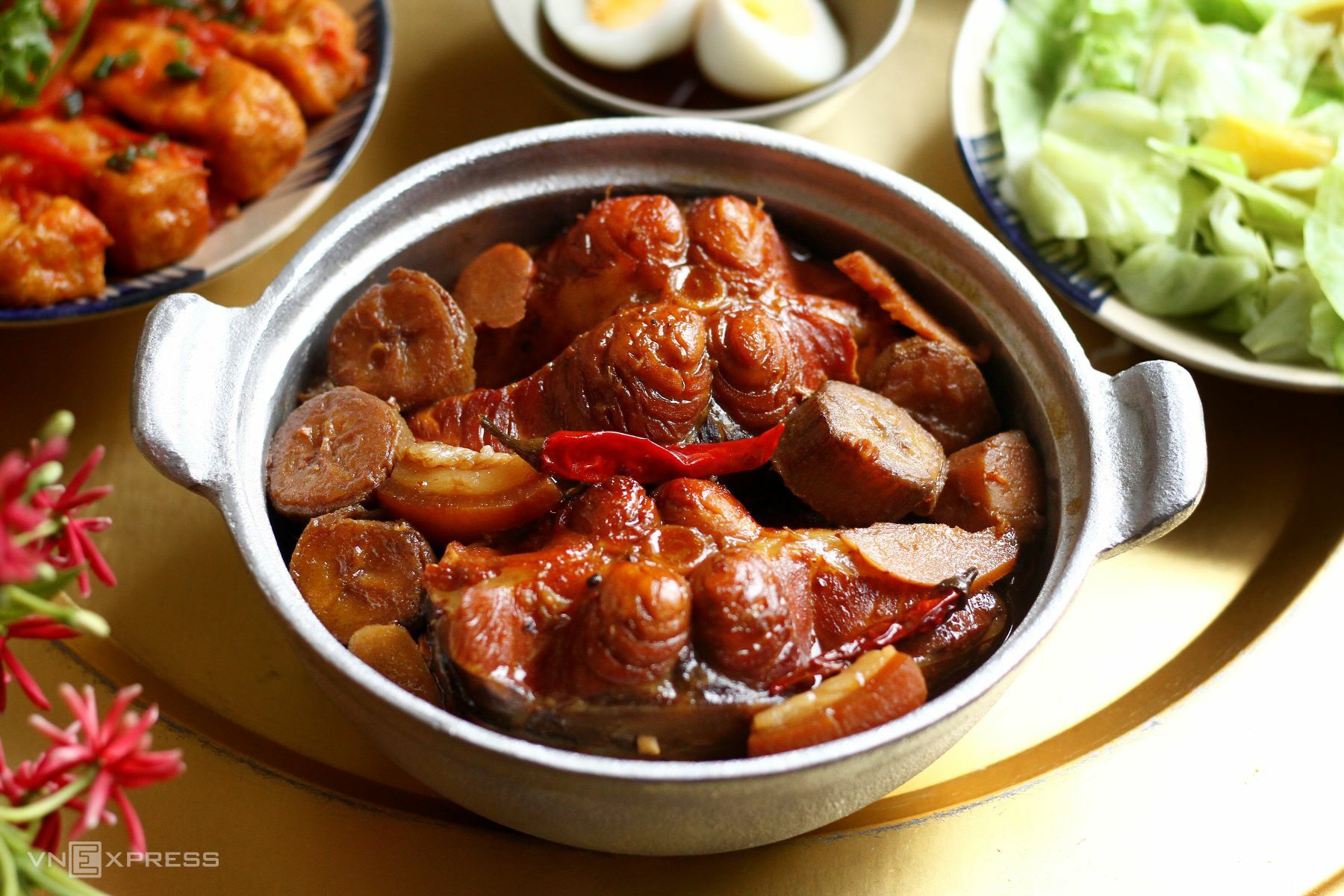 |
Northern-style braised fish with green bananas. Photo: *Bui Thuy* |
Stage two: gentle simmer, lid covered for flavor absorption
Once the braising pot reaches a steady boil and any foam is skimmed off, reduce the heat to its lowest setting (a gentle simmer) and cover the pot. This stage is crucial for achieving tenderness and deep flavor.
The enclosed environment and low temperature allow seasonings to slowly penetrate every fiber of the meat and bone. This gentle heat also transforms collagen in the skin and tendons into gelatin, resulting in a dish that is tender and succulent without falling apart. Rushing this stage with high heat will cause the sauce to evaporate quickly, leaving the ingredients bland inside.
Stage three: increased heat, lid open for color development
Once the meat or fish reaches desired tenderness, remove the lid and increase the heat to medium. The goal is to quickly evaporate the braising liquid, concentrating it into a rich, thick sauce.
This is when the browning and aroma-developing reactions are most intense, giving the dish a glossy reddish-brown color, often described as 'canh gian' (the color of a cockroach's wing, implying a deep, rich brown), and releasing the fragrant aromas of fish sauce, spring onions, and pepper. It is important to carefully monitor the heat at this step to ensure the sauce thickens perfectly, evenly coating the meat or fish without scorching.
Bui Thuy