Since April, Rescue Team 116 has participated in approximately 40 drowning search operations across the country. Victims are primarily children aged 7 to 15. Based on these rescue efforts, Nham Quang Van, captain of Team 116, has highlighted three main causes of these tragic accidents among students.
**Underestimating complex natural water environments**
According to data from the Ministry of Labor, Invalids and Social Affairs (MOLISA), over 2,000 children in Vietnam die from drowning each year. Of these, 76% of accidents occur in community settings such as ponds, lakes, rivers, streams, and areas around homes, which often harbor numerous unpredictable risks. "Many sections of rivers appear calm on the surface, but when we lower a camera, the underwater current is so strong it can dislodge a pole stuck in the mud," Van explained. When children jump in to swim, sudden changes in the riverbed, deep holes, or slippery algae can cause them to lose their footing, experience cramps, and be swept away by the water.
Many students are complacent because they have learned to swim in pools or believe swimming close to the shore is safe. However, swimming skills in a pool differ significantly from survival abilities in natural rivers and lakes.
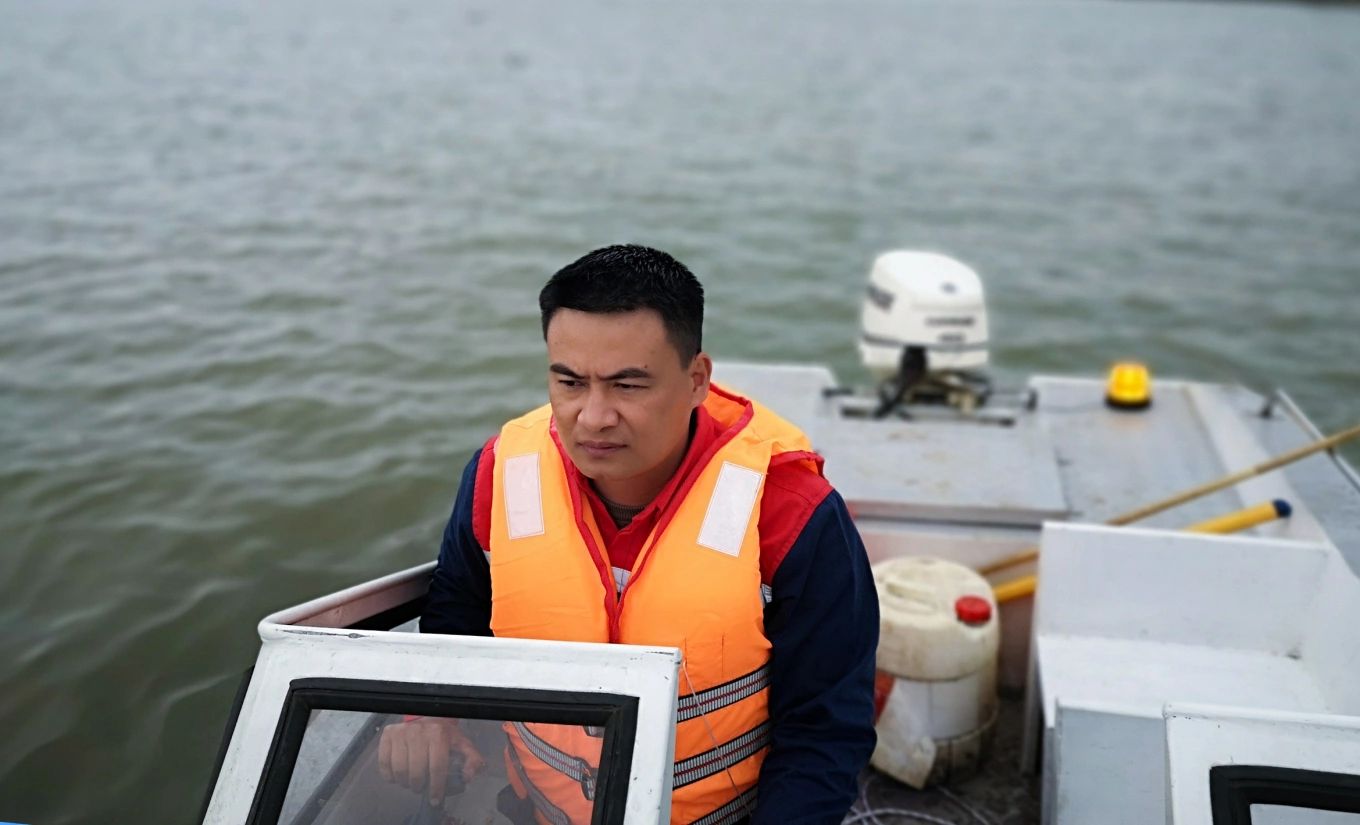 |
Nham Quang Van, captain of Rescue Team 116, during a drowning rescue mission at Lac Quan Bridge, Nam Dinh, in early 2022. *Photo: Provided by subject* |
**Lack of survival skills**
In many accidents, the victims knew how to swim. According to Van, the ability to remain calm and handle situations is more crucial than swimming technique alone.
Many children who swim well in pools become disoriented in natural water environments like rivers, streams, ponds, and lakes due to murky water and strong underwater currents. When panicked, they struggle excessively, quickly losing energy and sinking.
According to the rescue expert, essential water survival skills for children include how to float to conserve energy, control breathing, recognize dangerous areas, find floating objects for support, and safely escape. There is a significant gap in current skill-teaching efforts. Many parents mistakenly believe that teaching children to swim is sufficient, overlooking the critical next step of teaching water survival skills.
A 2025 report by the Ministry of Education and Training (MOET) indicated that approximately 30% of students nationwide know how to swim. Meanwhile, only about 2,200 out of over 25,000 schools have swimming pools.
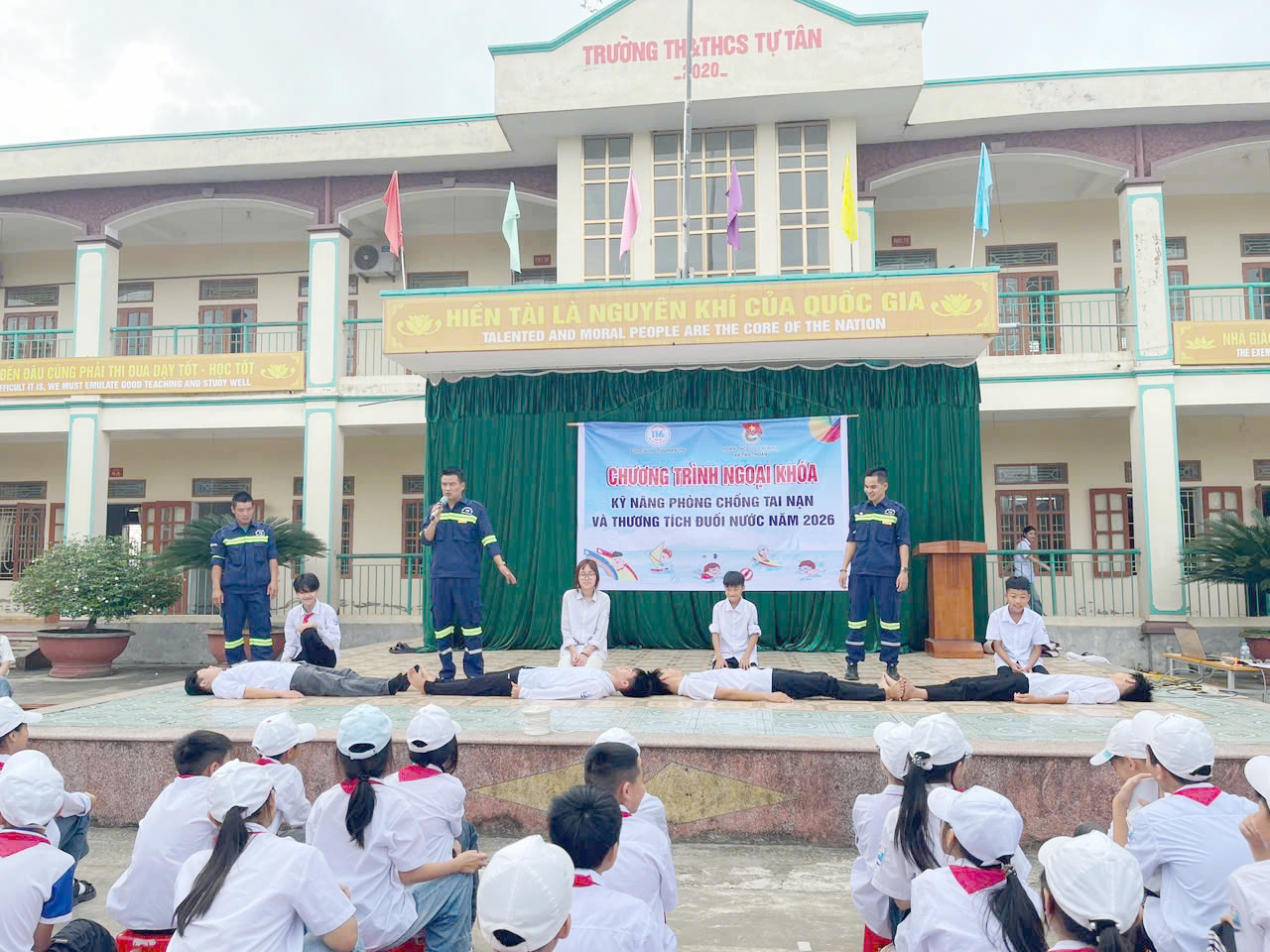 |
Rescue Team 116 organizes a workshop on accident prevention and drowning injury prevention skills at Tu Tan Primary and Secondary School, Hung Yen province, in 2026. *Photo: Nham Quang Van* |
Nguyen Le Thuy, a school psychologist, noted that a major flaw is that many water safety skill programs involve "practice on land". These lessons are often theoretical and lack practical demonstrations in the water. If children are not placed in realistic contexts to develop "muscle memory", they will forget the knowledge and act instinctively when an incident occurs. "Education and families need to reorder priorities: survival skills first, knowledge second," Thuy emphasized.
**Improper rescue attempts**
The recurrence of mass drowning incidents is a serious concern. Two consecutive incidents, for example, resulted in the deaths of five students in Phu Tho and four students in Dak Lak. According to Nham Quang Van, when students see a friend struggling, they often react instinctively by jumping in to help.
"The instinct to survive causes a drowning person to struggle with 3-4 times their normal strength. Without proper skills, the person jumping in to rescue is highly likely to become the next victim," the expert stated.
The principle for children is never to rush into the water to rescue someone on their own. Instead, they should:* Call for adult help.* Find and throw floating objects into the water, such as buckets, plastic cans, foam, or dry firewood.* If the victim is near the shore, the rescuer should use a pole, stick, rope, or throw a shirt for the victim to grasp. Simultaneously, the rescuer must lower their center of gravity and lie prone to avoid being pulled in.
Skilled rescuers entering the water should dive and approach the victim from behind. With one hand under the armpit and the other supporting the chin to prevent water from entering the victim's mouth, they should then swim on their back to bring the victim to shore.
Many drowning incidents occur at noon or after school in the afternoon, times when children gather to swim in rivers without adult supervision. In many rural areas, children have easy access to ponds, lakes, and streams but lack safe play areas and water safety skill classes.
To address this skill gap, members of Team 116 currently visit two to three schools daily to teach essential skills, including proper drowning rescue techniques.
"As students prepare for summer vacation, Team 116 urges parents to dedicate more time to supervising and caring for their children. Equip your children with water safety skills, and absolutely do not allow them to go swimming unsupervised in dangerous rivers, lakes, or deep ponds," Van advised.
Phan Duong