Kihnu island, located in the Gulf of Riga, is 7 km long and over 3 km wide. Together with Manija island and neighboring islets, it forms the Kihnu Cultural Space, recognized by UNESCO as an intangible cultural heritage. The island currently has a population of about 300 people.
Since the 19th century, men on the island regularly went to sea for fishing, seal hunting, or worked on the mainland for many months. Women remained to manage all tasks, from raising children and farming to running the community. This division of labor, lasting for generations, led media to dub Kihnu the "women's island".
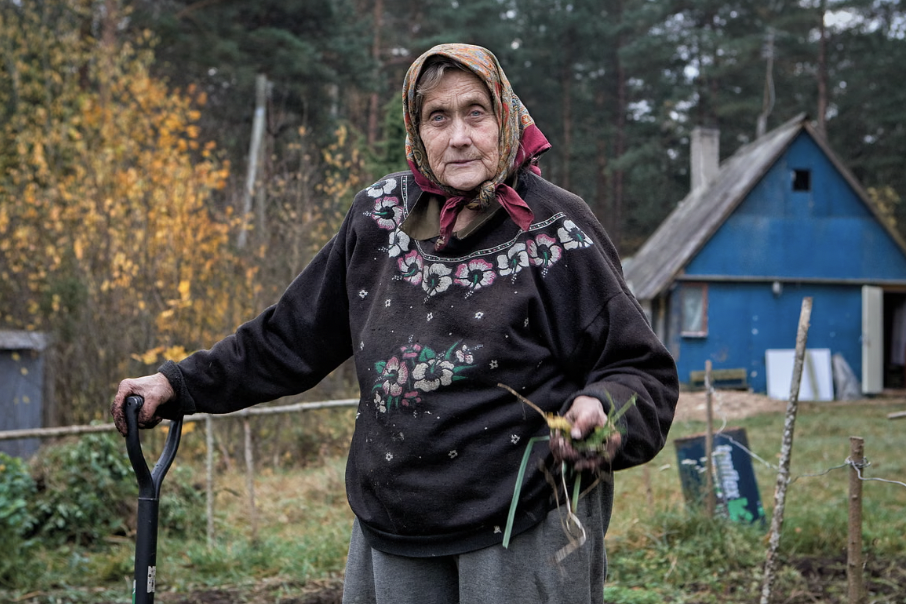 |
An elderly woman on Kihnu island, Estonia. Photo: *Guardian*.
However, locals do not fully agree with this label. "We are not a matriarchy. Kihnu is a community where women play a central role", said Mare Mätas, an island guide and cultural expert. She stated that women care for families, preserve customs, and organize ceremonies.
Most men on the island continue to be absent, working on cargo ships, cruise ships, or as migrant workers in Nordic countries like Finland and Norway to earn income to support their families. Job opportunities on the island are scarce and seasonal, forcing them to maintain the tradition of leaving the island for work for many months. Nevertheless, they remain important financial pillars of Kihnu.
Kihnu women still maintain the custom of giving birth in a sauna, carrying their children while working in the fields, or riding sidecar motorcycles. When men are away, they guard lighthouses, drive tractors, operate farms, and support ceremonies. The local language has many words describing ice conditions and sea weather, such as "tie" (solid ice) or "tuuloeauk" (thin ice).
Marriage and childbirth were once highly valued on Kihnu. Married women wear aprons over their traditional *kört* skirts. Skirts are woven in winter; red symbolizes youth, while black is worn during mourning.
Norwegian photographer Anne Helene Gjelstad believes that life on the island is difficult for women who do not marry or have children, as they are not valued as highly as other women.
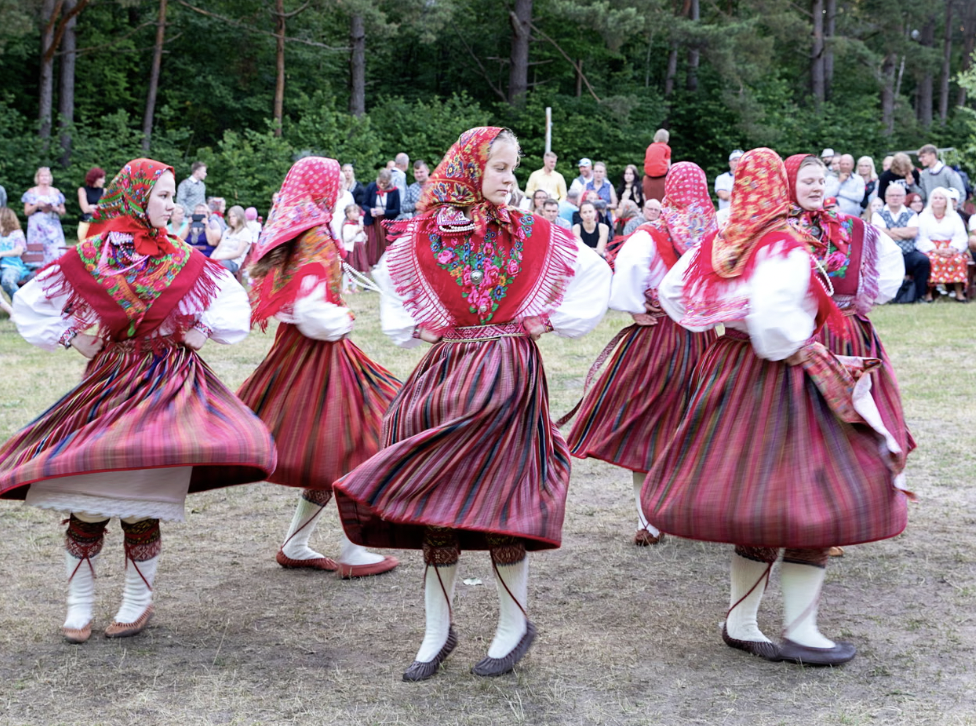 |
Women teach their daughters traditional dances to preserve Kihnu's culture, Estonia. Photo: *Guardian*.
Kihnu's culture faces the risk of erosion due to an aging population and the exodus of young people from the island. Traditional three-day weddings with music and dance are gradually disappearing as many choose to cohabitate without marriage or move to the mainland for education and work. Old beliefs that manual labor was more important than a daughter's education have also changed over time. Many wooden houses on the island are abandoned. Women entering their 60s begin preparing for their funerals, sewing their own clothes and knitting gloves for gravediggers.
To preserve its identity, Kihnu residents are trying to control tourism activities. Each summer, tourists visit the island to hear local women perform folk music, watch ancient runic dances, and purchase handicrafts.
According to Mare Mätas, Kihnu aims to attract tourists interested in culture and crafts rather than mass tourism. Local authorities are considering banning motorhomes from the island.
Ngoc Ngan (According to *Guardian*)