The issue began on 6/5 when some residents reported being unable to complete purchases on e-commerce platforms, with the system displaying "address not supported for delivery." Customer service explained that many stores had blocked orders to the area due to a very high rate of buyers abusing the refund policy.
Several online sellers confirmed the situation. A clothing merchant stated that out of 122 packages sent to Yingfeng, 94 orders were returned with refund requests.
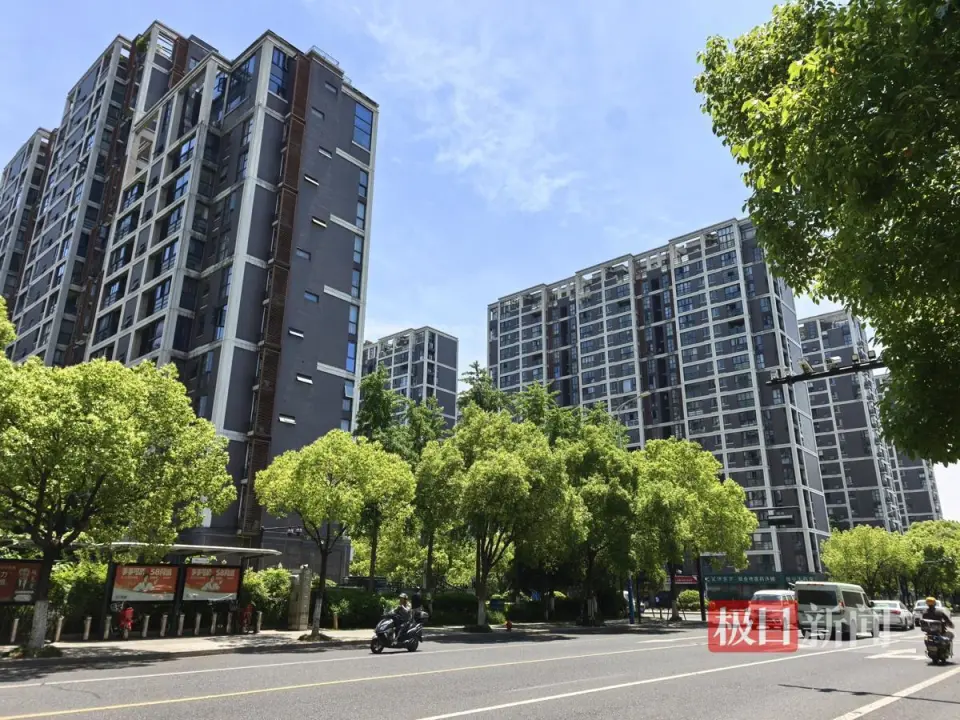 |
A view of Yingfeng neighborhood, Xiaoshan district, Hangzhou city. Photo: Jimu news
A survey by The Paper revealed that brands such as Saint Laurent, Prada, and Miu Miu have added the entire Yingfeng neighborhood to their restricted delivery lists.
A test conducted by Jimu News on 10/5 showed that attempts to order Prada sandals priced over 7,000 CNY (approximately 24 million VND) or IKEA items to an address in Yingfeng resulted in messages like "delivery not supported" or "out of stock." Transactions were only successful when changing the delivery address to a neighboring area.
Yingfeng neighborhood, located in Xiaoshan district, Hangzhou, has a population of approximately 239,000 people, with 70% being young adults. The area is a hub for livestreamers. Notably, the Regent International apartment building, an iconic structure in Hangzhou with an estimated capacity of over 20,000 residents, primarily influencers, streamers, and key opinion leaders (KOLs), has recorded the highest number of returned orders.
Xiao Shui, a Yingfeng resident, recounted her inability to order a Miu Miu handbag since 9/2023 due to a system error. On 8/5, a young man in the area also confirmed he could not purchase shoes on the Douyin platform.
Li, a livestreamer in Yingfeng, suggested this situation is a reaction from some brands. Li mentioned she frequently shops online, keeping 30% of her purchases and returning 70% after the trial period. She justified this rate by stating that product quality sometimes does not match advertisements.
Wu Chao, another streamer in Yingfeng, explained that the return rate for individuals in their profession is quite high due to the nature of their work. "They might order dozens of items at once to use as props for livestreams, but only keep one or two," Wu said.
Mr. Duan, the manager of a express delivery station in Yingfeng, confirmed the prevalence of online profiteering. Before the 1/5 holiday, three footwear and handbag brands had ceased deliveries to the area because customers were ordering items to use for outings then returning them for a refund. Mr. Duan also noted that many people purchase mid-range items to sell on secondhand platforms, returning them to the store if they remain unsold.
"Delivery staff have to collect returned orders without additional income, which significantly increases their workload," Mr. Duan stated.
Xiao Zhang, another delivery employee, shared an instance where a high-end brand's products were bought by residents in the area, copied to make fakes, subsequently leading to the brand refusing deliveries.
Lao Bai, a Taobao shop owner, reported that the fashion industry suffers significant losses, with return rates reaching 50-70%. He mentioned having to compensate for products damaged by customers seeking refunds. Platforms like Taobao and Douyin allow customers to return items within 7 days without needing a reason, which contributes to this abuse. Lao Bai has installed four cameras to monitor the packaging process and block transactions with many customers.
A representative from the Yingfeng Neighborhood Committee declined to comment on the matter.
Retail expert Zhuang Shuai, founder of Bailian Consulting, believes the issue stems from an imbalance in platform rules. He proposed that e-commerce platforms should establish return rate thresholds, require buyers to bear shipping costs if returns exceed 80% each month, and create a restricted list for stores with false advertising.
By Bao Nhien / The Paper, Red Star