In 2021, Stella Guan, 33 years old, purchased a home in Los Angeles, hoping to establish a stable foundation for her freelance work and life. However, pressure mounted immediately upon moving in.
The old house contained black mold and asbestos, a mineral fiber once used in construction and linked to lung disease and cancer. For her health, she was forced to spend 50,000 USD on immediate remediation. This expense, far exceeding her budget, completely disrupted her financial plans.
What stressed Stella was not just the 50,000 USD, but the feeling of continuously emerging hidden costs. The house, instead of providing peace of mind, became a persistent source of pressure. Unable to endure it further, she hastily sold the house through a real estate platform, accepting a 100,000 USD loss to end the cycle of spending. "Since then, I have chosen a nomadic lifestyle and have no intention of buying a home again", Stella said.
 |
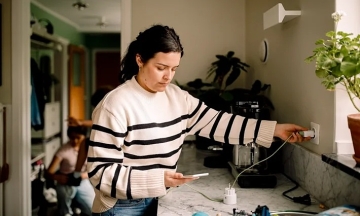
Stella Guan, 33 years old, in Los Angeles, US. Photo: BI |
Meg, 60 years old, an office manager in Maryland, found herself in a similar situation. In 2020, she bought a house because loan interest rates were lower than her steadily increasing rent payments. Initially, she was grateful for "her and her daughter's small home", but that sense of security quickly faded.
The old house constantly experienced problems. The heating and air conditioning system failed, forcing her to take out another loan for replacement, piling debt upon debt. Currently, the costs to maintain the house alone consume 50% of her income. Including other essential living expenses, the total costs reach 75%. To cope, she continuously increased her insurance deductibles (paying more out-of-pocket before insurance coverage). Despite this, fees still rise annually, while her income remains stagnant.
"The pride of homeownership has given way to constant pressure. I feel trapped by a decision I once thought was wise", Meg shared.
These two stories reflect a growing conflict in the US: many can afford to buy a home, but the unexpected repair and maintenance costs exceed their capacity, forcing them to sell at a loss or struggle to hold on.
The ServiceTitan Benchmark 2025 report indicates that 71% of homeowners delayed repairs in the past year, with 62% postponing critical maintenance items due to insufficient funds. This creates an estimated repair "backlog" of over 300 billion USD across the US.
A survey by Today’s Homeowner of 1,000 US homeowners also revealed that 84% of families have one to five items needing repair. Over half of these households delayed repairs due to financial exhaustion.
The pressure intensifies amidst high inflation and interest rates. According to the Harvard Joint Center for Housing Studies, the average age of homes in the US has reached 44 years, accelerating their deterioration. Therefore, homeownership no longer equates to stability.
 |
Illustration photo: Pexels |
On the Reddit forum, a millennial shared that he was once proud to buy a house while his friends rented. However, after just two years of living in California, he admitted to "hating everything about being a homeowner". Each new issue brings thousands of US dollars in bills. He lives in constant anxiety, wondering what will break next, and estimates it will take another decade to see any financial benefits from homeownership.
According to Bankrate, the average monthly mortgage payment in the US (including taxes and insurance) reached 2,768 USD in 2/2025. This figure is 38% higher than the average rent of 2,000 USD (which does not account for the pervasive risks of repairs). For many, the real pressure only begins on the day they receive the keys.
Ngoc Ngan (According to Business Insider, Yourtango)