While peers are engrossed in social media, Laura Derrendinger's 16-year-old son in Vermont only uses a rotary phone and paper maps when driving. She believes giving her son access to social media is more dangerous than using a chainsaw. His main daily activities, along with his three siblings (10, 12, and 14), involve raising chickens and goats at home.
Derrendinger, 49, is a board member of the organization Smartphone Free Childhood in the US. She stated her family moved 10 times to find a screen-free environment for raising their children. Their home has no television or tablet devices.
Unable to find a suitable high school, she and her husband once sent two children to Washington D.C. to live with their grandparents and attend a Waldorf school, which employs a screen-free education method.
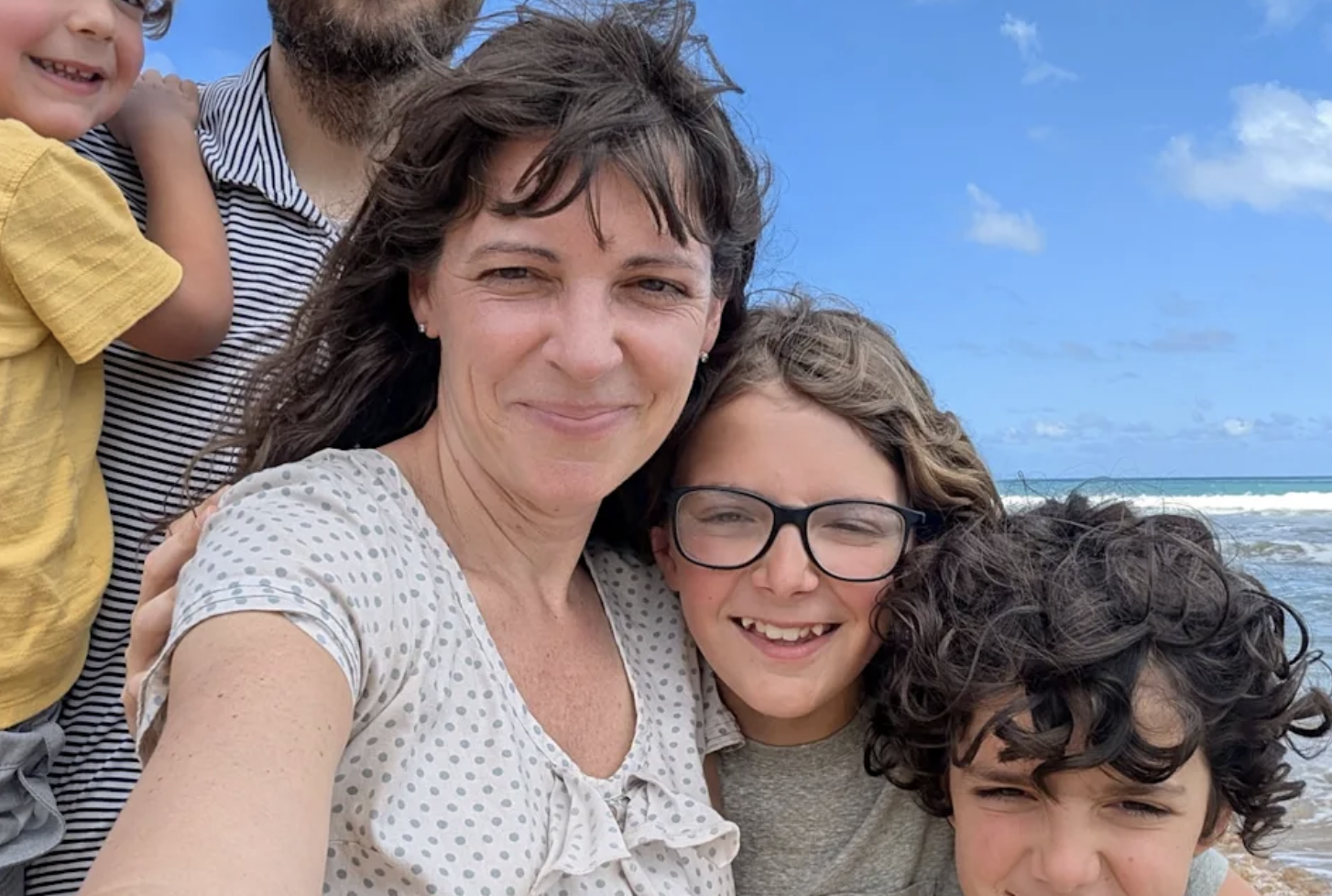 |
Laura Derrendinger with her children in Vermont, US. Photo: Independent
A growing number of American parents are pursuing a screen-free parenting model due to health impacts. Ashley Dickson, 44, recounted that she moved from Boston to Charlottesville, Virginia, for her three sons to attend a Waldorf school.
Dickson stated she trained her children to entertain themselves with books before they started school. She believes banning electronic devices helps children develop the ability to play and explore independently without relying on electronic devices. Thanks to this early training, the children can invent games while waiting at airports, restaurants, or during long car trips. Often, an audiobook or simply gazing out the window is enough for entertainment.
In 2018, when her eldest son was in kindergarten, she was surprised by the frequent use of tablets in class, even for reading and math. During the pandemic, Dickson decided to homeschool her children. "There's no way I would put my 7-year-old in front of a computer for hours every day when I have enough time to teach them," Dickson said.
In 2024, the Dickson family moved to Virginia after finding a private school that limits screen use. Dickson mentioned she is also a member of an online education social media group with over 250,000 participants, where methods for hiding remote controls or "weaning" children off digital devices are shared.
Victoria Price, 39, living in Florida, said her children changed noticeably after their screen time was reduced. She recounted that previously, her five children had almost unlimited device use. "They spent all their free time at home on screens," Price said.
After a teacher reported her son frequently falling asleep, Price decided to make a change. Currently, her children are only allowed to use devices for a few hours on weekends.
Sleep consultant Rachel Mitchell analyzed that using phones in the evening reduces children's sleep quality. She does not encourage screen use for children under two years old.
Emily Boddy, founder of Smartphone Free Childhood in the US, stated: "I hope that delaying smartphone use or replacing them with basic phones will gradually become a popular choice for children."
By Ngoc Ngan (Source: Independent)