A study by Japan's National Cerebral and Cardiovascular Center, published in the european journal of stroke in january 2024, compared the pillow heights of over 100 individuals and found a concerning link.
The research indicated that consistently sleeping on a high pillow (over 12 cm) is a risk factor for spontaneous vertebral artery dissection. Using an overly high pillow causes the neck to be abnormally twisted for extended periods. When people sleep soundly and turn over, rotating the head can lead to excessive stretching, damaging the blood vessels that supply blood to the brain. Scientists refer to this condition as "Shogun pillow syndrome," which can increase the risk of stroke.
The name of this syndrome originates from japanese history in the 17th-19th centuries, when Shoguns and Samurai often used hard, high wooden pillows, typically 12-16 cm, to avoid disturbing their neatly tied topknots. This practice contributed to the relatively high stroke rates during that era.
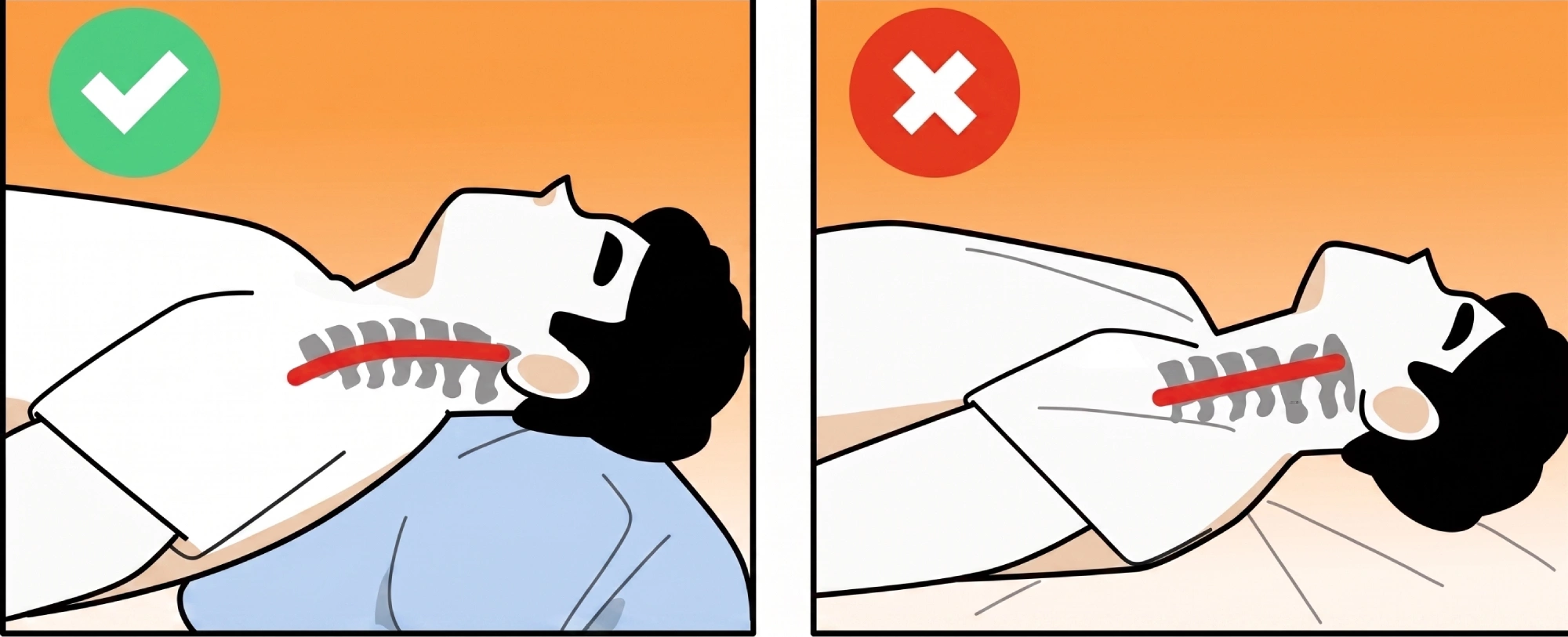 |
A proper pillow supports the natural curve of the cervical spine. Illustration: AI |
Beyond height, daily pillow habits also determine sleep comfort. While some believe sleeping without a pillow benefits the spine, this actually leaves the cervical vertebrae unsupported, disrupting their natural physiological curve. The small muscles at the back of the neck must constantly tense to maintain an open airway, leading to waking up feeling stiff and sore.
Conversely, only placing a pillow under the back of the head, leaving the nape unsupported, turns the cervical spine into a "broken bridge," causing pain, fatigue, and postural misalignment.
An unhygienic pillow is also detrimental to skin health. Rubbing one's face against a dirty pillow every night directly causes hidden acne, breakouts, and respiratory allergies such as sneezing and a runny nose.
A good pillow is key to deep sleep, whereas an incorrect pillow not only causes neck and shoulder pain but also poses many potential health and appearance problems. Waking up feeling unrested, dizzy, with numb hands, or a stiff neck are all signs that you may be choosing the wrong pillow.
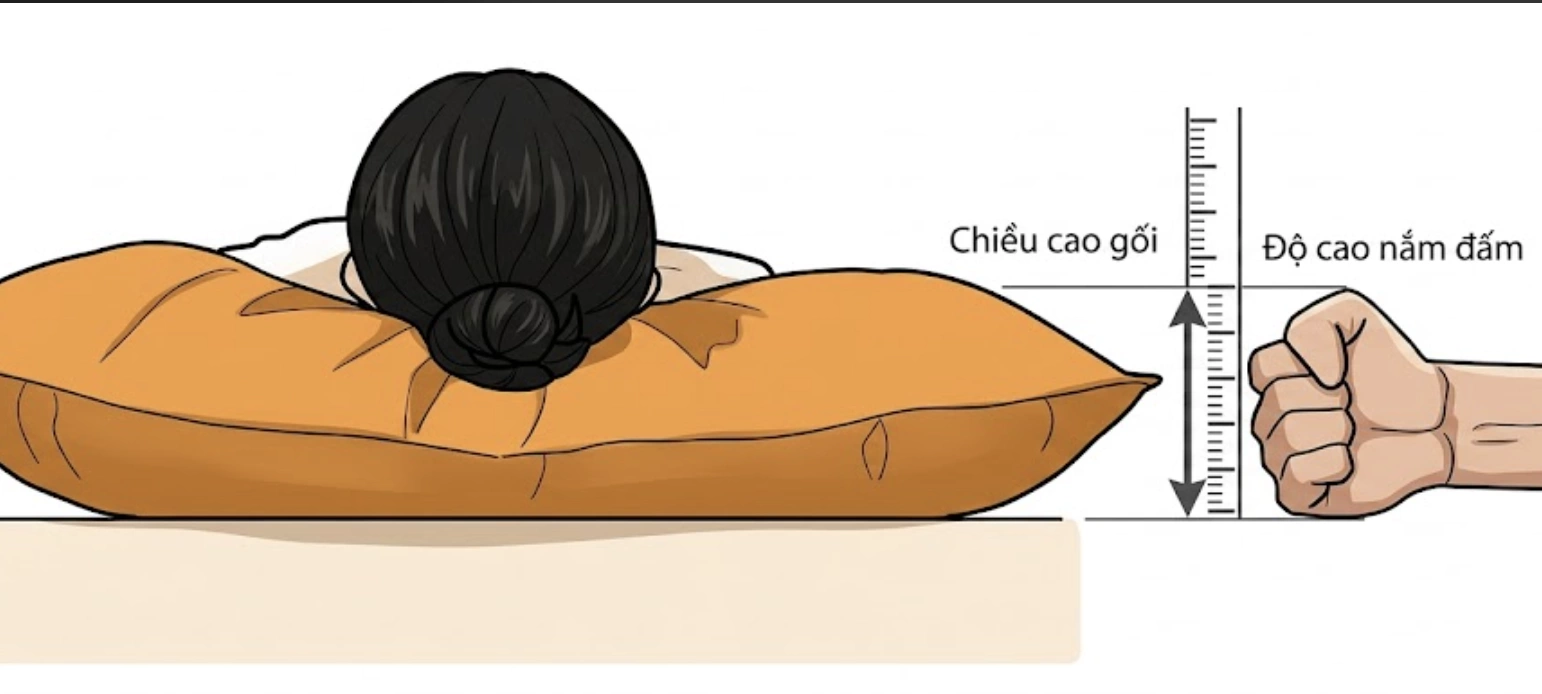 |
Correct pillow height. Illustration: AI |
Scientists emphasize that the primary principle is to select a pillow height compatible with one's body. For back sleepers, the pillow's height after compression should be approximately equal to the height of their own fist, ensuring the chin and forehead remain on a flat plane.
For side sleepers, the pillow needs to be as high as the distance from the base of the neck to the outer edge of the shoulder to fill the gap, keeping the spine straight.
Pillow material also requires careful consideration. Memory foam pillows excel at conforming to the head and neck's contours and distributing pressure, although they can feel somewhat warm in summer. In contrast, natural latex pillows offer good breathability and support, while also producing fewer dust mites.
Finally, consistently changing pillowcases once a week and regularly cleaning pillow inserts every one to two months are essential steps to protect your skin and ensure restful sleep.
Bao Nhien (According to Aboluowang)