Eating habits for balut vary significantly between Vietnam's northern and southern regions. Southerners often enjoy it as a casual snack in the late afternoon or evening, while northerners prefer it in the morning or at noon to replenish energy for the workday.
According to chef Vu Nhat Thong from the Eric Vu Cooking Class Center, the timing of balut consumption determines how well the body absorbs its nutrients. A medium-sized balut contains approximately 182 kcal, 13 g of protein, 12 g of fat, and 600 mg of cholesterol. The energy from two baluts is equivalent to a bowl of pho, but with a more concentrated protein content and richer essential amino acids.
Due to its high nutrient density, the dish's health impact largely depends on the body's biological clock.
Morning and noon: During these times, metabolism is high, and the digestive system and muscles operate at full capacity. Consuming balut then allows for optimal absorption: the 13 g of protein are utilized for muscle regeneration, and the 182 kcal are fully burned through daytime activities.
Late evening: At this time, metabolism slows, and the digestive system enters a resting state. Eating balut late can overload the stomach, causing bloating and difficulty sleeping; excess energy is also easily converted into visceral fat.
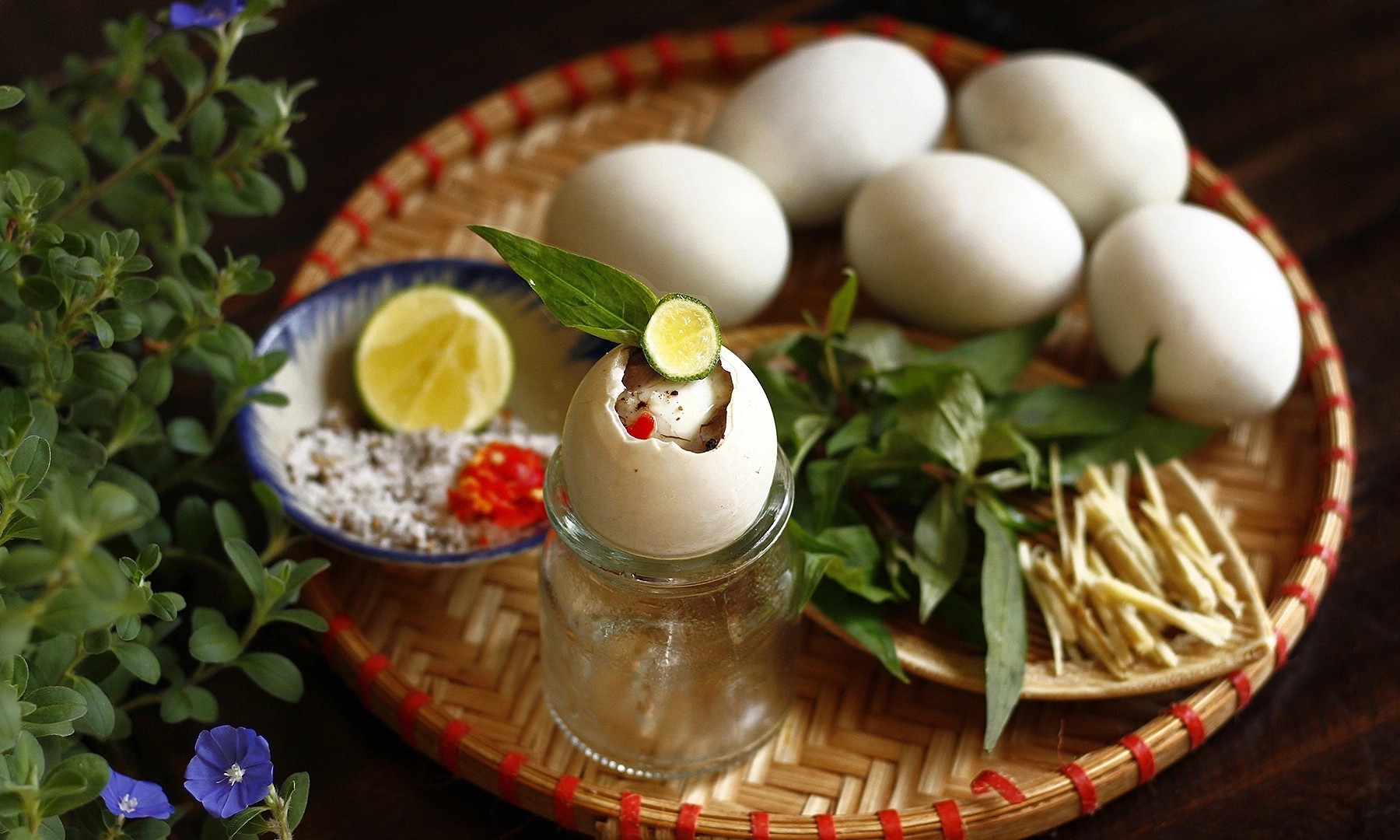 |
Balut served with ginger and Vietnamese coriander. *Photo: Bui Thuy* |
Beyond modern science, traditional medicine also advises consuming highly nutritious dishes during the day when "yang energy is abundant," and to limit eating them late at night.
According to Traditional Eastern Medicine, balut has a cold nature, which nourishes yin and enriches blood, benefiting those with debilitated health. To balance yin and yang, folk wisdom combines balut with warming spices such as Vietnamese coriander, fresh ginger, and a salt-pepper-lime dip.
This traditional combination aligns with modern medical findings. Fresh ginger contains the active compound gingerol, which helps warm the intestines and stimulate digestion. Vietnamese coriander is rich in natural essential oils, which help reduce bloating and abdominal distension when consuming protein-rich foods.
Although nutritious, the high content of 600 mg of cholesterol and purine in balut means certain groups should limit or avoid its consumption:
* Individuals with cardiovascular disease, high blood pressure, or high blood cholesterol: Should consume a maximum of one to two eggs per week and consult their treating doctor.
* People with gout: The high purine content in balut can trigger acute joint pain.
* Children under 5 years old: Their digestive systems are not yet fully developed, and consuming such nutrient-dense eggs can easily cause digestive disorders.
* Pregnant women: Can consume in moderation but should minimize eating it with Vietnamese coriander.
Healthy individuals should consume balut in the morning or at noon, one egg per serving (a maximum of two to three eggs per week), accompanied by about 10 g of Vietnamese coriander and 5 g of shredded ginger. Avoid going to sleep immediately after eating to allow the digestive system to work efficiently.
Bao Nhien