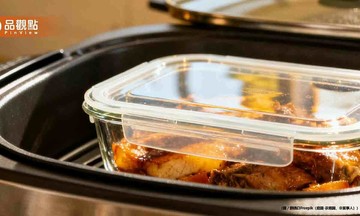
However, this is not always the smart choice. Here are tips for selecting the right ribs for different cooking purposes, explaining why the best ribs often have a moderate amount of meat.
Choosing ribs based on the dish
No one type of rib is ideal for all dishes. Depending on the preparation method, you need to select a different meat-to-bone ratio:
For braised, stewed, or sweet and sour dishes: For dishes that offer a satisfying bite, such as braised ribs, stewed ribs, or sweet and sour ribs, choose baby back ribs (suon nach). This part has small, flat bones, with abundant, tender, and juicy meat. The ideal ratio for this section is 3 parts bone to 7 parts meat.
For soups, stews, and steamed dishes: If the primary goal is to extract broth, choose pork backbone (xuong cuc) or older ribs near the neck. Although this section has less meat, it contains a lot of marrow. When simmered for a long time, the essence released from the marrow naturally enhances the broth's rich sweetness, something lean meat cannot achieve.
For grilled or pan-fried dishes: Choose moderately meaty ribs. Pork belly ribs are the optimal choice. This section has alternating layers of lean meat and fat, which prevents the ribs from drying out when grilled, maintaining tenderness and richness.
 |
For grilled ribs, choose thin cuts; for stewed ribs, choose thicker cuts. Bui Thuy |
Why sellers rarely leave too much meat on ribs
Many people wonder why ribs are more expensive than other cuts of meat, yet sellers often trim them closely, leaving little meat. In reality, this relates to the economic calculation of the pork belly slab.
The meat on the ribs connects to the pork belly section. If too much lean meat is left on the ribs, the remaining pork belly slab will have a thin lean layer and a thick fat layer. This makes the pork belly greasy, unbalanced, and difficult to sell. Therefore, sellers typically trim the meat moderately to ensure value for both the ribs and the pork belly.
Moreover, good ribs owe their flavor to the sweetness of the bone and the tenderness of the marbled fat. If ribs have too much thick lean meat, they will feel dry and fibrous when eaten, not as palatable as cuts with a moderate thickness.
Three signs of low-quality ribs
Regardless of the type chosen, freshness is the determining factor. You should avoid ribs with the following signs, even if they are cheap:
Press the meat with your hand. Fresh ribs will be dry or slightly moist and have good elasticity. If they feel sticky, slimy, or if pressing leaves an indentation that does not spring back, the meat is spoiled and contains bacteria.
Fresh ribs have a light pink or bright red color, with shiny white fat. Avoid buying ribs that are dark red, dull, or pale (indicating thawed frozen meat that has lost water).
Fresh meat only has a mild, characteristic raw smell. Absolutely do not buy it if you detect a foul odor.
Bao Nhien (According to Sohu)