Many people believe that fresh seafood is always superior to frozen products. However, chef Vu Nhat Thong, founder of Eric Vu Cooking Class in TP HCM, disagrees with this notion.
From a food science perspective, the concept of "fresh" is relative. Salmon for sashimi, flash-frozen at minus 60 degrees Celsius immediately after being caught, will retain higher nutritional content than a lobster swimming in a restaurant tank that has been starved for days, causing its muscle tissue to gradually waste away.
According to Mr. Thong, self-decomposition begins as soon as seafood dies. Enzymes break down protein structures, softening the flesh and creating a fishy odor. Seafood sold in markets often undergoes hours of harvesting and inadequate icing. Exposure to room temperature allows bacteria to multiply and form histamine, a compound that can cause anaphylactic shock, inflammatory reactions, allergies, neurotransmission, and gastric acid secretion, thereby degrading quality and posing a risk of food poisoning.
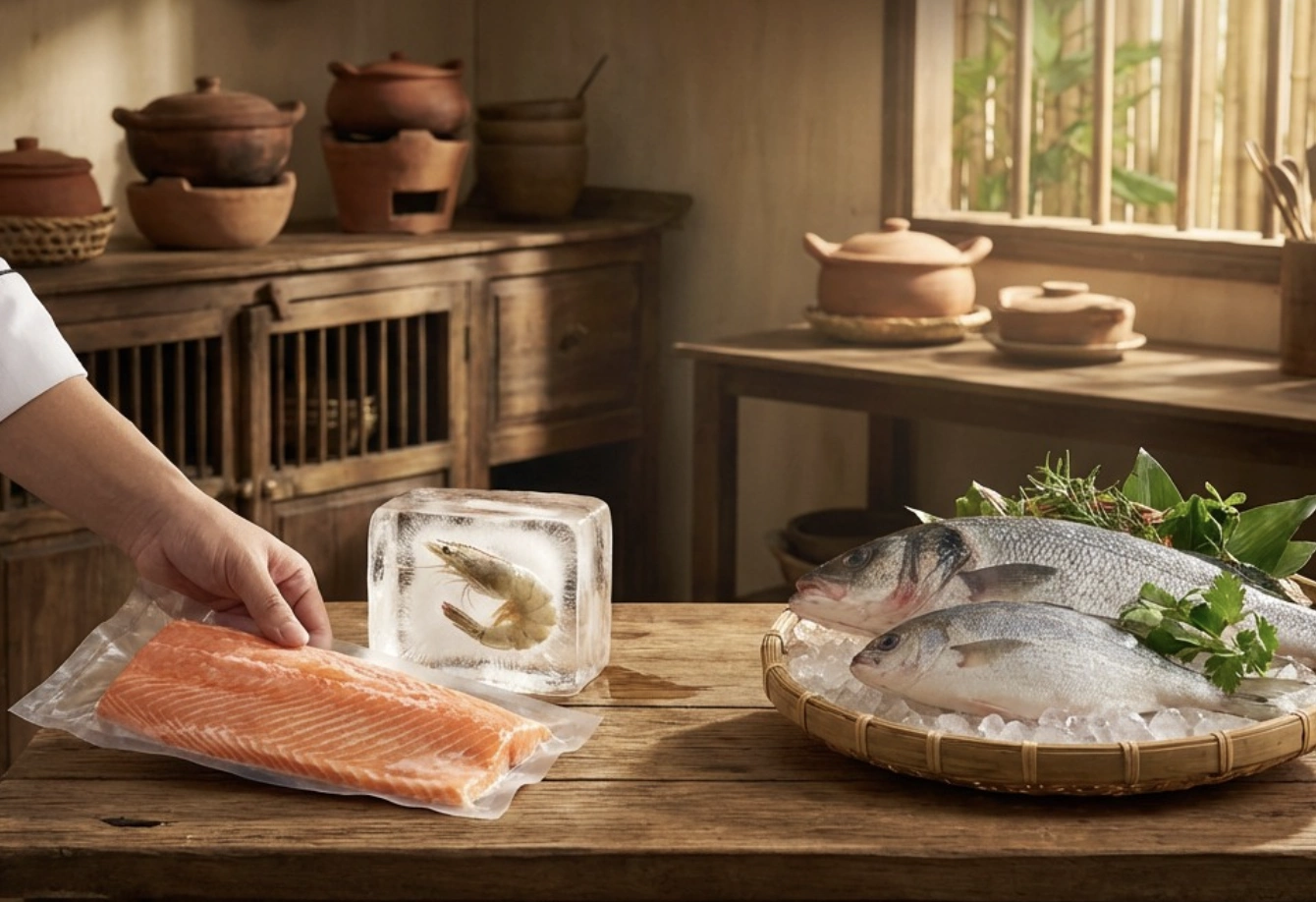 |
Properly frozen seafood can sometimes be superior to fresh seafood sold at the evening market. Photo: AI |
Freezing technology determines quality
Seafood flash-frozen on board ships using ultra-fast cold storage at minus 40 degrees Celsius immediately halts enzyme and bacterial activity. When thawed, the product maintains its structure and nutritional content.
Many people worry that frozen food becomes dry and watery. Mr. Thong explains this is due to freezing technique. Marine organisms are 70-80% water. When frozen slowly in a home refrigerator, water molecules form large ice crystals, piercing cell membranes and causing cellular fluid to leak out, a phenomenon known as drip loss.
In industrial settings, individual quick freezing (IQF) technology rapidly lowers the core temperature of products to below minus 18 degrees Celsius. Water crystals freeze into small sizes, preventing cell membrane damage, thus allowing the ingredients to retain their elasticity.
Specifically for raw dishes like sashimi, using frozen seafood is a mandatory rule. In natural environments, wild salmon, tuna, or squid often contain many parasites, notably Anisakis worms. The US Food and Drug Administration (FDA) stipulates that fish intended for raw consumption must be frozen at minus 20 degrees Celsius for at least 7 days, or minus 35 degrees Celsius for 15 hours, to kill parasites.
 |
Selection and thawing criteria
The chef suggests consumers choose fresh seafood when buying directly from coastal areas or when preparing steamed or boiled dishes. Frozen seafood is suitable for restaurants requiring consistent ingredients and for consumers buying out of season. This ingredient is ideal for heavily sauced braised, simmered, fried, or grilled dishes, as the texture difference between fresh and frozen is almost imperceptible. Furthermore, properly frozen seafood helps avoid risks from preservatives (such as urea, borax) often misused to keep fish fresh longer in markets.
According to the expert, frozen seafood primarily degrades due to incorrect thawing. Directly soaking it in hot water, leaving it at room temperature, or overusing a microwave causes the fish to lose water and promotes bacterial growth.
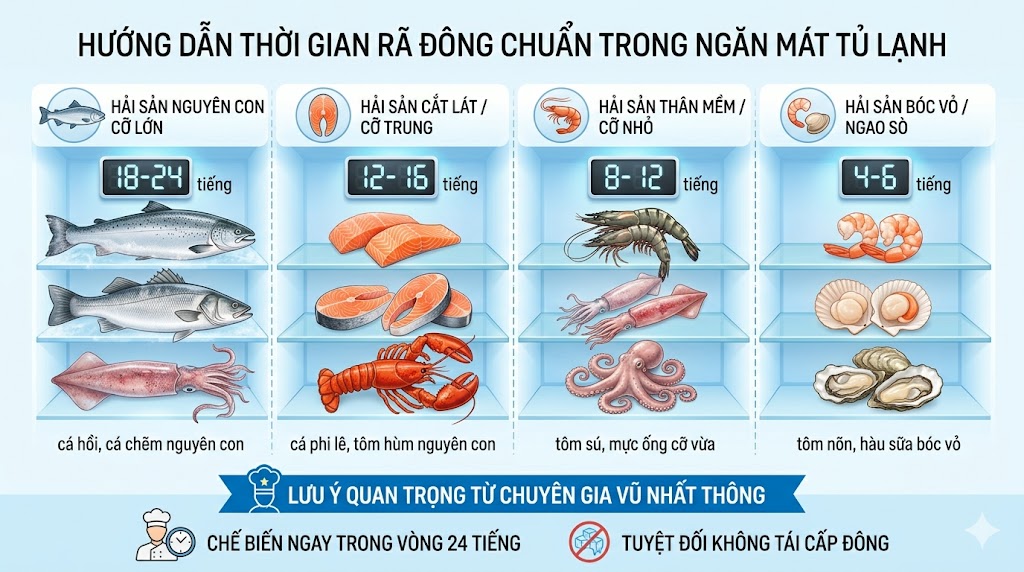
The correct thawing method is to transfer food from the freezer to the refrigerator's cold compartment 12-24 hours beforehand. The gradual temperature increase allows ice crystals to melt and reabsorb into the muscle fibers, keeping the ingredient succulent.
Bao Nhien