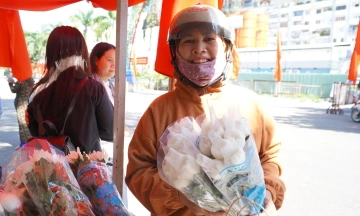
The alstonia tree (scientific name Alstonia scholaris), native to India and Southeast Asia, is also known as the "blackboard tree" or "devil's tree". Due to its rapid growth and wide canopy, this species was widely planted in many asian cities for shade. However, each blooming season, from September to December, its strong fragrance, along with pollen and fuzzy seeds, becomes a source of contention.
Taiwan
For many years, the alstonia scent spreading at night has disrupted the lives of Pingtung city residents. Initially, many households suspected industrial emissions from nearby factories, only later discovering the smell originated from the rows of trees along the streets.
In Taiwan, alstonia blooms throughout november, causing sleep disturbances for many. In spring, the trees' fuzzy seeds disperse in the wind, leading to breathing difficulties for individuals with asthma. Pingtung City Public Works Bureau records numerous complaints each blooming season. Many demand the authorities remove the trees, threatening legal action with higher authorities for health compensation and business losses.
"The scent and fuzzy seeds affect learning, forcing the school to request permission to cut down 20 of the 30 alstonia trees", said Chen Chia-yin, principal of Zhi Cheng junior high school.
Pingtung authorities have removed and replaced many alstonia trees in schools and residential areas. However, managing trees in parks, along rivers, and on sidewalks remains challenging because the species disperses seeds widely.
In Taichung city, the Urban Development Bureau has increased pruning of branches to reduce the strong odor and fuzzy seeds. The agency plans to relocate 6.000 trees affecting public safety over 4 years. From 2016 to 10/2017, the city removed 2.814 alstonia trees, renovated planting pits, and replaced them with suitable shrubs and woody plants.
 |
Alstonia trees in New Delhi, India. Photo: Indian Express |
India
In New Delhi, the first alstonia trees were planted in the Golf Links area in the 1940s and now line many main roads and small alleys.
Doctor Faiyaz Khudsar, Manager of Yamuna Biodiversity Park, stated that the trees bloom from october to december, emitting a strong scent to attract pollinating insects. "This fragrance is pleasant to some, but airborne pollen harms many others", Khudsar said.
In Noida, a satellite city, residents from over 10 sectors collectively petitioned authorities to replace the species in 2022. Residents reported an increase in sinusitis, asthma, runny nose, and eye irritation during the blooming season, in addition to insects from the trees entering homes.
The Federation of Noida Residents' Welfare Associations (FONRWA) sent a letter requesting the urban management agency replace alstonia with fruit trees. The urban green spaces department subsequently sprayed insecticides in residential areas to appease residents.
From a research perspective, Bhupendra Choudhary, a plant scientist at Gautam Buddha University, noted that alstonia is a normal link in the ecosystem. According to him, the fact that some residents are sensitive to pollen does not mean the species is toxic.
Singapore
The Singapore National Parks Board stated that alstonia in the country typically blooms simultaneously after dry, cold weather, emitting a scent similar to burnt sugar. On the Nature Society forum, many residents reported still smelling the flowers throughout the night, even with closed doors and being 700 m away from the trees.
Similar situations also occur in other Southeast Asian countries such as Malaysia, the Philippines, and Thailand, where this species is commonly planted in residential areas.
 |
Alstonia trees on a street in Shenzhen, China, 10/2025. Photo: Dutenews |
China
In Shenzhen city, Guangdong province, the alstonia scent at night during the September-november period causes dizziness and nausea for many passersby.
To address complaints, the Shenzhen Urban Management Bureau removed alstonia from its recommended shade tree list after 2010 and reduced planting areas in residential zones. During blooming season, authorities increase pruning frequency and use water cannons to wash trees in sensitive areas like schools and hospitals to dislodge flowers, shortening the scent emission period.
Meanwhile, Yangjiang city continues to plant alstonia due to its ability to absorb toxic gases and repel mosquitoes. To find a balance, the city's green space management center prunes branches before the blooming season on streets where residents have complaints.
Minh Phuong (According to Indian Express, Taipei Times, QQ, India Times)