Handheld calculators may not possess the impressive processing power of newer technologies, but they offer an advantage AI cannot replicate: unwavering reliability. While even the smartest chatbots sometimes experience "hallucinations" or errors in basic addition, "handheld calculators always provide the correct answer," affirms Tomoaki Sato, Casio's Chief Executive Officer.
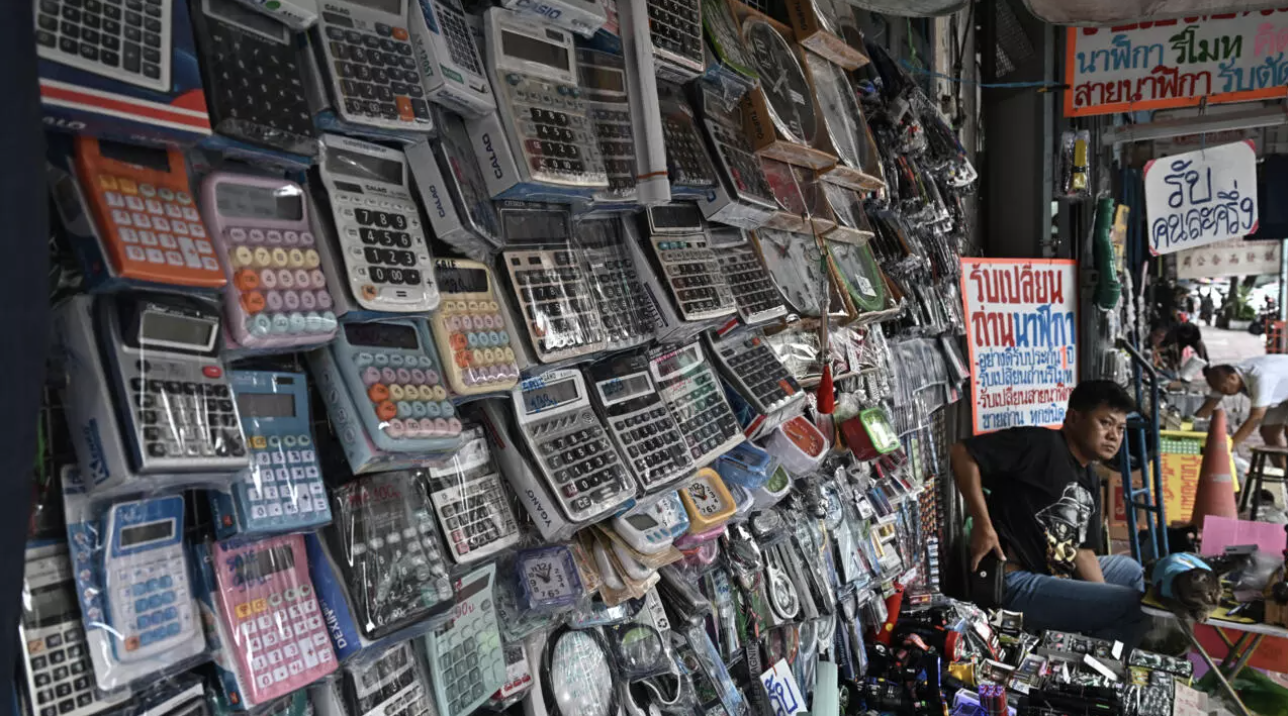 |
Handheld calculators displayed for sale in stores in Bangkok, Thailand. Photo: Lillian SUWANRUMPHA |
This enduring reliability helps the Japanese electronics giant maintain its market position. Sato acknowledges that the business calculator market is shrinking due to competition from smartphones and web browsers. Furthermore, AI models from Google and OpenAI have recently solved Olympic-level math problems. Despite this, Casio has found a "blue ocean" in the education sector.
In developing countries, handheld calculators offer a significant cost advantage, the ability to operate on batteries or solar power, and no internet connection is required. This makes them an optimal tool for students, helping them avoid distractions from social media on phones.
The numbers attest to this vitality. Casio currently sells approximately 39 million calculators annually across 100 countries. While this is lower than the peak of 45 million units in the pre-pandemic period, the figure has recovered significantly from the low of 31 million units post-Covid-19.
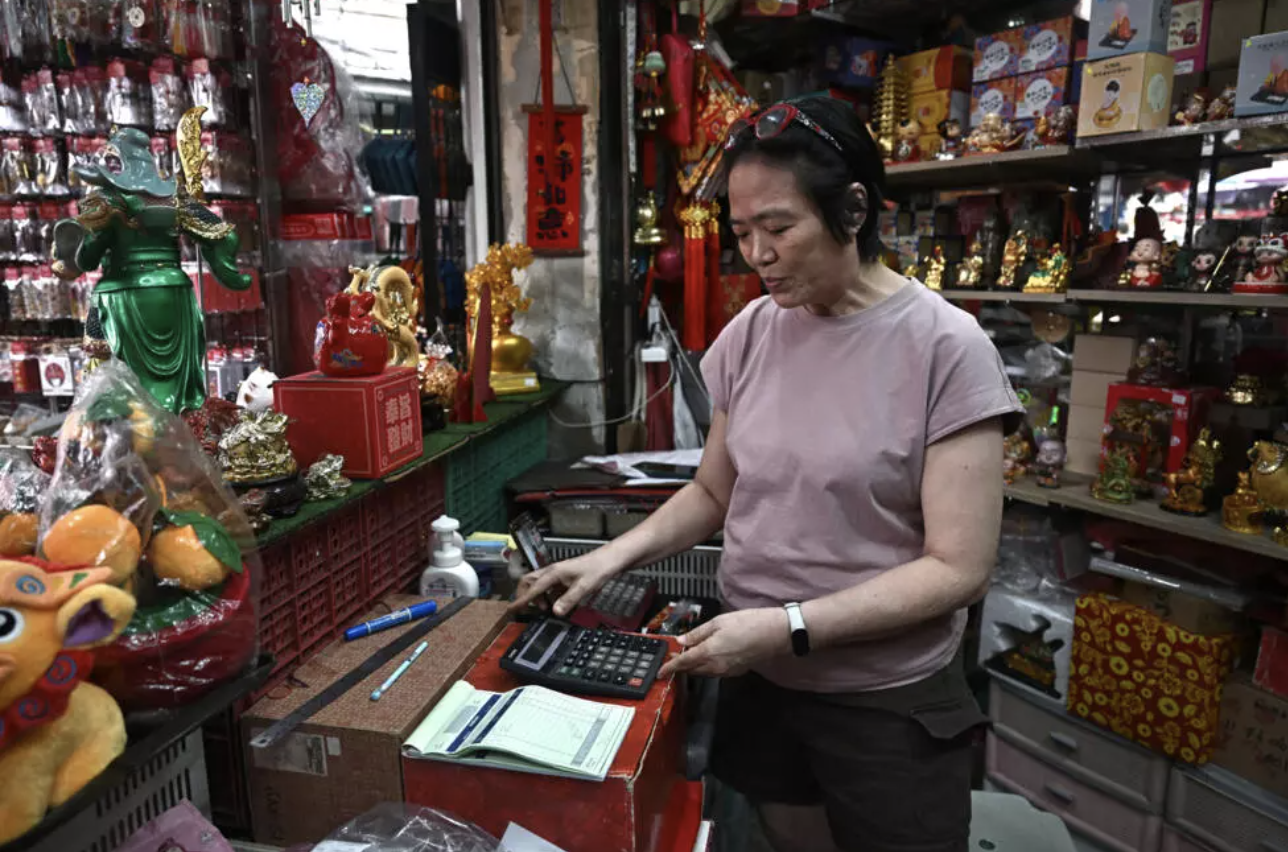 |
Ms. Thitinan Suntisubpool, a vendor in Bangkok, Thailand, prefers using a handheld calculator for its durability and ease of use. Photo: Lillian SUWANRUMPHA |
In everyday life, many users still prefer the tactile feel of physical buttons. Ms. Thitinan Suntisubpool, 58, owner of a shop in Bangkok's Chinatown, Thailand, remains loyal to her large-format calculator due to its durability, despite dropping it numerous times.
"It is more convenient than a phone. I can punch in numbers and show them to customers immediately, avoiding misunderstandings about prices due to language barriers," she shared.
However, the challenge against evolving technology is never easy. Gregor Dolinar, Professor of Engineering at the University of Ljubljana, Slovenia, and President of the International Mathematical Olympiad (IMO) Committee, believes physical calculators may "slowly disappear."
"Previously, we needed scientific calculators, but today, we just ask AI. My students have started calculating everything directly on their phones," Dolinar stated.
By Minh Phuong (According to AFP)