One September evening, Kate, 53, sat across from her husband at the dinner table, patiently listening to him recount his personal troubles. She awaited a question about an important presentation she was anxious about, but her husband had completely forgotten, eagerly shifting the conversation to football.
That moment triggered an explosion of years of feeling ignored. Kate drained her glass of wine and told herself, "I cannot continue this anymore." She decided to divorce.
Kate exemplifies a growing social phenomenon in the UK: "walkaway wives" – women quietly exiting their marriages.
 |
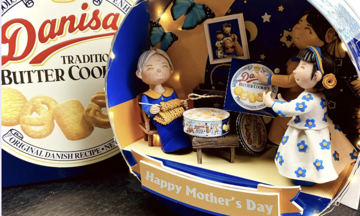
The "walkaway wife" phenomenon is prevalent among women in the UK. *Illustration: Partnersinfire*
Previously, middle-aged divorce was often associated with men pursuing younger partners. However, this trend is reversing. A report titled "Beyond the Break", published in 11/2025 by law firm Mishcon de Reya and the women's community NOON, indicates that women are now more proactively filing for divorce, often citing a simple reason: "I have had enough".
Statistics reveal that nearly 50% of current divorces are initiated by women. Notably, 64% of these do not involve infidelity. Additionally, 23% state they fell out of love, and 11% do not wish to waste the rest of their lives with an increasingly distant husband.
"My divorce filing completely shocked my ex-husband", shared Ana Clarke, 41. "He believed my silence over the years signified consent. However, in reality, my mind had left the marriage long ago."
While husbands are often stunned by a "sudden" divorce petition, wives have actually been signaling their dissatisfaction for years without a response. Psychologist Susie Masterson noted that during therapy sessions, men are often surprised by the extent of their wives' disappointment. "Men consider a 'mediocre' marriage acceptable, but modern women do not", she said.
Many studies indicate that married men report greater happiness than married women, largely because their needs are better met, while wives often bear the burden of both household chores and emotional labor.
For Kelly Peck, 50, the decision to divorce after 19 years stemmed from an "it's now or never" mindset. Her husband was not unkind, but they lived more like roommates. While she desired travel, he was content with his TV. "I could live another 50 years and I do not want to dedicate them to boredom", she stated.
Family lawyer Ellie Foster observed that women were previously constrained by financial dependence or societal prejudice. Today, middle age is often viewed as a new beginning. 71% of surveyed women affirm they are not afraid of living alone.
However, freedom comes at a cost. Divorced women experience higher stress levels, with 49% encountering psychological issues such as anxiety and depression. Finances represent the greatest challenge. Jan, 57, the primary breadwinner for her family, felt it was unfair to split assets equally with a husband who contributed little over 28 years. "I worked and raised the children, bearing the emotional burden. Now I have to work until I am 80 to pay him", she lamented.
Nevertheless, 76% of divorced women assert they have no regrets and would make the same decision if given the choice again.
"After decades of caring for others, they find freedom in finally living for themselves", concluded lawyer Ellie Foster. "Few wish to find a new partner. Most say: Never again will I marry".
Bao Nhien (According to Independent)