On the morning of 17/8, the National Assembly Standing Committee discussed a draft resolution on special mechanisms and policies for addressing legal violations related to the state economy, private economy, science and technology, innovation, and digital transformation. The National Assembly is expected to consider and approve the draft on 24/8 at an extraordinary session.
Minister of Public Security Luong Tam Quang stated that most opinions supported the resolution's necessity. Incorporating feedback from delegates, the drafting agency will continue reviewing the draft, aiming to both uphold strict discipline and foster development.
Authorities will study including the draft resolution's policies in the amended Criminal Code project. The Supreme People's Procuracy has also added corresponding provisions, including procedures for temporary suspension of prosecution and exemption from criminal liability, to the amended Criminal Procedure Code project.
According to the Minister of Public Security, the draft is designed to prevent policy abuse, legitimization of wrongdoing, or adverse impacts on state management effectiveness.
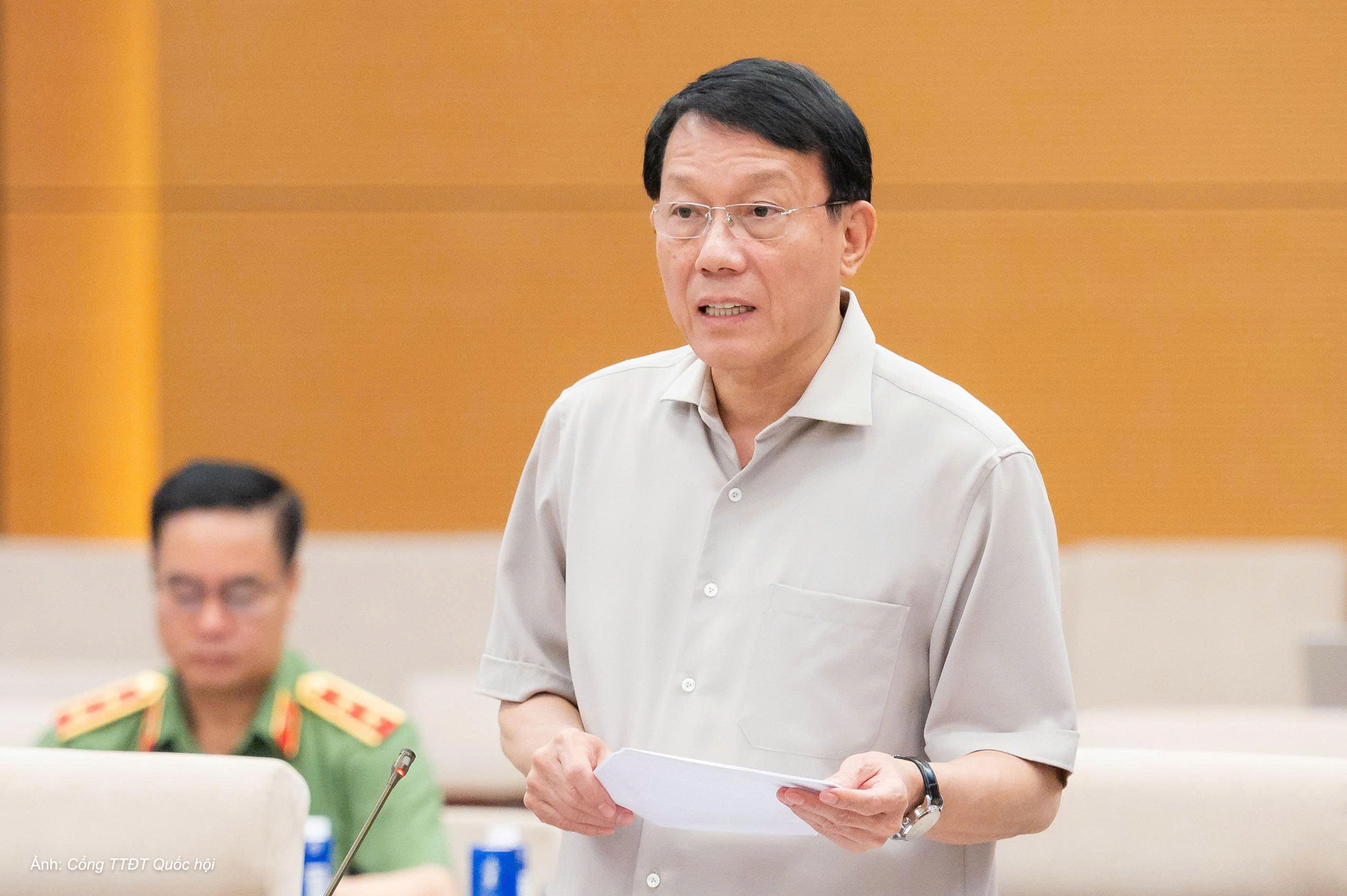 |
Minister of Public Security Luong Tam Quang speaks at the National Assembly Standing Committee session on the morning of 17/8. *Photo: National Assembly E-portal* |
Some members of the National Assembly Standing Committee proposed classifying damage levels and setting thresholds that require reporting and approval from competent authorities. Minister Luong Tam Quang explained that the resolution bases the application of criminal policy on the outcome of consequence remediation. He noted, "If all consequences can be remedied, then non-prosecution or exemption from criminal liability will be considered, depending on the stage of proceedings."
For particularly serious cases, the Minister noted that current regulations already have a mechanism for these to be monitored and directed by the Central Steering Committee on Anti-Corruption, Anti-Waste, and Anti-Negativity.
According to the Government, the draft resolution aims to create a legal basis to protect officials who dare to think and act for the common good, without engaging in corruption, waste, or negativity. Processing will consider political, economic, and social effectiveness, prioritizing economic, civil, and administrative measures, with criminal processing as a last resort. Those who abuse the mechanism for corruption, waste, or negative acts will still face strict penalties.
Representing the verification agency, Deputy Chair of the Economic and Financial Committee Doan Thi Thanh Mai agreed with the major policy groups in the draft. She affirmed this is a necessary direction to alleviate hesitation, unlock resources, and encourage innovation, but it must not create loopholes to legitimize violations.
The Permanent members of the Economic and Financial Committee believe that criminal policy needs a renewed approach. Provisions on prohibited acts, elements constituting a crime, and related legal responsibilities also require continued review.
The verification agency proposed institutionalizing policies proven in practice into the amended Criminal Code and related laws, gradually forming a stable, long-term mechanism suitable for development requirements.
Son Ha