The Civil Aviation Authority of Vietnam reported that aviation fuel supply faces a shortage risk. This prompts Vietnam Airlines to prioritize national connecting routes and key domestic arteries, serving travel, trade, and tourism demands. From 1/4, the airline plans to suspend operations on several routes, including Hai Phong - Buon Ma Thuot, Hai Phong - Cam Ranh, Hai Phong - Phu Quoc, Hai Phong - Can Tho, TP HCM - Van Don, TP HCM - Rach Gia, and TP HCM - Dien Bien, totaling 23 flights each week.
Vietnamese airlines are also developing plans for fuel surcharges on international routes, potentially implementing them from early April.
A Bamboo Airways representative stated that over the next two months, the airline will focus resources on key routes like Ha Noi - TP HCM - Da Nang and high-demand tourist destinations such as Quy Nhon and Cam Ranh. It will also maintain international charter flights to China and the Philippines. The airline expects to keep peak season flights but at a potentially lower frequency than the previous year if fuel prices continue to rise.
Amid volatile fuel prices, Bamboo Airways may adjust ticket prices while adhering to the price framework regulated by the State.
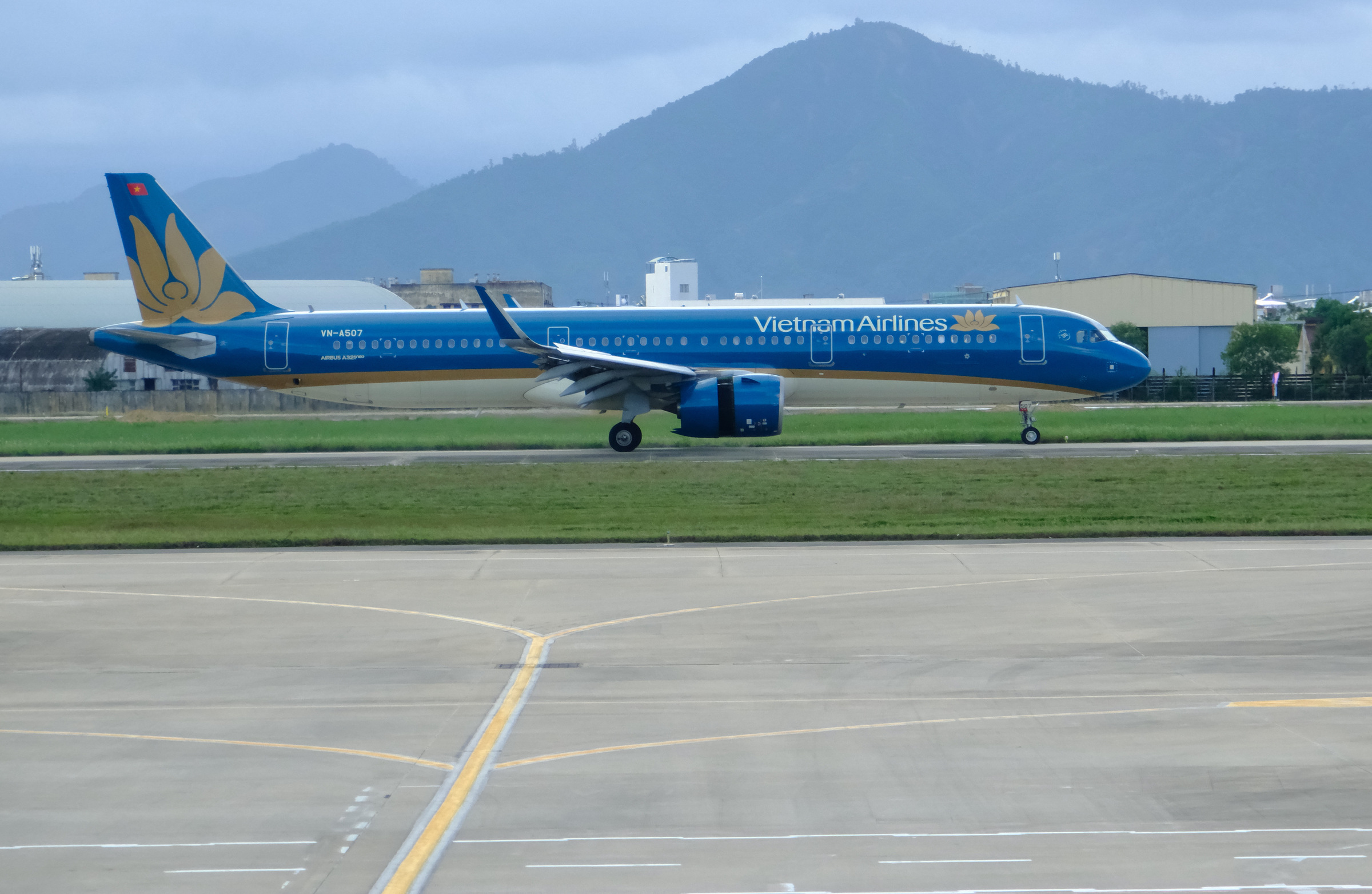 |
A Vietnam Airlines aircraft prepares for takeoff at Da Nang International Airport. Photo: Nguyen Dong |
According to the Civil Aviation Authority of Vietnam, global energy prices continued to rise from 20/3 to 22/3. In Asia, jet A-1 prices in Singapore commonly ranged from 220-230 USD per barrel. A survey on 20/3 of nearly 40 international and regional airlines revealed that over 60% had increased, were increasing, or planned to increase fuel surcharges or adjust ticket prices from mid-March.
Some airlines did not separate surcharges but adjusted them directly into base fares, with increases typically ranging from 5-20% depending on the route and service class. Other groups applied separate fuel surcharges, varying from approximately 130,000 dong to over 10 million dong per ticket, based on distance and seat class. For cargo transport, some airlines implemented fuel surcharges of about 17,000-40,000 dong per kg.
Facing cost pressures, domestic airlines have petitioned the Government to consider reducing environmental protection tax and aviation fuel tax. They also requested maintaining a 0% import tax on fuel from outside ASEAN, along with solutions for tax deferrals, interest rate support, loan restructuring, and adjusting airport service fees.
Doan Loan