Doan Van Tan, Director of the Urban Traffic Management and Operations Center – Ho Chi Minh City Department of Construction, announced the extension on 23/3. This follows a nearly three-month pilot of the city's first priority bicycle lane on Mai Chi Tho boulevard in what was formerly Thu Duc City. The existing lane spans almost six km along both sides of the route, from Nguyen Co Thach street to D1 street.
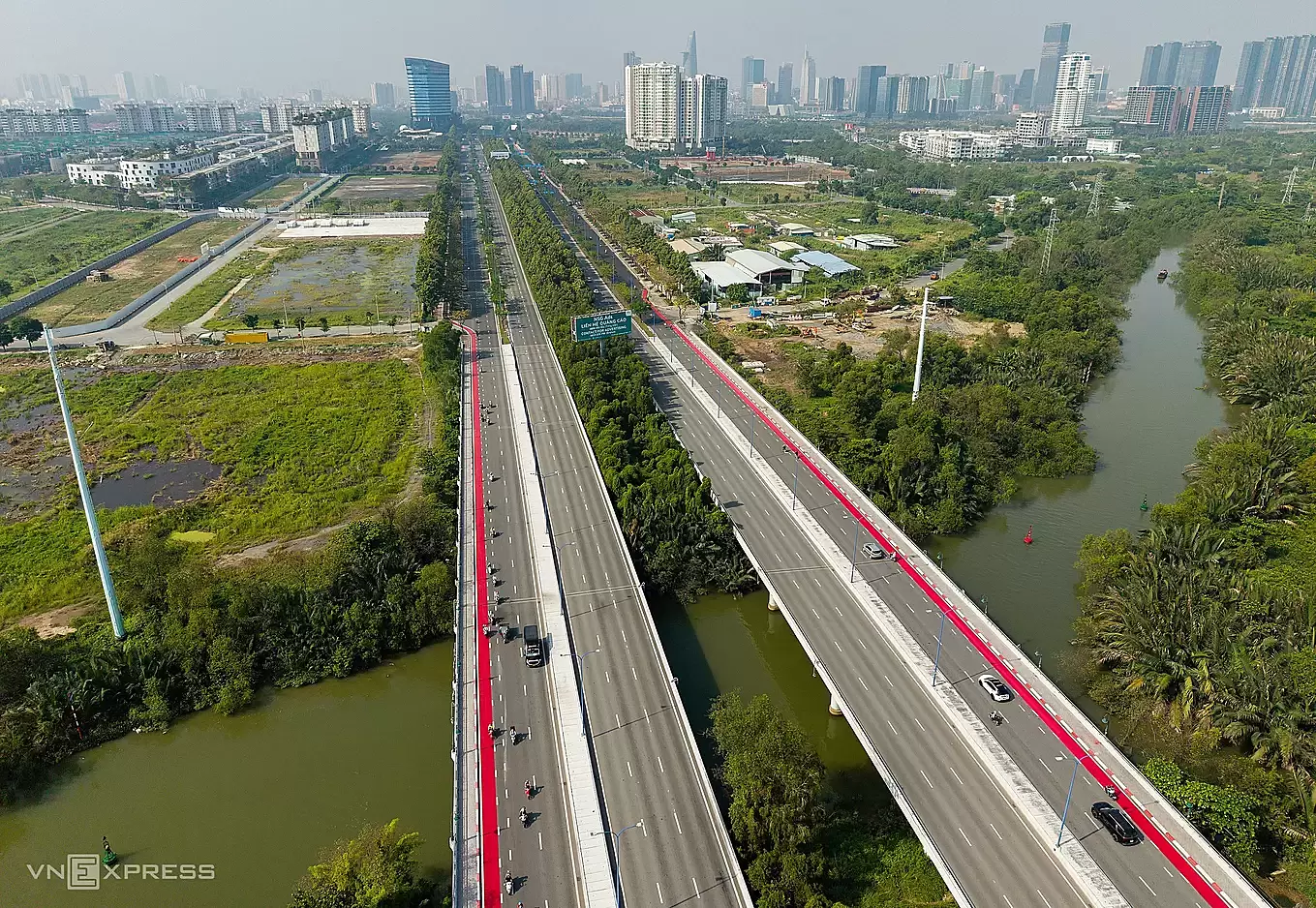 |
The priority bicycle lane across the bridge on Mai Chi Tho boulevard is painted red for identification. *Quynh Tran*
Under the expansion plan, the route will extend in two directions. One branch, approximately two km long, will continue along Mai Chi Tho boulevard to the Ben Thanh - Suoi Tien metro station on Vo Nguyen Giap street. The other branch, approximately 2,5 km long, will follow Nguyen Co Thach street to the Saigon riverside park within the Thu Thiem urban area. This extension is expected to create a continuous cycling axis, enhancing access to the metro and public spaces.
The pilot phase showed a gradual increase in cycling demand on the route, involving both private bicycle users and public bike-sharing services. Most of the lane is separated from motorized vehicle traffic, which significantly improved safety. While motorbikes entering the bicycle lane was common initially, this decreased as residents adapted. This positive trend supports the city's decision to expand the model.
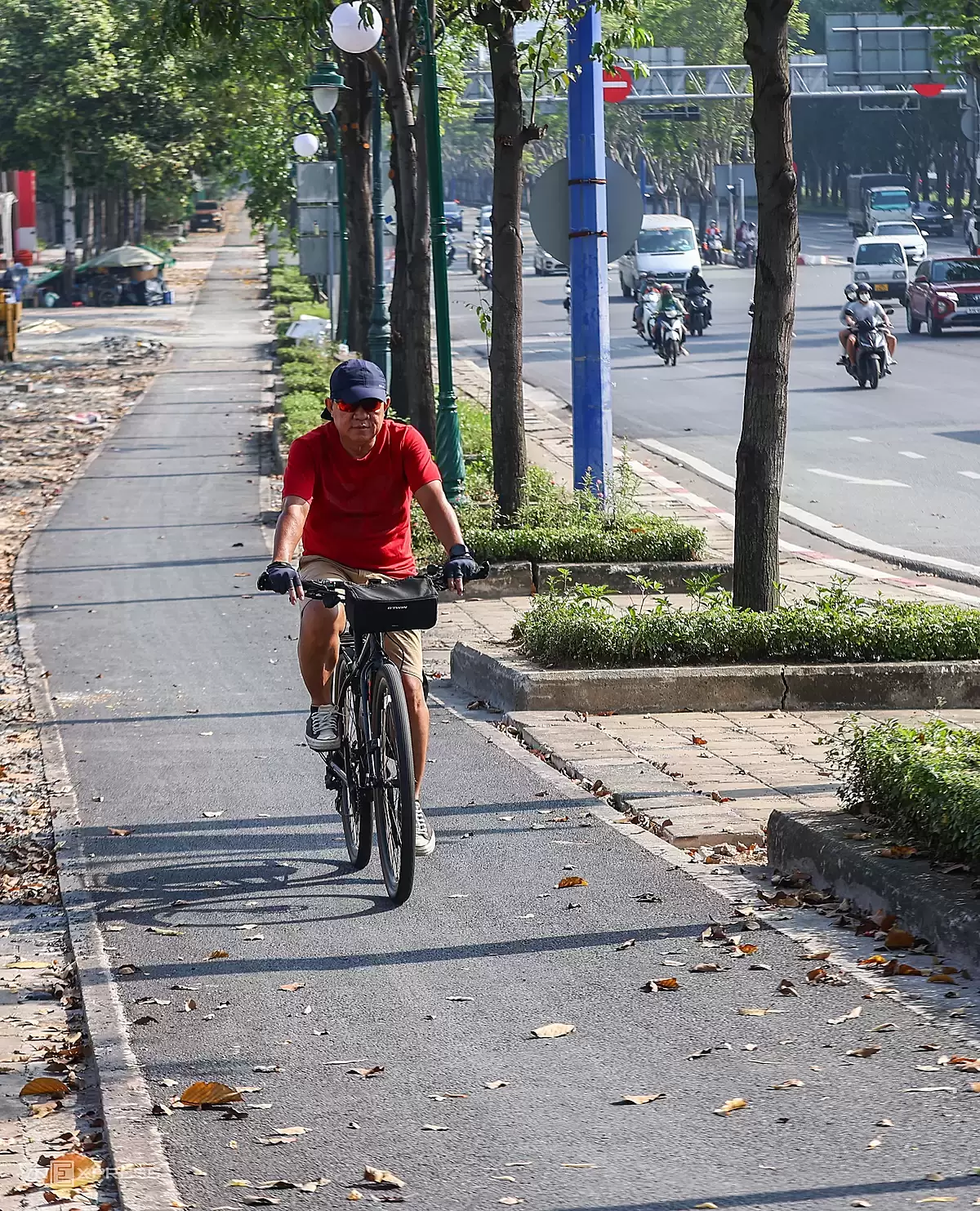 |
Residents cycle on the priority lane, which is separated from motorized vehicle traffic on Mai Chi Tho boulevard. *Quynh Tran*
The Ho Chi Minh City Department of Construction also announced that several central streets, including Nguyen Van Cu, Tran Hung Dao, Le Loi, Nguyen Hue, Ham Nghi, and Le Duan, are being studied for similar implementation. However, careful consideration will be given to avoid impacting car and motorbike traffic.
Historically, Ho Chi Minh City had numerous dedicated bicycle routes during the French colonial era on streets like Pasteur, Tran Hung Dao, and Nguyen Van Cu, but these gradually faded. In 2021, the city launched public bike-sharing in the central area, attracting users, but the lack of dedicated lanes posed safety risks. The current expansion aims to address these safety concerns and promote sustainable urban transport.
Giang Anh