 |
Many bus stops in Ho Chi Minh City are suffering from encroachment and neglect. This widespread issue includes vendors illegally occupying spaces and trash accumulating, creating an unsightly environment and posing challenges for public transport users. This situation threatens to undermine the city's initiative to offer free bus fares.
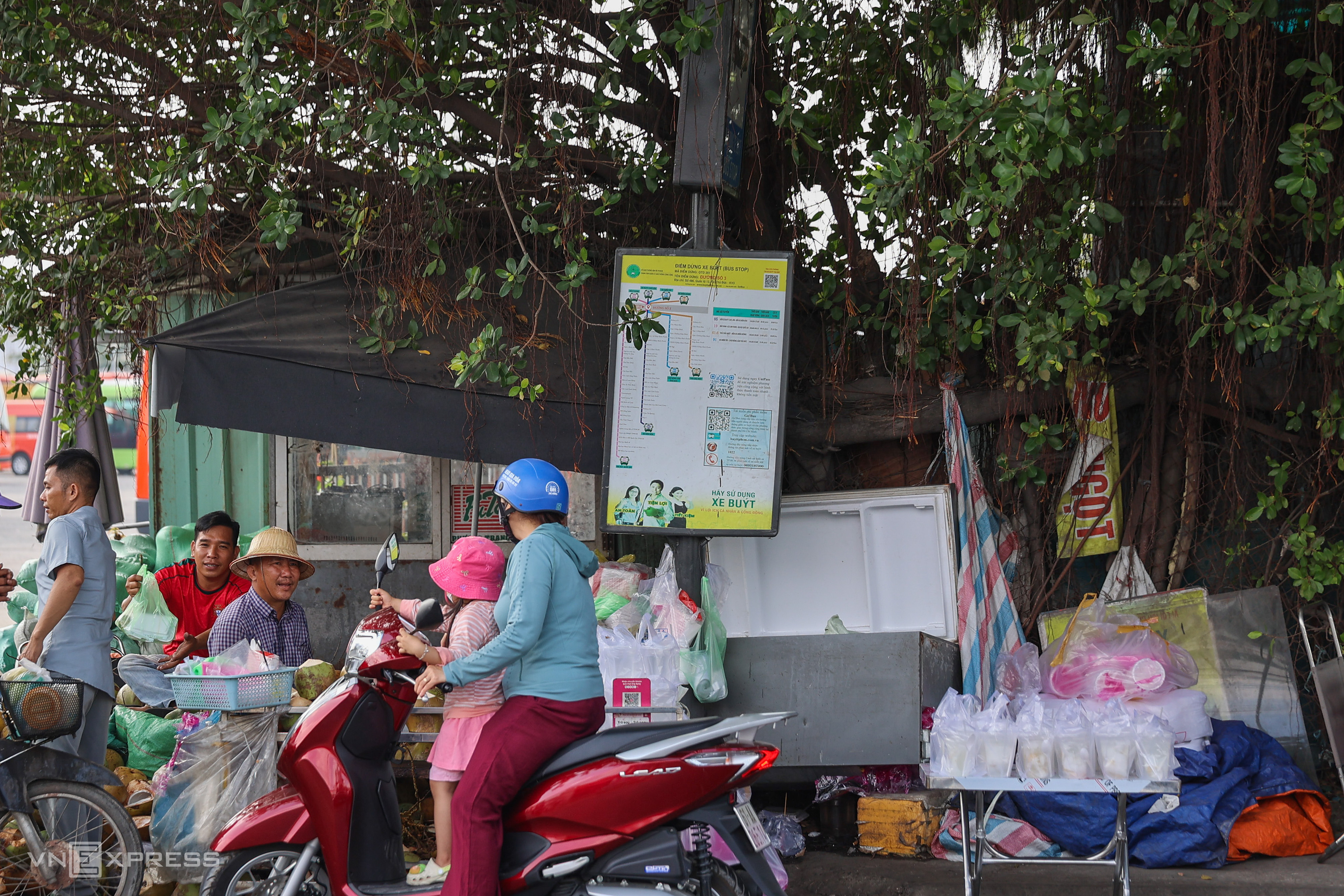
For instance, a bus stop at 486 National Route 13, Hiep Binh ward, is used by vendors selling drinks, with their goods cluttering the area. Route information at this stop is obscured by trees and serves as a makeshift hanger. Van Dung, a driver on bus route 19, which serves this stop along with routes 5 and 81, stated that he often has to drive a bit further past the designated stop as there is no clear boarding or alighting point for passengers.
Ho Chi Minh City previously proposed a policy to offer free bus fares to all residents starting in May. This initiative aims to reduce travel costs, encourage public transport use, and thereby contribute to alleviating traffic congestion and pollution. If approved, it would mark the first time all passengers in Ho Chi Minh City could ride buses for free.
At the stop near Hiep Binh market, the surrounding area and sidewalk have long been encroached upon for commercial activities. A similar situation occurs at the stop on Hoang Huu Nam street, Long Binh ward. Additionally, information at this stop is partially obscured by overgrown trees.
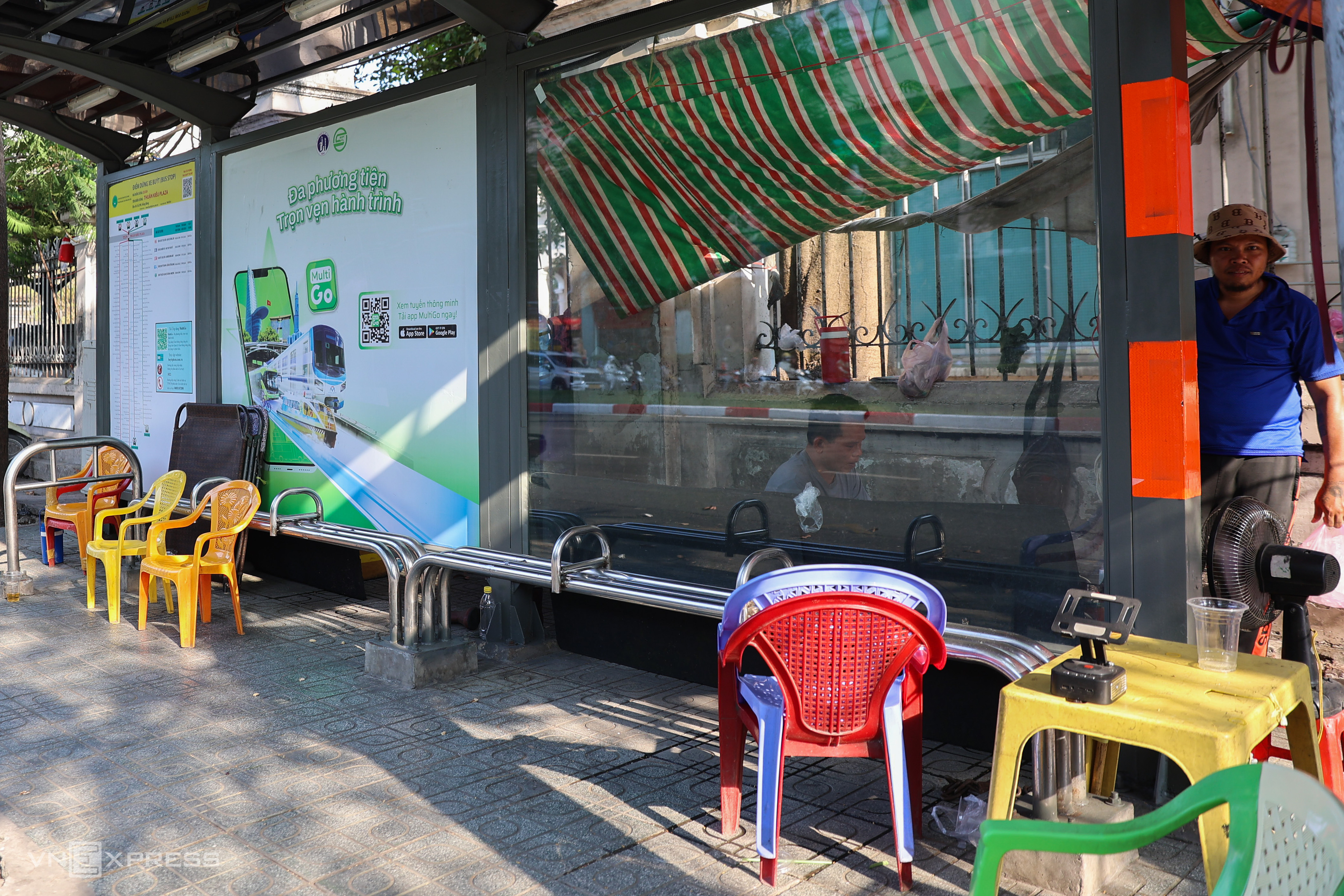
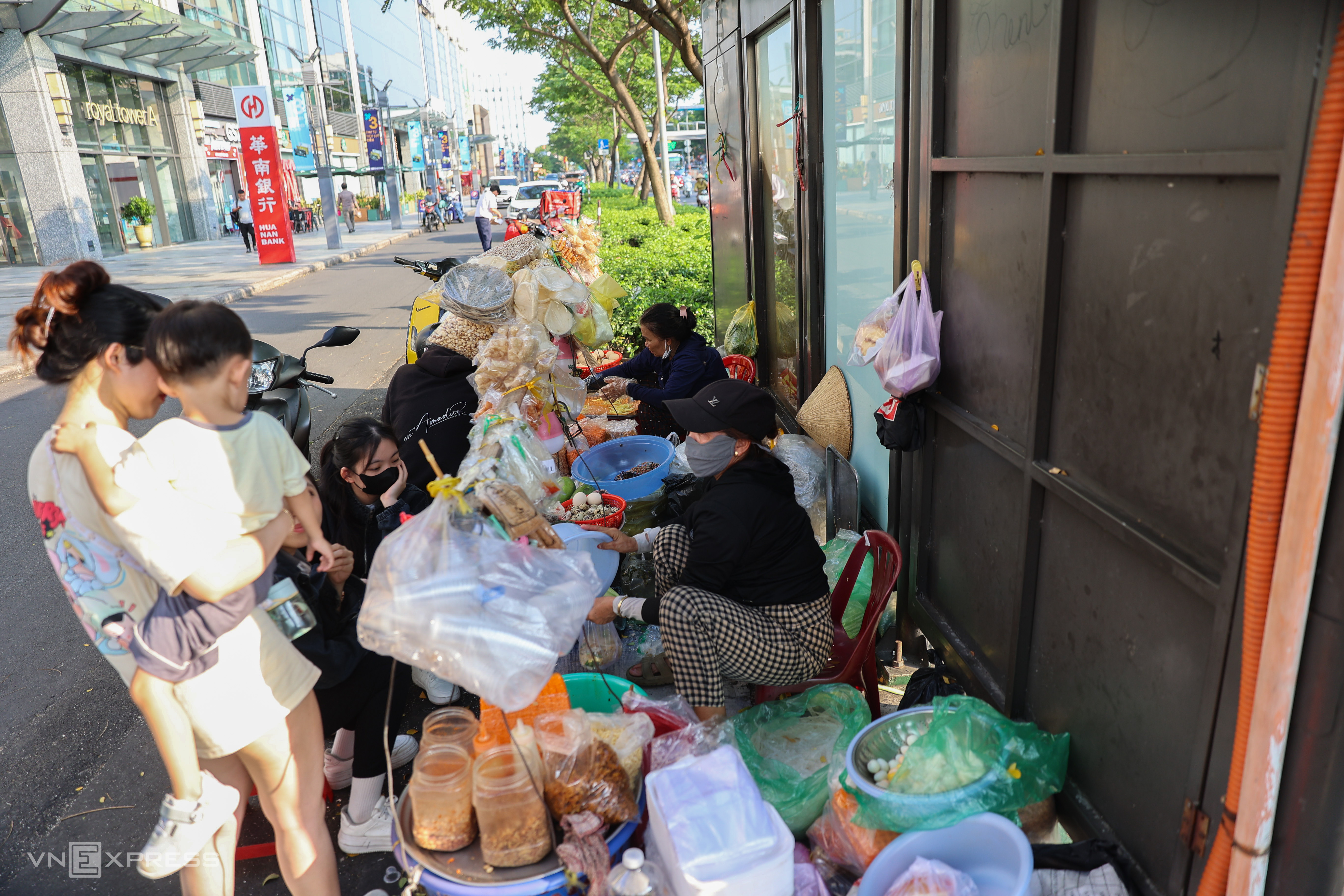
A bus shelter on Hong Bang street, Cho Lon ward, is also encroached upon by vendors selling drinks. The back of a bus shelter on Nguyen Van Cu street has become a food stall, and many other stops are also used to store belongings.
These issues arise as Ho Chi Minh City considers a significant public transport reform. According to the plan, free fares would apply to 135 bus routes operating within the city, comprising 109 subsidized routes and 26 non-subsidized routes. Inter-provincial bus routes would not be included.
 |
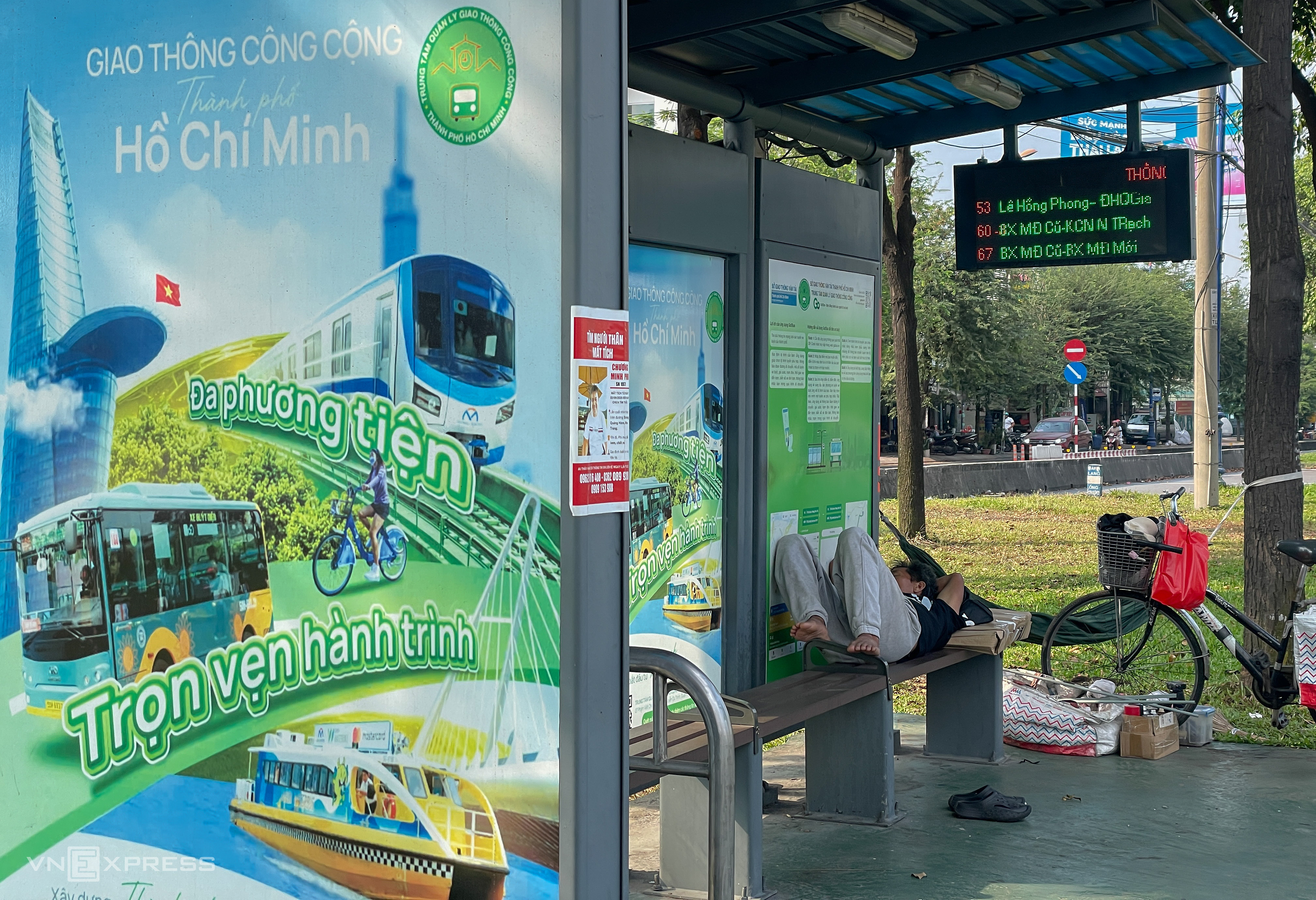
A bus shelter on Hanoi Highway is used as a sleeping place by many people.
Hoang Tien Anh, 19, a student at the University of Technology and Engineering who regularly takes the bus to school, observed that many stops are occupied by homeless individuals or vendors. "At those times, I have to stand further away to ensure safety", the student said.
 |
Beyond encroachment, many stops have become trash collection points. "The trash at this stop has been here for a long time, and I haven't seen it cleaned up", said Le Thi Thoa, after a medical examination, as she approached the bus stop near the Ho Chi Minh City Oncology Hospital.
 |
Four hundred meters from the Oncology Hospital, a bus stop on Hoang Huu Nam street is cluttered with construction materials, waterlogged potholes, and overgrown weeds, forcing many people to board buses further away.
Route information at bus stops on Kha Van Can, Hoang Dieu 2, and Dong Van Cong streets is either obscured or completely missing.
Some stops are also vandalized with graffiti or have partially damaged structures.
The Department of Construction expects to submit the policy to the Ho Chi Minh City People's Council for approval in April. If accepted, the free bus fare implementation could begin in May. Experts have proposed four options, with three applying to the subsidized bus system.
Since 2022, the Public Transport Management Center has undertaken repairs and maintenance of bus stops citywide. At that time, the city had 710 bus shelters and 3,075 bus stop poles. Following mergers with Binh Duong and Ba Ria - Vung Tau, Ho Chi Minh City now operates approximately 180 intra-provincial and inter-provincial bus routes, utilizing over 2,400 vehicles, with electric buses accounting for nearly one-half. The current state of bus stops poses a challenge to the city's efforts to modernize and encourage public transport.
Quynh Tran