Huong's production facility, spanning over 200 m2 in Cai Tau hamlet, U Minh commune, buzzes with dozens of workers busily preparing, processing, and packaging orders for various destinations. Production areas are clearly separated, with a strong focus on food safety and hygiene.
Born and raised in a region specializing in shrimp and crab farming, Huong grew up familiar with local specialties and how to prepare dishes from them. In 2017, she graduated with a literature degree from Can Tho, then worked as an office employee, sold cosmetics and clothes online, and later opened a spa.
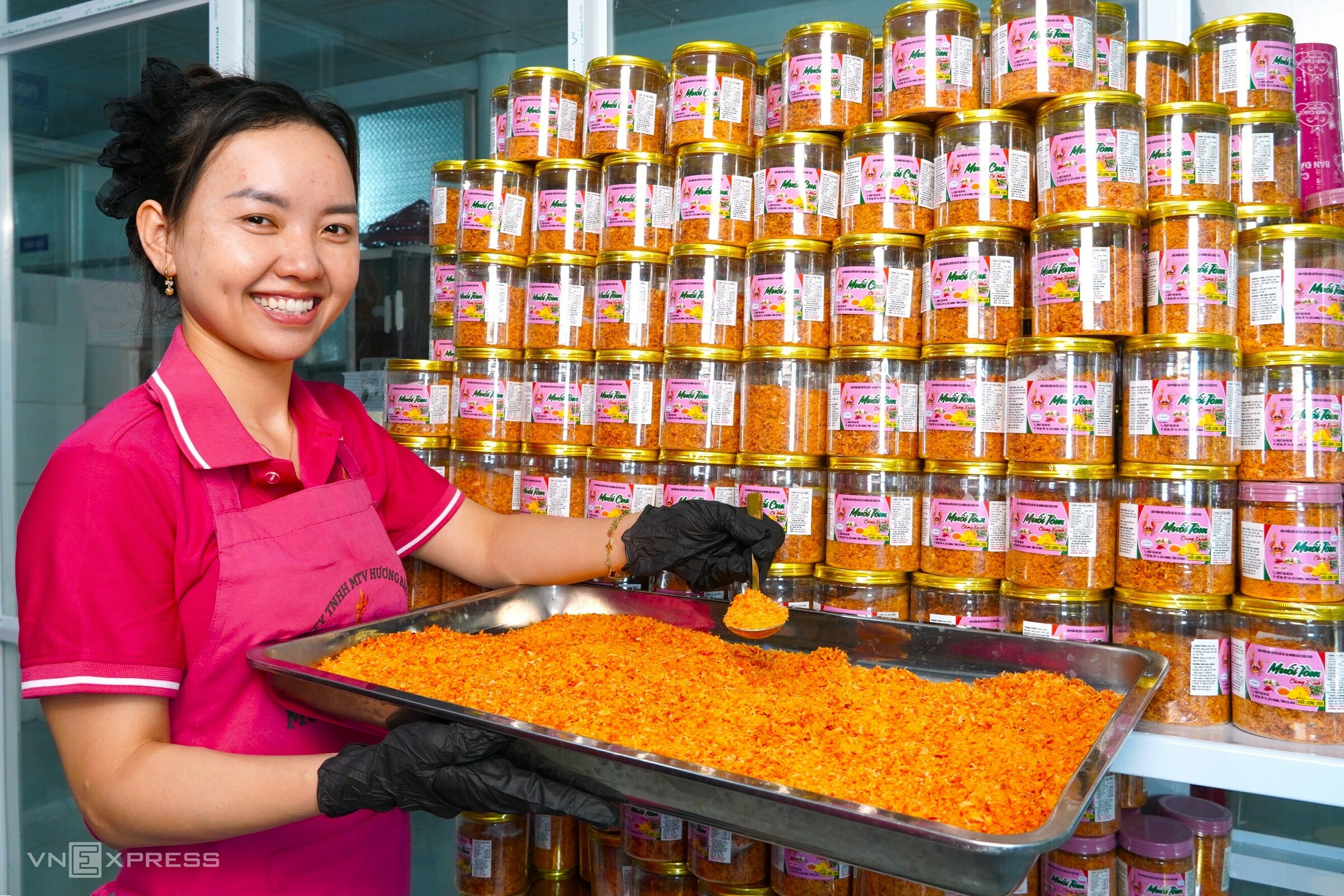 |
Nguyen Thi Lan Huong dedicated significant time to research to create a quality crab salt product. Photo: Chuc Ly
In 2023, after encountering personal issues, she left her businesses and returned home to live with her parents. After giving birth, she was unsure how to restart her career.
While browsing online, Huong stumbled upon a video selling shrimp salt in Tra Vinh. She considered that Tay Ninh, despite being landlocked, has famous shrimp salt, while Ca Mau, known for its specialty sea crabs, lacked a distinctive crab salt product.
She decided to act on her idea immediately, buying crabs to experiment with her first batch. When the product was successful, she gave samples to friends and acquaintances for feedback. Over the next six months, she continuously adjusted the recipe, trying various salts and spices to find the perfect ratio.
"I have always enjoyed spiced salts, so I spent a lot of time researching", she said. At one point, she bought all the famous salts on the market to taste, learning from them and addressing their shortcomings.
To fund her idea, Huong borrowed hundreds of millions of dong from relatives. Her family's support further motivated her to pursue the product.
The facility's crab salt uses live, high-quality sea crabs. After purchase, the crabs are thoroughly cleaned, boiled, and then the meat and roe are extracted. The crab meat is then mixed with salt, garlic, chili, and other spices according to a unique ratio. This mixture is then manually roasted over low heat.
According to Huong, this stage requires significant time and experience. Workers must constantly stir the salt by hand, staying at the stove to control color, dryness, and flavor. Each batch takes 4-5 h to roast. Approximately 4 kg of crab meat are needed for one kg of crab salt. The product is packaged with a crab content of 35-70%, priced at 130,000-188,000 dong per 150 gram box.
A distinctive feature Huong wanted for her product is that customers should "see the crab meat". The crab meat is kept in strands within the salt mixture, not crushed. The roe provides a natural orange color and a characteristic aroma.
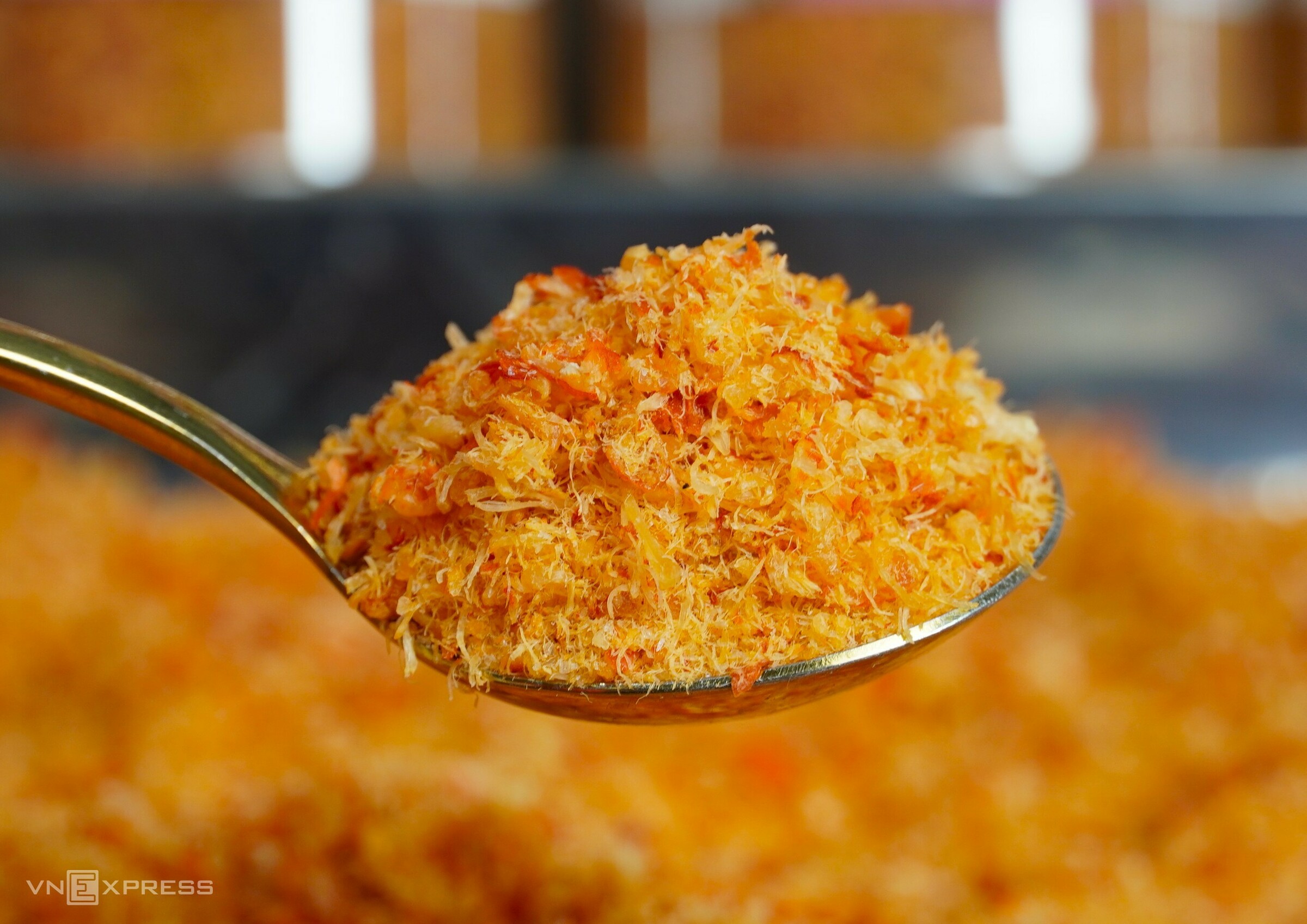 |
The distinctiveness of Huong's product lies in its fluffy salt grains and visible crab meat fibers. Photo: Chuc Ly
Thanks to the manual method, the product maintains fluffy, aromatic salt grains and does not become watery over time. The facility does not use preservatives or artificial colors.
Huong explained that the high cost of crab ingredients and the predominantly manual production process result in a higher product price compared to common spiced salts.
"Initial customers come out of curiosity, but there's no way to retain them other than by providing a quality product", she stated.
To help customers understand the product's value, Huong often shares production stages on social media, transparently sharing ingredient costs and explaining the crab salt making process. She also had the product tested, publicly disclosed ingredients, registered intellectual property for the brand, and then established a company to expand the market.
After more than one year on the market, Huong Bao Chau crab salt has received positive feedback. The facility sells thousands of boxes annually, generating approximately 3 billion dong in revenue with a 20-25% profit margin.
In addition to the domestic market, thousands of boxes of crab salt have been sold to the US. Huong is currently finalizing criteria to target countries with large Muslim populations.
Elevating local specialties
Not stopping at crab, Huong continues to find ways to enhance the value of other local specialties, including giant freshwater prawns.
Ca Mau has large areas producing under the rice-shrimp model, where giant freshwater prawns grow naturally in the fields. Their meat is sweet but difficult to preserve for long. The facility selects prawns directly from local farmers' fields and purchases them at prices higher than the market rate.
Fresh prawns, once lightly boiled, are transferred to a drying system at an appropriate temperature to maintain their chewiness and natural sweetness. On average, 5 kg of fresh prawns yield one kg of finished dried product. Selling for approximately 1-1,3 million dong per kg, this process nearly doubles the value of the prawns compared to selling them fresh.
 |
Workers packaging crab salt into boxes. Photo: Chuc Ly
Besides crab salt and dried giant freshwater prawns, the facility also produces giant freshwater prawn salt, shredded crab floss, dried lotus-claw shrimp, and dried baby squid. This product group generates over 1 billion dong in annual revenue.
The facility currently provides stable employment for dozens of local workers, with an income of nearly 6 million dong per person per month. Huong has a dedicated production and display area and plans to expand operations to consume more agricultural products for local residents.
For Huong, making a jar of crab salt is more than just a business venture. She wants the product to retain the distinctive flavor of Ca Mau crab while creating additional outlets for local specialties.
She stated that she does not intend to mass produce but will monitor purchasing power to balance output, ensuring customers receive quality products.
Tran Minh Nhan, Chairman of U Minh Commune People's Committee, praised crab salt as a new, groundbreaking product for the locality. The product is currently completing the final procedures for OCOP recognition.
Through fairs and exhibitions both within and outside the province, Ca Mau crab salt has received positive feedback thanks to its combination of salty taste and the distinctive delicate sweetness of sea crab.
Chuc Ly