


Le Van Su made the request during a meeting on May 7 with the investor of the Ca Mau airport expansion project, the Tan Thanh Ward People's Committee, and other relevant units.
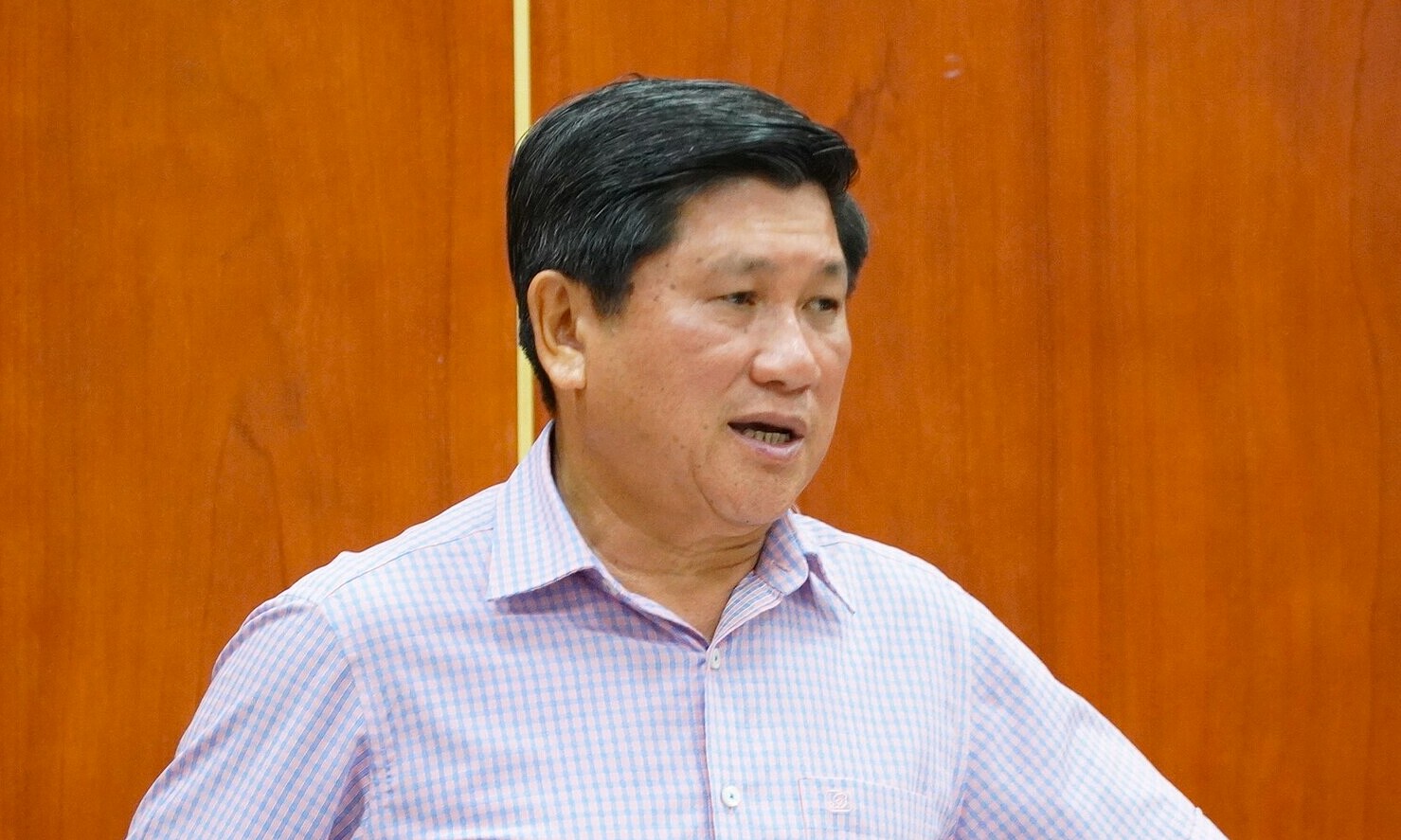 |
Le Van Su, vice chairman of the Ca Mau Provincial People's Committee. Photo: Chuc Ly |
Le Van Su, vice chairman of the Ca Mau Provincial People's Committee. Photo: Chuc Ly
The Ca Mau airport expansion and upgrade project, with a total capital of 2.400 billion dong, is invested by the Airports Corporation of Vietnam (ACV). During its construction, saltwater from the project spilled into nearby canals, causing widespread deaths of aquaculture, primarily gobies and eels, belonging to local residents.
Initial statistics show that over 90 households in Tan Thanh Ward were affected. The damage encompassed approximately 85 hectares of rice, crops, and aquaculture.
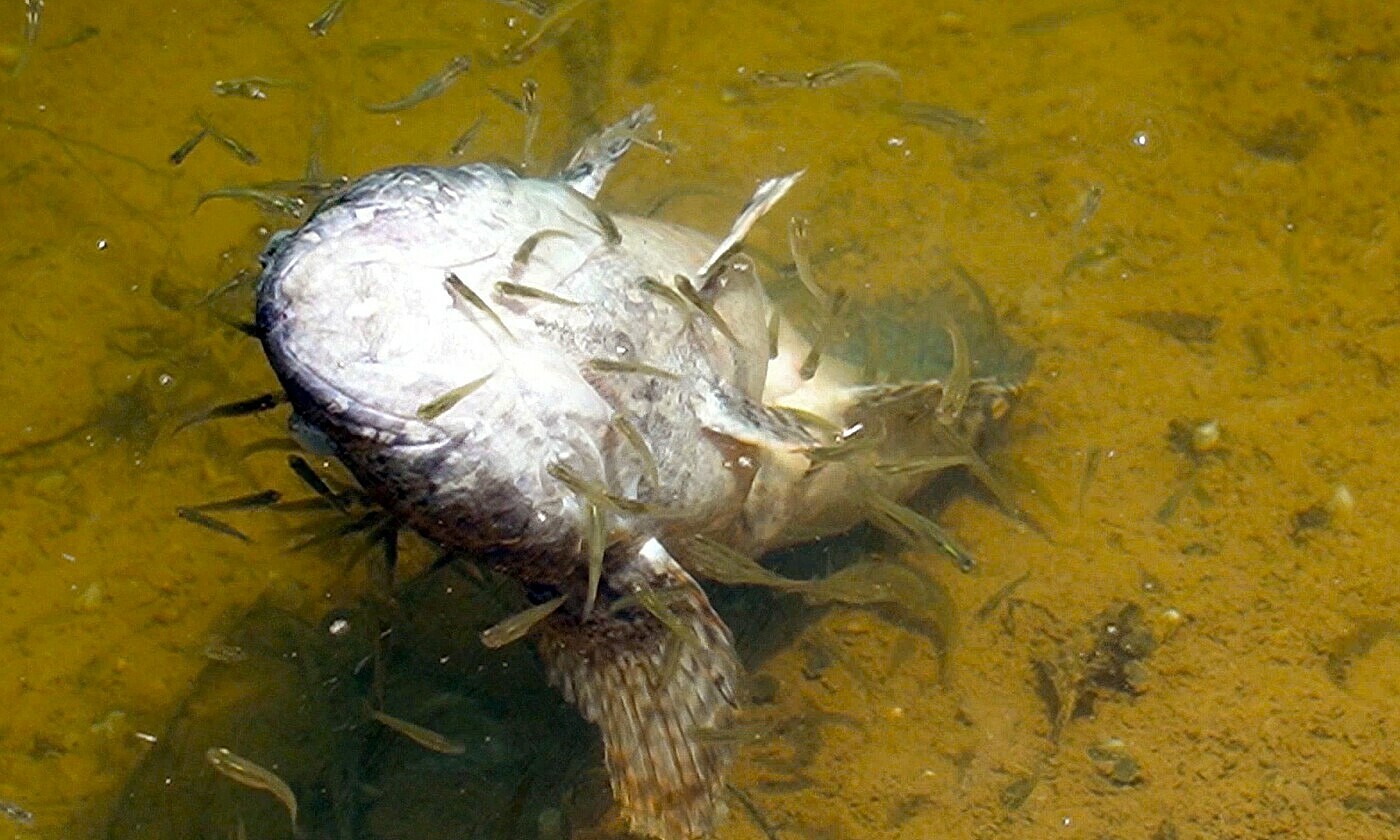 |
Gobies died due to saltwater contamination. Photo: An Minh |
Gobies died due to saltwater contamination. Photo: An Minh
According to the Tan Thanh Ward People's Committee, raising eels in a 1,000 square meter area for 12 months incurs costs of about 238 million dong. If the survival rate reaches 70%, the estimated profit is around 100 million dong. Gobies yield an estimated profit of about 55 million dong using a similar calculation. For rice, farmers typically earn about 800,000 dong per 1,000 square meters per crop.
Su emphasized that this is compensation, not aid, for the affected residents. He stated that the compensation amount must be calculated based on the average income for an entire production cycle, considering that the land has become saline and will be difficult to replant in the short term.
Provincial leaders proposed collecting information from local authorities, farmers, and traders to determine the average income. Additionally, they suggested basing the compensation factor on the age of the crops and livestock at the time the damage occurred.
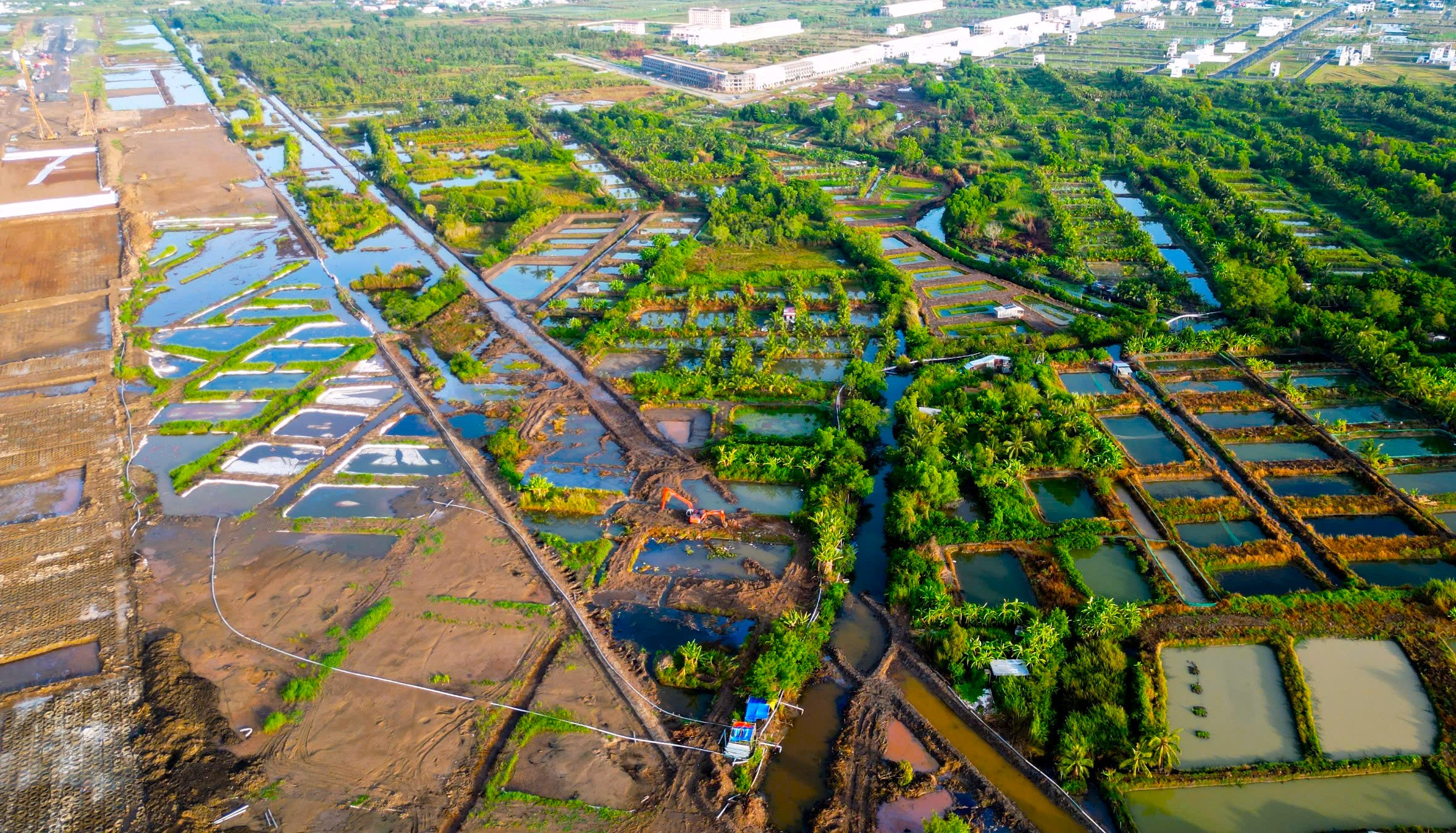 |
The production area of local residents (green on the right) borders the project. Photo: An Minh |
The production area of local residents (green on the right) borders the project. Photo: An Minh
The investor and contractor are required to address ongoing issues affecting production. They must also cooperate in assessing the damage and surveying locations for desalinization pump stations. The Department of Agriculture and Environment will monitor the environmental impact and review the responsibilities of all involved parties.
The meeting concluded with an agreement to establish an inter-agency task force. This task force will continue to quantify the damages, providing a basis for compensating the affected residents.
Chuc Ly


