The project, with an investment exceeding 1,780 billion VND, will establish a waste-to-energy plant. This facility is planned for Dat Moi commune, covering an area of about 20 hectares, including both land and water. The plant will process approximately 600 tons of waste per day, combining waste incineration with electricity generation at a capacity of 6 MW. The investor for this project will be selected through a bidding process.
According to the Provincial People's Committee, the primary goal of the facility is to treat household waste, with power generation serving as a supplementary objective. Once operational, the plant will receive waste from various areas: Phan Ngoc Hien, Tan An, Dat Mui, Nam Can, Dat Moi, and Tam Giang.
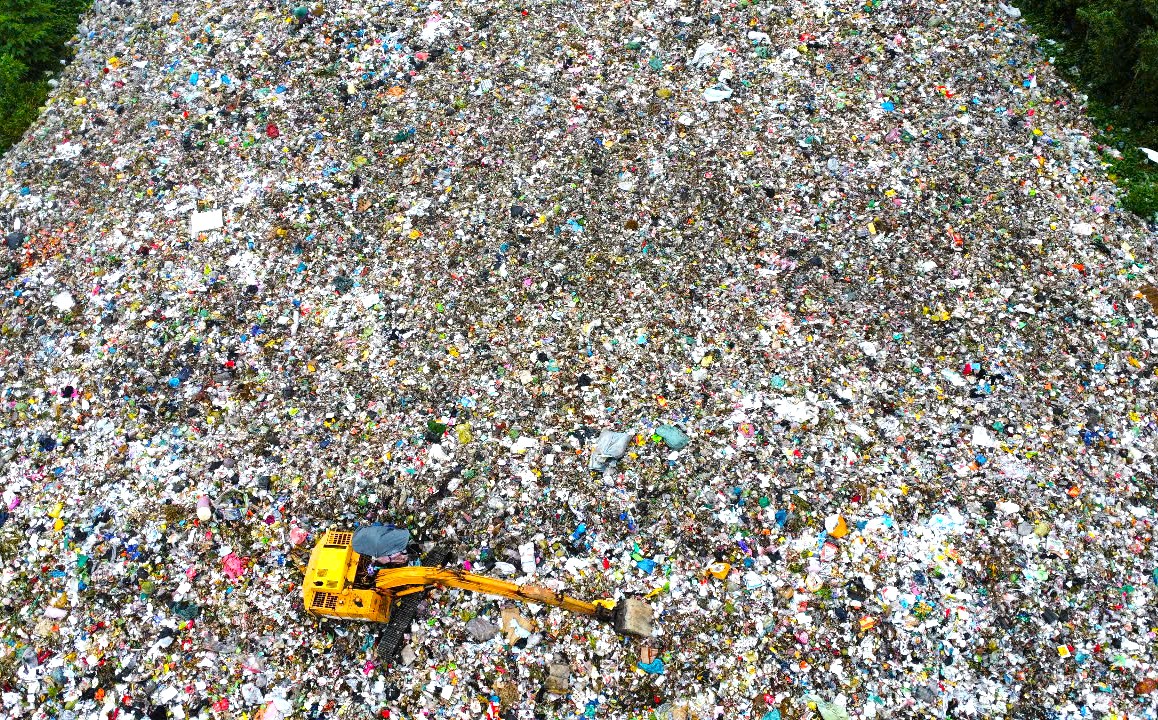 |
Waste in Ca Mau is currently landfilled because the waste treatment plant is not operational. *An Minh*
Ca Mau currently generates over 400 tons of household waste daily. The province relies heavily on a few remaining landfills, as the previous waste treatment plant in Ca Mau City (old) ceased operations over six months ago, pending new pricing agreements. This dependence on landfilling creates significant difficulties in waste collection and treatment. Furthermore, a landfill renovation project in Hoa Binh district (formerly Bac Lieu province) has stalled, preventing the effective management of daily waste.
In addition to the recently approved project, Ca Mau province is actively seeking investment for a provincial-level solid waste treatment complex. This complex includes another waste-to-energy plant, proposed for Khanh An commune, with an area of about 10 hectares.
Chuc Ly