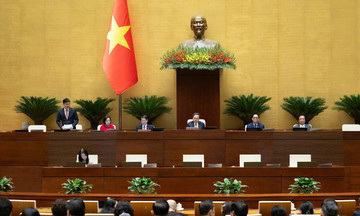
The National Assembly on 11/12 passed the Law amending and supplementing a number of articles of the Law on Geology and Minerals. The law stipulates that all activities involving the investigation, assessment, exploration, exploitation, processing, and use of rare earth must comply with the national strategy on rare earth and rare earth mineral planning. The State prioritizes investment in organizing geological investigations, assessments, and exploration of this resource.
The exploration, exploitation, and processing of rare earth must be strictly controlled, and raw rare earth cannot be exported. Only organizations and enterprises designated or authorized by the State are permitted to carry out these activities. Deep processing of rare earth should be linked to the formation of a modern industrial ecosystem to enhance domestic value and ensure self-reliance in implementing the national rare earth strategy. The State will also establish and uniformly manage geological data related to rare earth, regulate import and export activities during different periods, and maintain appropriate reserve policies.
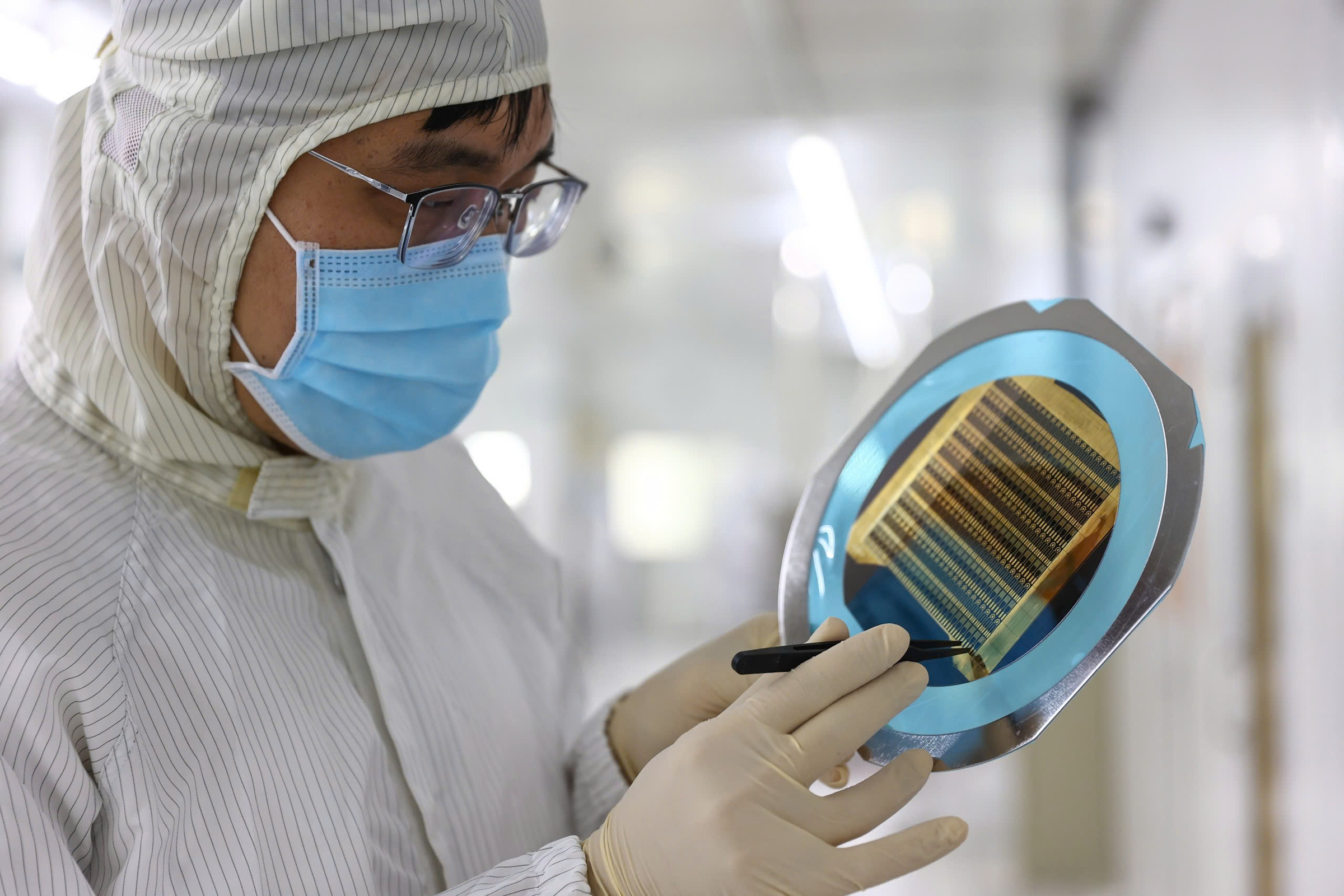 |
Semiconductor laboratory at the Research and Development Center, Ho Chi Minh City Hi-Tech Park, 12/2024. Photo: Quynh Tran |
The law encourages international cooperation in research and technology transfer for the exploration, beneficiation, separation, and deep processing of rare earth. It also prioritizes training high-quality human resources for this field. Rare earth mineral reserve areas are defined as locations with minerals that have not yet been exploited and require protection based on geological investigation and exploration results.
According to the Government, rare earth plays a strategic role in many important industries, such as advanced alloys and materials, solar panels, electric vehicle batteries, military robots, autonomous equipment, unmanned aerial vehicles, and semiconductors. Demand for this material is expected to increase sharply in the coming decade with the development of high technology, renewable energy, and electric vehicles, making rare earth a special commodity with significant implications for national defense, security, and diplomacy, thus requiring strict management mechanisms.
In addition to provisions on rare earth, the law also introduces policies to address difficulties and reduce administrative procedures for converting land use purposes for the exploitation of Group III minerals for construction materials and Group IV minerals for public investment projects, public-private partnership (PPP) projects, national key projects, urgent projects, and disaster prevention projects, as well as some projects decided by the Chairman of the provincial People's Committee. This activity is carried out under a multi-purpose land use mechanism in accordance with land law and applies only to planted production forest land and non-agricultural land, excluding defense and security land.
The law takes effect from 1/1/2026.